Nick Evans

Where, in Nick Evans’ art, does the soul reside? It’s an odd question to ask of sculptures on plinths, but the heart of Evans’ beguiling work is strangely absent – that is to say, it is not where we might ordinarily expect to find it.
Where, in Nick Evans’ art, does the soul reside? It’s an odd question to ask of sculptures on plinths, but the heart of Evans’ beguiling work is strangely absent – that is to say, it is not where we might ordinarily expect to find it.
Gagosian Gallery, Beverly Hills

Kandor 18 B (2010), photograph: Fredrik Nilsen
‘Portrait of the Artist as Superhero’
In 2000, Mike Kelley made a film titled Extracurricular Activity Projective Reconstruction #1 (Domestic Scene). It was the first of a series of works that reanimated photographs of carnivalesque performances he found in high school yearbooks such as plays or fancy dress days; he saw them, he said, as ‘rituals of deviance’.[i] Some were simply photographs; others comprised installations, video performances and original music. In 2005, he presented the series in his acclaimed exhibition ‘Day is Done’ at Gagosian Gallery in New York. (Matthew Higgs breathlessly suggested at the time that it was ‘the best show ever’.[ii])
Thomas Solomon Gallery, Los Angeles
Analia Saban’s exhibition strives to entertain, despite its obvious handicap: all the paintings are grey. Within this austere limitation, Saban finds diverse and ingenious ways of dismantling the procedure of painting. By dispensing with colour (unless you insist that grey is a colour too), she directs our attention to paint’s constructive rather than representational qualities. Read the rest of this entry »
Blum & Poe, Los Angeles

The colour black is, notionally, an absolute. As a racial classification, however, black consists of myriad shades of grey, though it continues to absolutely define many Americans’ lives. In Henry Taylor’s work it appears both as a colour and a condition. In each instance, the Los Angeles-based artist proves black to be a potent but inadequate term when talking about the realities of people’s daily existence.

Jerry Burchard, Jay DeFeo (1958) Collection SFMOMA
Between 1946 and 1952, the proportion of students at California’s five most important art schools who had served in the military was never less than 70 percent, and frequently more than 80. Most of these enrolled with assistance from the GI Bill, the monumental piece of post-war legislation that swelled the ranks of liberal arts courses across the United States with mature, motivated and philosophically reflective men and women, alive to the preciousness of their personal freedoms.
California Dreaming: The work of William Leavitt reflects upon Los Angeles’ faded visions of the future, bourgeois taste and the scientific sublime
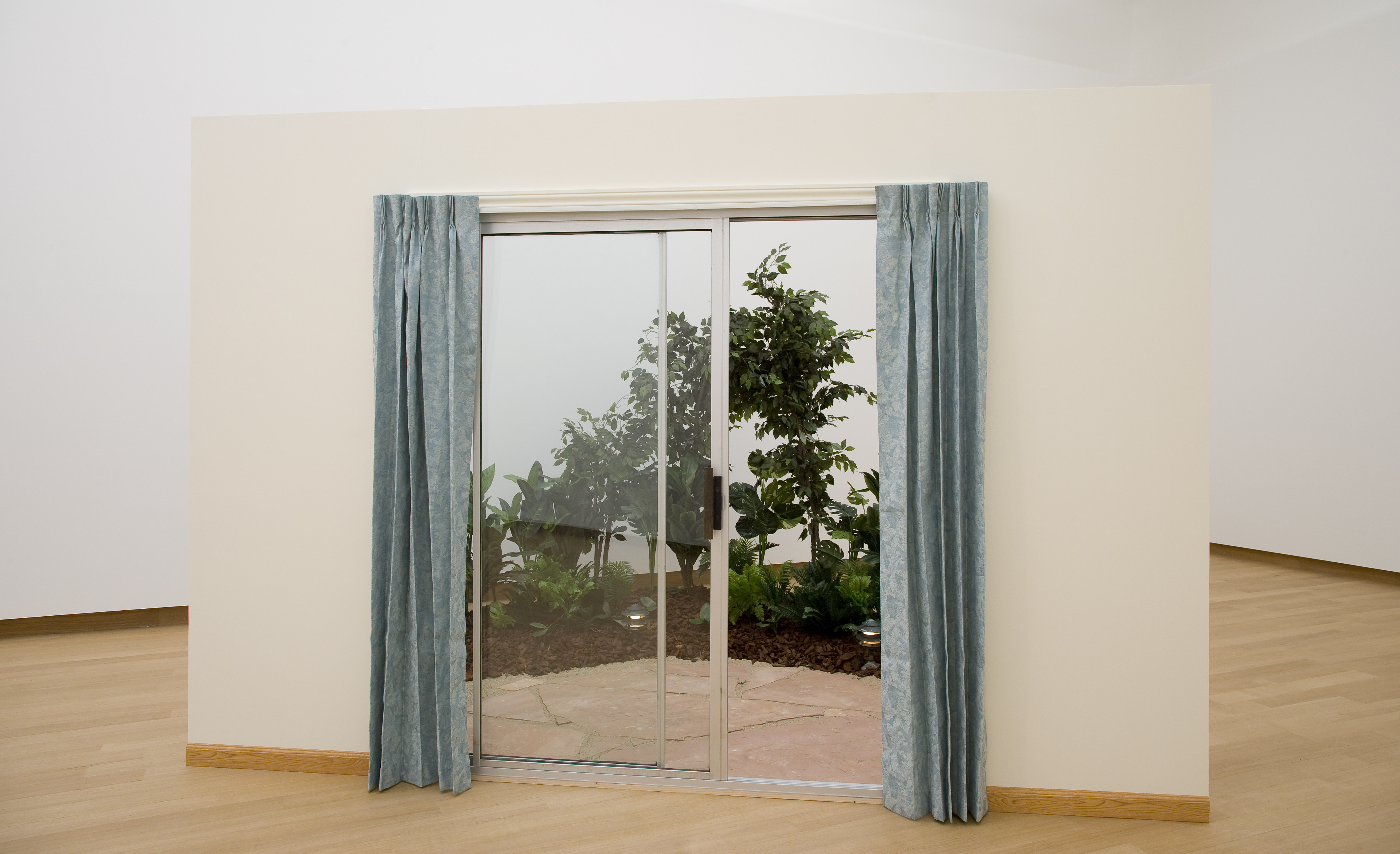
It is evening in the backyard and garden of a contemporary hillside home in Southern California. There is a swimming pool, a flagstone patio, a redwood fence, some lawn and the usual tropical landscaping of succulents, ferns, leafy plants, and flowering shrubs. The beauty of the scene is most evident at this time of day when the combination of lighted pool, soft garden lights, black sky and the lights of surrounding homes comes into play.
On this particular evening a small cocktail party is being held on the patio adjoining the house. The guests are all close friends of the host and hostess. Their presence adds the elements of motion and sound to the setting; the men stand near the edge of the patio engaged in relaxed conversation, while the women sit in a loose circle of garden chairs arranged on the lawn. Now the hostess comes out through the sliding glass door to announce that a light buffet supper is ready inside.
 Jonathan Griffin