Jonathan Griffin

Criticism and essays on art and culture

Category: Apollo

Ruth Asawa

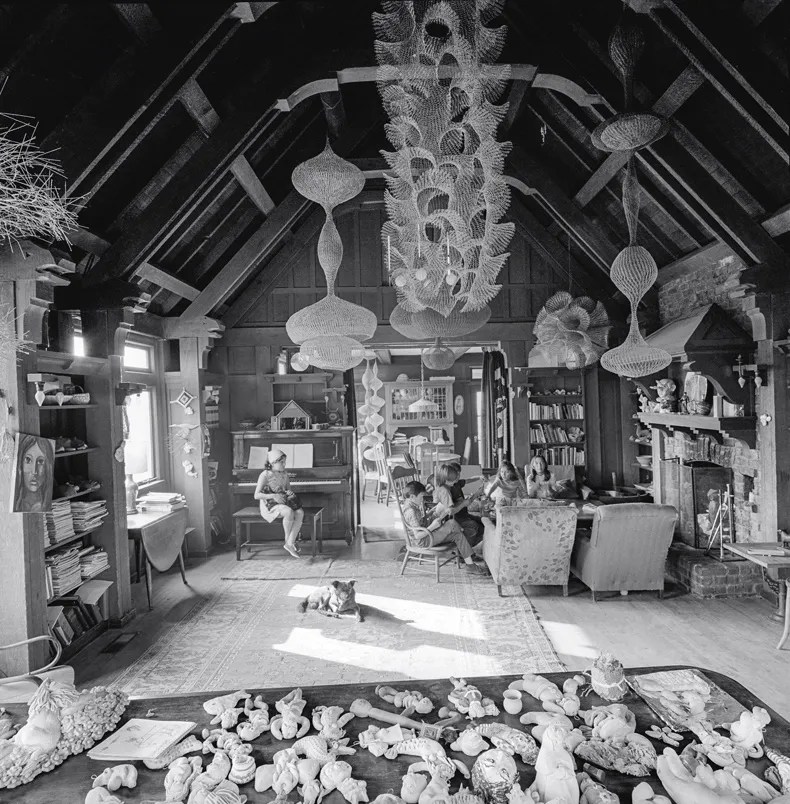
The living room of Ruth Asawa’s home in the Noe Valley neighbourhood of San Francisco, photographed by Rondal Partridge in 1969. Photo: © 2025 Rondal Partridge Archive

The black-and-white photograph shows a wood-panelled room with a pitched roof of dark redwood beams. A low table is pushed cosily up against a large brick hearth, and around it several children sit in easy chairs, one reading, others busily engaged in craft activities. At a piano, a girl strokes a cat, while a dog basks in the sunlight that slants across a large rug. This peaceful scene is the San Francisco living room of the artist Ruth Asawa (1926–2013), photographed in 1969. Asawa is nowhere to be seen, but her art is everywhere. Most conspicuous are the hanging wire sculptures for which Asawa is best known. Resembling elaborate lanterns or lighting fixtures, or biomorphic models of seed-pods or chrysalises, or complex fishing nets, or baskets, these sculptures fill the darkened space beneath the high rafters with miasmic, playful movement, catching the light as it filters through the window.

Read the rest of this entry »
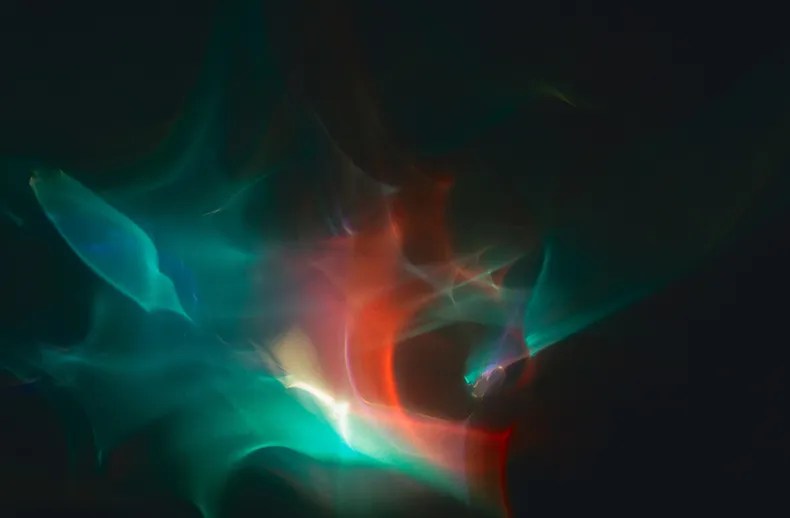
Thomas Wilfred

Lumia Suite, Op. 158 (1963–64), Thomas Wilfred. Museum of Modern Art, New York

Between 1964 and 1981, visitors to New York’s Museum of Modern Art (MoMA) could sit in a darkened room and contemplate opalescent wisps of colour drifting slowly across a screen. The installation, tucked in the museum’s basement, was a favourite among regulars. At times, the screen – eight feet wide and six high – was filled with diaphanous skeins of pale yellow, green, blue or pink, while at other times the light dwindled, letting most of the picture fall into darkness. It was mesmeric, unlike anything else in the museum. Unlike, probably, anything yet made in the history of humankind.

Read the rest of this entry »

Bernice Bing

A Lady and a Road Map, 1962, by Bernice Bing (American, 1936– 1998). Oil on canvas. Asian Art Museum of San Francisco, Museum purchase, 2020.26. © Estate of the Artist. Photograph © Asian Art Museum of San Francisco.

Once upon a time, everybody knew Bingo. In San Francisco in the 1970s, it’s said she couldn’t walk down the street in North Beach or Chinatown without someone calling out her name. Bernice Bing, the statuesque artist known to most as Bingo, was easy to spot in her sharp zoot suits, boots and jet-black hair. She was born in Chinatown in 1936; when it became the heart of the Beat movement in the 1950s, she found herself at the centre of a community that was not only wildly hedonistic but also close-knit, pluralistic, non-judgemental, socially progressive and spiritually visionary. Later, she worked with at-risk youth in the area, including gang members whom she persuaded to take part in art workshops. She helped found the South of Market Cultural Center (SOMAR, now known as SOMArts), which she ran in the 1980s. Why, then, is Bing – who died in 1998 – so little known today?

Read the rest of this entry »

Faith Ringgold

American People Series #20: Die (1967), Faith Ringgold. Museum of Modern Art, New York. © Faith Ringgold

When the Museum of Modern Art in New York reinstalled its collection in 2019, amid widespread critical acclaim for the institution’s revisionist canon, one pairing in particular hit the headlines: Faith Ringgold’s American People Series #20: Die (1967) hanging next to Pablo Picasso’s Les Demoiselles d’Avignon (1907).

Read the rest of this entry »

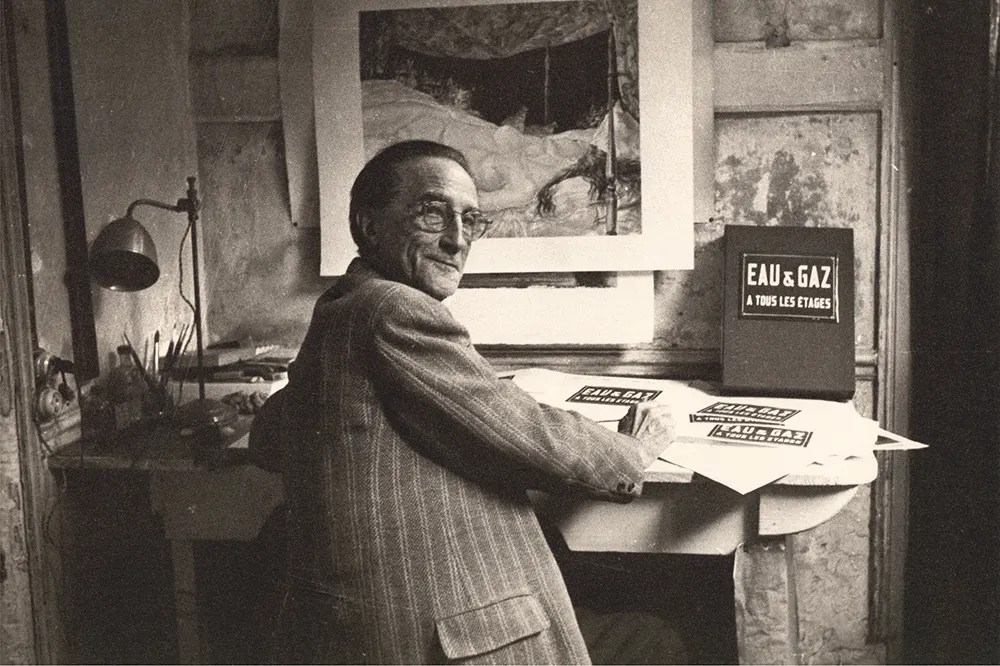
Marcel Duchamp

In 1959, Marcel Duchamp’s career was in the weeds. Not that he minded much. He had largely abandoned making art almost 40 years earlier and, while he still dabbled in corners of the art world, full recognition had never really arrived. Plans for a retrospective at the Museum of Modern Art in New York were shelved in the 1940s; talk of another, at the Philadelphia Museum of Art a few years later, fizzled out.

Read the rest of this entry »

Charles Ray

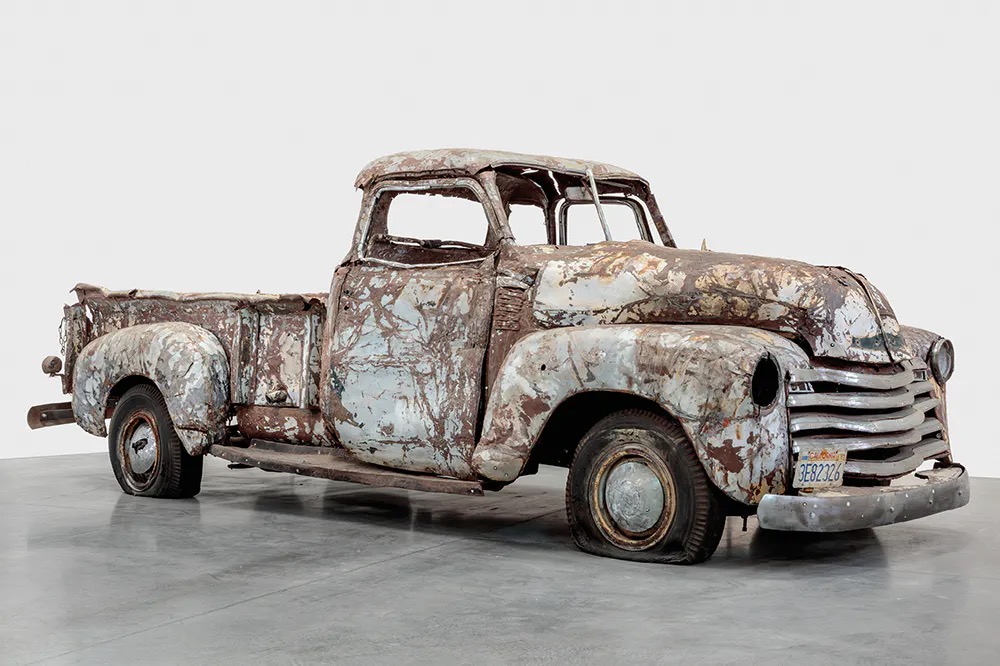
Unbaled Truck (2021), Charles Ray.  Photo: Josh White; courtesy Matthew Marks Gallery; © Charles Ray

In May 2020, the sculptor Charles Ray was driving north from his home in Los Angeles to Anacortes, in Washington state, to see a man about a boat. Locked up in the early months of the pandemic, the restless Ray got what he calls ‘Covid fever’ and, despite the entreaties of his wife Sylvia, threw a sleeping bag into the back of his car and set off for the boatyard, near the Canadian border, where he needed to make some decisions about the layout of a sailing boat that was being built for him. Ray takes sailing very seriously indeed. In 2003 he was nearly shipwrecked in the Pacific Ocean when an unlit military vessel collided with him in the middle of the night; this new boat, he tells me, is designed to accommodate his wife and her friends so Ray will not have to sail alone.

Read the rest of this entry »

Howardena Pindell

Howardena Pindell, Untitled #100, 1979, Mixed media on board, 13 1/2 x 10 1/2 inches, Courtesy: Garth Greenan, New York

Many – if not all – artists eventually acquire origin stories, formative experiences to which all their subsequent artistic achievements can plausibly be traced. Tony Smith had his night-time drive on the unfinished New Jersey Turnpike; Louise Bourgeois had her father’s affair; Andy Warhol had his time drawing ads for shoes. Such stories become more meaningful as they recede in time, ossifying with use and reuse.

Read the rest of this entry »

The Transcendental Painting Group

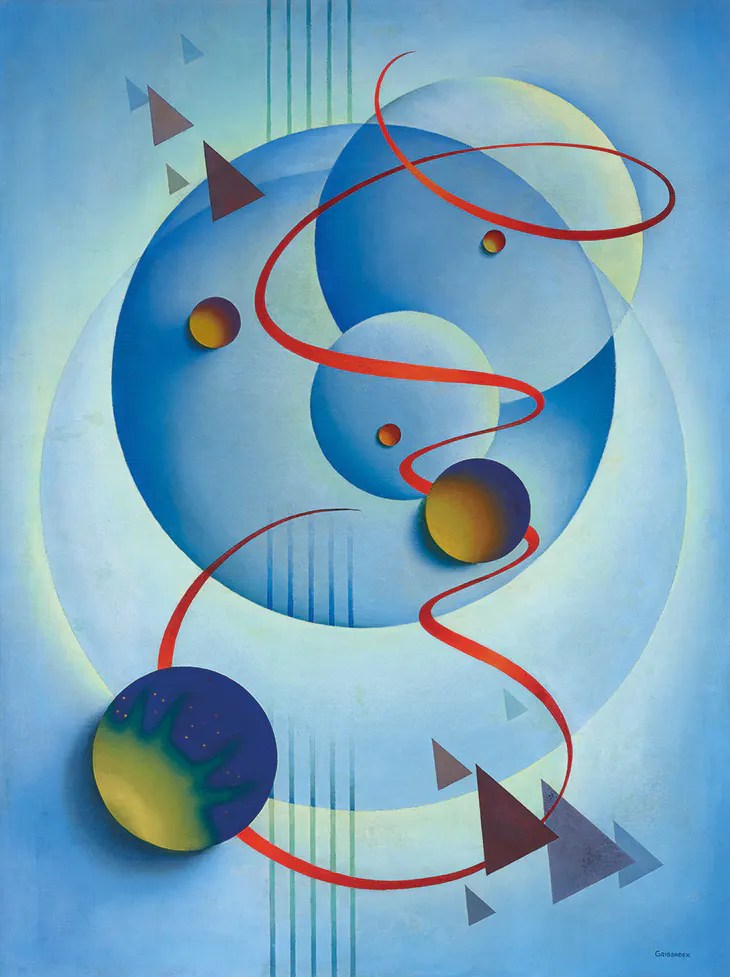
Composition #57/Pattern 29 (1938), Robert Gribboek. Fine Arts Museums of San Francisco Photo: Geistlight Photography, Albuquerque

Depending on who you ask, Helena Blavatsky was either a mystic and a sage who introduced Eastern spirituality to Western culture, with the stated aim of establishing ‘a universal brotherhood of humanity’, or she was a plagiarist, a racist and a fraud. If you ask me, she was a bit of both. Kurt Vonnegut called her ‘the Founding Mother of the Occult in America’, which is not entirely hyperbole. When she arrived from her native Russia, in 1873, the United States was already in the thrall of new religious movements such as Spiritualism, but it was Blavatsky’s co-founding of the Theosophical Society with fellow seekers Henry Olcott and William Quan Judge that cemented her influence on Western esotericism on both sides of the Atlantic. 

Read the rest of this entry »

Lisa Yuskavage

The Tongue Tondo (2018), Lisa Yuskavage. Courtesy the artist and David Zwirner; © Lisa Yuskavage

Sometime not long ago, before the pandemic rendered such gatherings unconscionable, I met up with a few fellow critics for drinks at a friend’s house. At one point in the evening, during a boisterous discussion about artists’ personal politics, someone casually remarked that so-and-so was ‘definitely a misogynist’, and everyone roundly agreed before cantering on with the conversation.

Read the rest of this entry »

Betye Saar

1969_SAAR_Black-Girls-Window

Black Girl’s Window (1969), Betye Saar. Photo: Rob Gerhardt/The Museum of Modern Art, New York; courtesy the artist and Roberts Projects, Los Angeles; © Betye Saar 2019

Betye Saar greets me, complaining. ‘I woke up in pain, so I’m grumpy today,’ says the artist, who will turn 93 a few days after we meet in late July. Recently she’s had to do so many ‘silly interviews’, she says, she has been left with no time to work. I’m not offended – it’s an understandable grievance. This year, when she might have hoped to enjoy some quiet time in her studio, or to tend her splendid hillside garden in Laurel Canyon, Los Angeles, she has instead been obliged to prepare for major solo exhibitions at the Los Angeles County Museum of Art (until 5 April 2020) and at MoMA in New York (until 4 January 2020). On 2 November she will be honoured at LACMA’s annual Art+Film Gala, a calendar highlight for Los Angeles’ cultured elite. Read the rest of this entry »