Jonathan Griffin

Criticism and essays on art and culture

Category: Frieze

Cyprien Gaillard

New Romantic

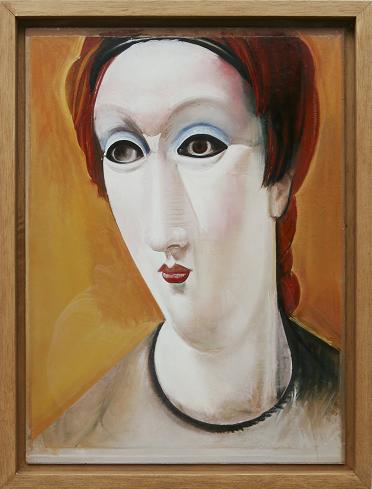
Paris-born, Berlin-based artist Cyprien Gaillard could be described as an archaeologist of recent history. In his films, photographs, collages, sculptures and performances, the Sublime sits alongside the profane, and brutality is underscored by moments of quiet beauty.

Jonathan Griffin: Where is wilderness today and how do you value it?

Cyprien Gaillard: My father was a fly fisherman. He would take me on trips to a river in Oregon, and I would spend my time looking for a parking lot or road so I could skateboard. I think my early relationship to architecture was informed by that.

Read the rest of this entry »

Bob Law


Karsten Schubert and Thomas Dane Gallery, LondonIn 1959, Bob Law lay in a Cornish field and wondered how to describe the space he was in. His solution was a series of drawings in which figurative elements – such as trees or houses – are arranged along a doddery pencil line at the perimeter of the paper. A year later, Law had distilled this approach to his signature device: the rectangular perimeter alone, bounding empty space, sometimes accompanied by a date, a title or his name, always in block capitals. Read the rest of this entry »

Pietro Roccasalva

Through the Looking Glass

Pietro Roccasalva says he doesn’t believe in chronologies, at least not where his work is concerned; every image or idea that arises is the reflection of another that came just before it or a premonition of one to follow. He likes to think of his oeuvre as ready-formed – a magnificent hall of mirrors.

Read the rest of this entry »

Ben Rivers


A Foundation, Liverpool, UK

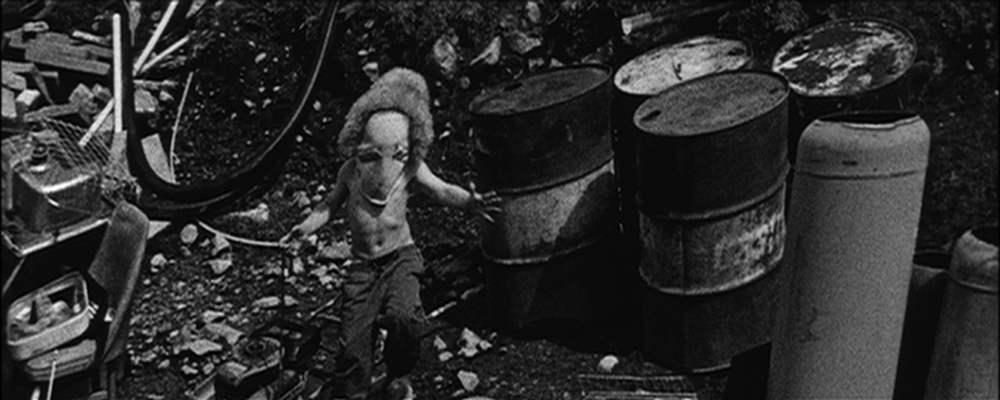
Ben Rivers makes films about latter-day hermits and pioneers – usually men – who have chosen to exist at an ideological and geographical remove from the rest of society. The London-based artist journeys into the depths of private, imperfect, perhaps misguided but defiantly hopeful worlds. His use of a wind-up Bolex camera and hand-processed film seems not just to be a matter of interpretation, but the only appropriate response to the jerry-rigged and hamstrung lifestyles he is permitted to witness. Read the rest of this entry »

Nasreen Mohamedi

Milton Keynes Gallery, UK

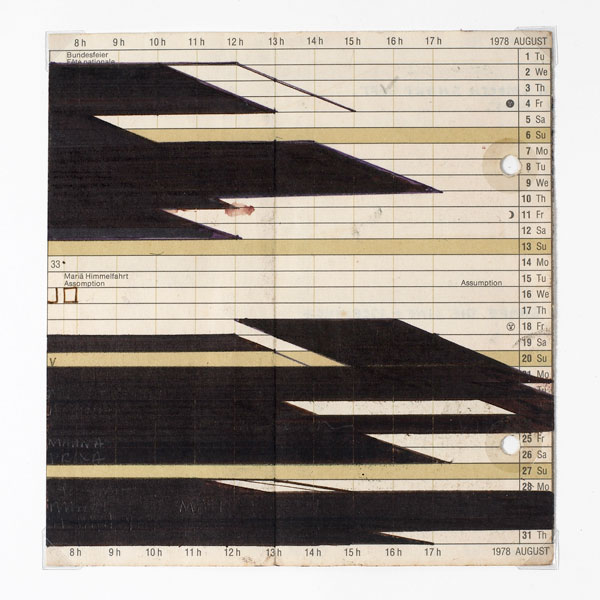
The only dated works in the exhibition ‘Nasreen Mohamedi: Notes’ at Milton Keynes Gallery are the four pages cut from the artist’s diaries. On Friday 3 December 1971, Mohamedi records: ‘EVE BLACKOUT. WAR BEGINS.’ The words are, however, nearly obscured by the page’s ornamention: over the top of the capital letters are tight rows of ruled pencil lines, occasionally punctuated by coin-sized discs of black ink and filled-in rectangles.

Read the rest of this entry »

Eric Bainbridge

Tales of Everyday Madness

I worried for weeks about where to meet Eric Bainbridge. I envisaged talking to him in surroundings that are significant for him and his work, somewhere that might lead our conversation in unexpected but fruitful directions. Should I travel up to Hartlepool, the town in the north-east shoulder of England near where he was raised, and where he now lives for part of the week in a cottage by the sea? Or would it be better to visit the art school in nearby Sunderland, where he has taught for the past nine years, and where his office currently doubles as a studio, allowing cups of tea and tangerines to drift into his sculptural combinations? When this became too complicated to arrange, I considered something closer to home: a trawl through London’s second hand shops, where I imagine he finds much of his raw material, or a trip to an out of town D.I.Y. store (it turns out that Greg Hilty already had this idea for an essay he wrote on Bainbridge’s work in 1990).1 Perhaps a market would be appropriate, or, given his interest in the global circulation of goods, a spot out on the Thames estuary where we could watch cargo ships dock and unstack their coloured metal containers. Read the rest of this entry »

Trisha Donnelly

Modern Art Oxford

A sign insisted that access to Trisha Donnelly’s exhibition at Modern Art Oxford was gained via the museum’s front stairs; the three spaces that the show inhabited were clearly intended to be experienced in sequence. An optimist might therefore have expected an unfolding narrative, a progression of scenes, or an installation that, in having a front, a best side, signals awareness of the viewer who stands before it. Instead, the untitled installation of diverse objects that filled the galleries hovered uneasily at the edges of the rooms or in corners, like shy children pushed reluctantly into a party.

Read the rest of this entry »

Alina Szapocznikow

Broadway 1602, New York

While it can be a lazy writer’s crutch to defer too readily to biography, the course of Polish artist Alina Szapocznikow’s extraordinary and painful life is integral to understanding her awkward, restlessly experimental and often darkly hilarious art. A potted history of her life would include the early deaths of her father and brother, her imprisonment during World War II in Auschwitz, Bergen-Belsen and Theresienstadt, her studies in art schools in Prague and Paris after the war and finally her tragic death from breast cancer at the age of 47 in 1973. Read the rest of this entry »

Matthew Monahan

A tour across the aesthetic landscape of Matthew Monahan’s figurative sculptures, prints and drawings would make stops in the caves of Lascaux, at archaeological digs in peat bogs, sealed tombs of ancient Egypt and Babylon, Easter Island and the temples of Greek and Roman antiquity – not to mention contemporary Japan, Amsterdam, China and Los Angeles. Read the rest of this entry »

Marcus Coates

‘Why do cats understand what you say?’ ‘Where does hair go when you go bald?’ ‘How can the city control illegal bicycle parking?’ These are just some of the questions that Marcus Coates has attempted to answer by descending into the ‘lower world’ and consulting the birds and animals that he encounters there. Usually they respond in cryptic clues; uncharacteristic behaviour is what he is looking out for, which he then does his best to interpret for his audience on his return. Read the rest of this entry »