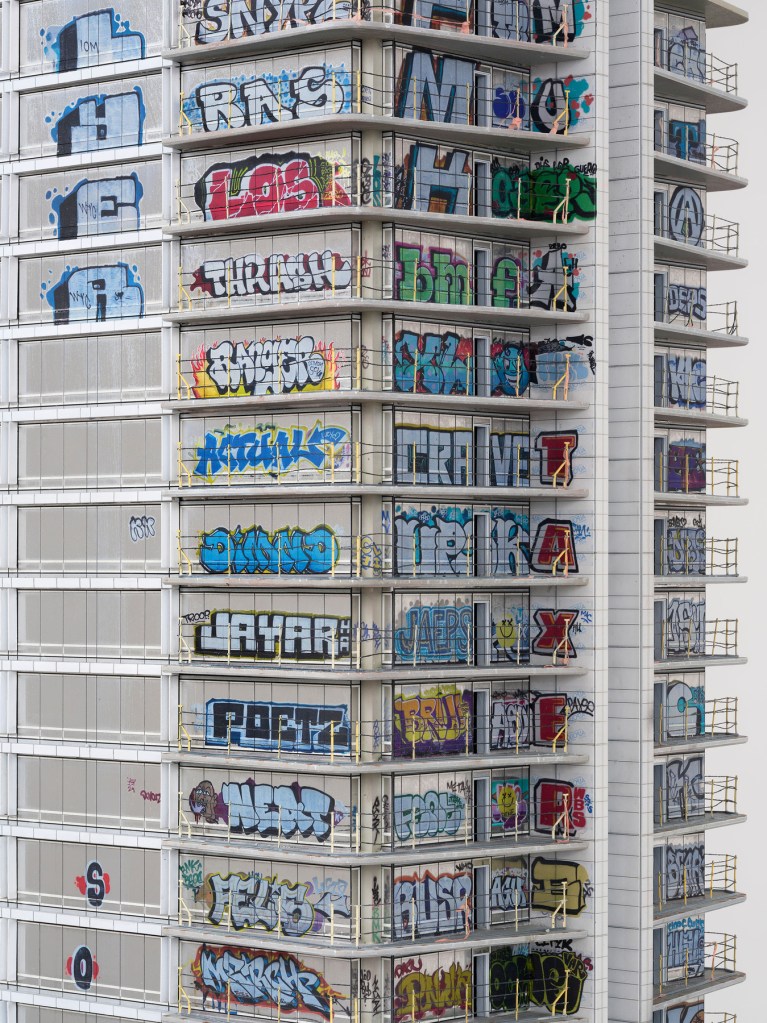
Sayre Gomez, “Oceanwide Plaza,” 2025-26. Courtesy David Kordansky Gallery
Early in 2024, graffiti artists broke into the half-finished Oceanwide Plaza skyscraper development in downtown Los Angeles, scaled dozens of flights of stairs and, over a few days, covered much of the towers’ exterior with spray paint. Colorful tags — “Sorak,” “Libre” or “Suave,” more than six feet tall — were emblazoned on mirrored glass windows of nearly every floor.
“I don’t consider myself a creative person at all,” Greta Waller tells me, in the kitchen of her south Los Angeles bungalow, despite abundant evidence to the contrary.
I FIRST SAW an artwork by Mike Kelley before I was able to recognize it as such. On the wall of a dorm room at the rural English boarding school I attended, someone had pinned a poster for Sonic Youth’s 1992 album Dirty: a photograph of a stuffed toy crocheted from orange yarn, an alien with antennae and a bashful smile.
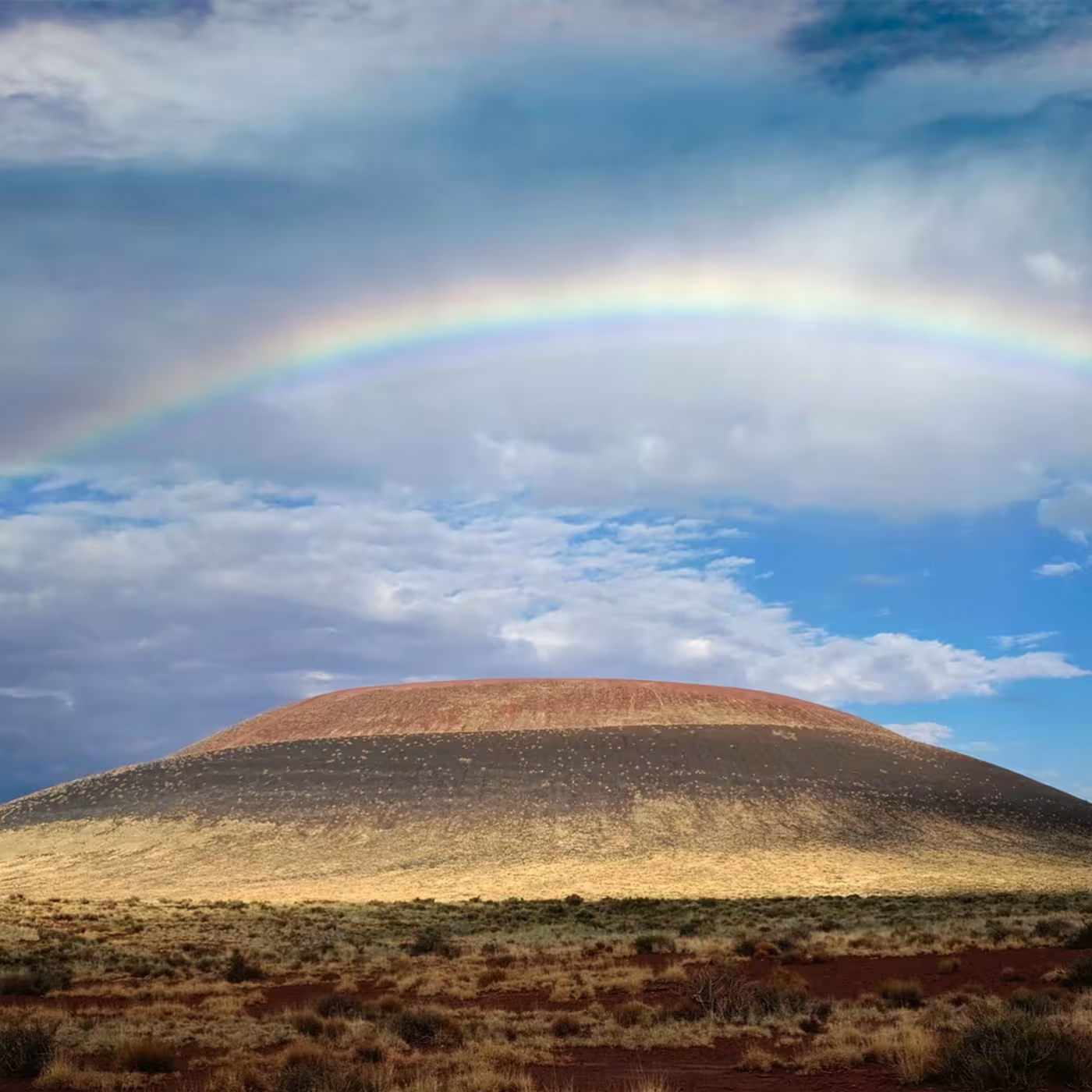
The high terrain of the Walking Cane Ranch in north-central Arizona, between the Painted Desert and the Little Colorado River and the San Francisco Peaks, is astoundingly beautiful. Flaxen grasses dust black and red volcanic gravel, which rises in huge, soft mounds — extinct volcanoes, the newest of which last erupted in 1066.
James Turrell, 81, the owner of this ranch and one of America’s most beloved artists, calls it “a land between”.
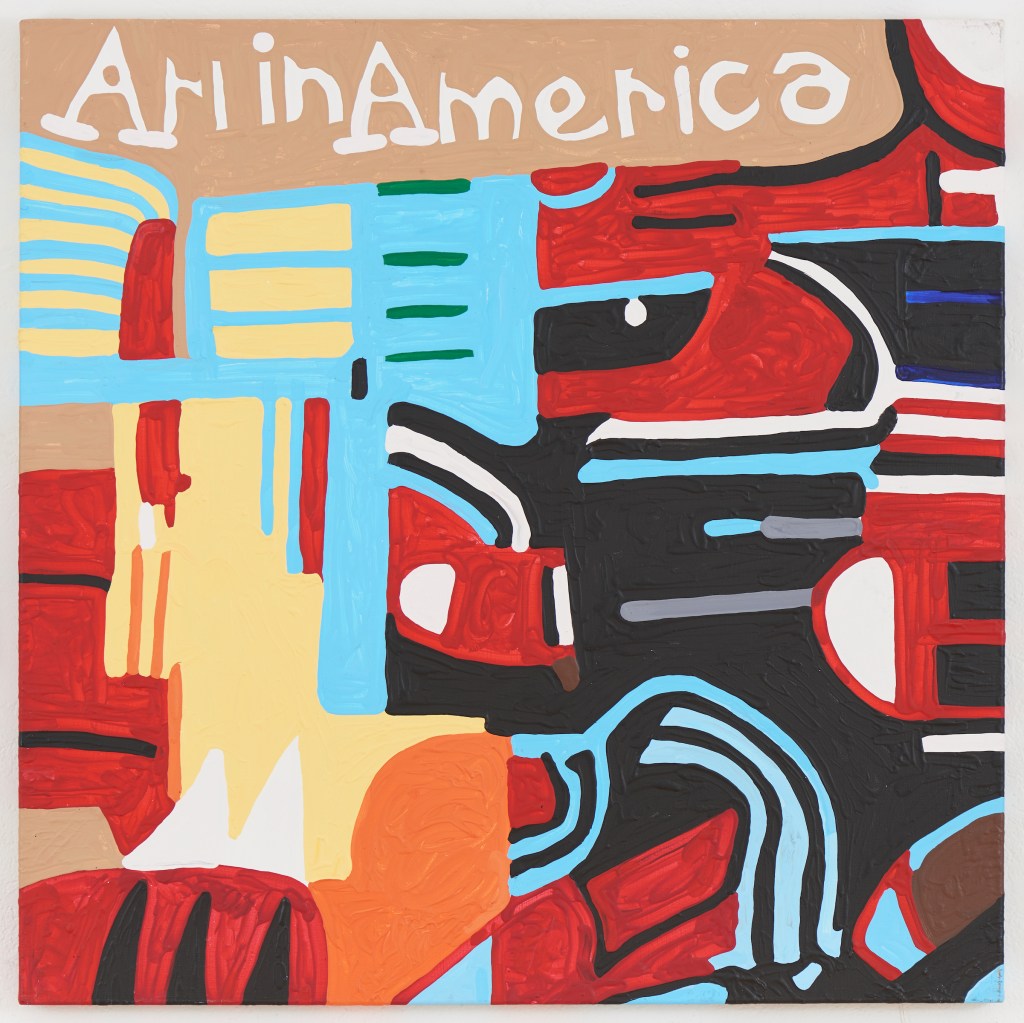
Before Marlon Mullen begins a painting, he likes to tidy his work space. He’ll pre-mix his paints — Golden acrylics in recycled pots — and lay out his brushes and canvas on his table. Often, he’ll empty the studio’s trash cans. Sometimes he’ll even sweep the yard outside, or rearrange objects on the studio shelves according to their relation to colors he plans to use in his painting. As I learned when I visited him in Richmond, Calif., one recent rainy morning, this ritual process can take days.
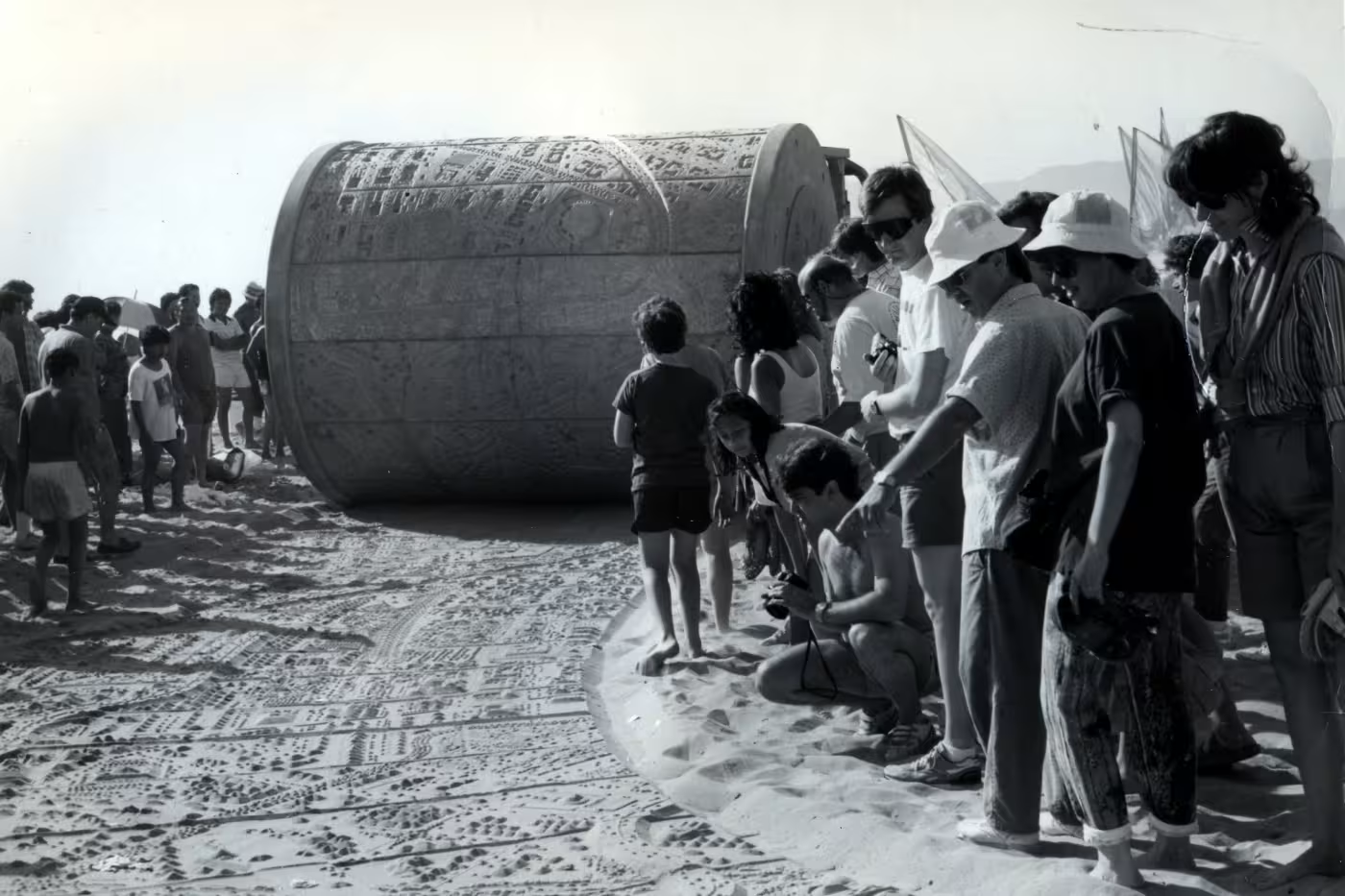
Tourists and surfers strolling down the Santa Monica pier in 1979 would have passed a mysterious awning advertising “The Natural Museum of Modern Art”. A nearby explanatory panel did little to clarify: “The Natural Museum of Modern Art project is part of an ongoing interest by the John Doe Co in natural objects and phenomena.”
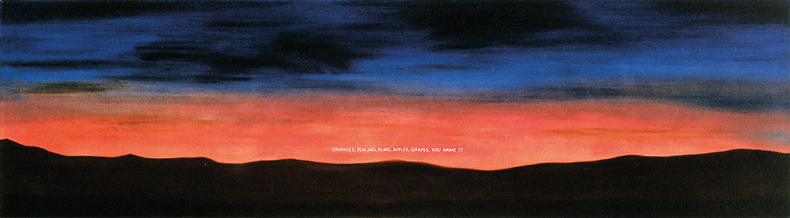
In the cultural history of Los Angeles, it’s an indelible scene: the 19-year-old Edward Ruscha and his friend, the musician Mason Williams, tearing down Route 66 in a customised Ford from Oklahoma to Los Angeles. Ruscha’s arrival in 1956 in the still-young city and his excitement at its signs and buildings, its colours and its surfaces, inflected most of his art over the coming decades. Even if his enthusiasm is sometimes tempered by unease, or a wry quizzicality, Ruscha is generally considered the artist-laureate of Los Angeles.
Dan Miller, “Untitled” (2021) Courtesy: San Francisco Museum of Modern Art
In 1974, Florence Ludins-Katz and Elias Katz — she an artist, he a psychologist — turned the garage of their Berkeley home into an art studio for adults with developmental disabilities. Across California at that time, people with a range of disabilities were being deinstitutionalized, with little provision made for them after their release. The Katzes viewed art-making as a pathway not only to personal fulfillment for disabled people, but also to their integration into a society that valued their work.
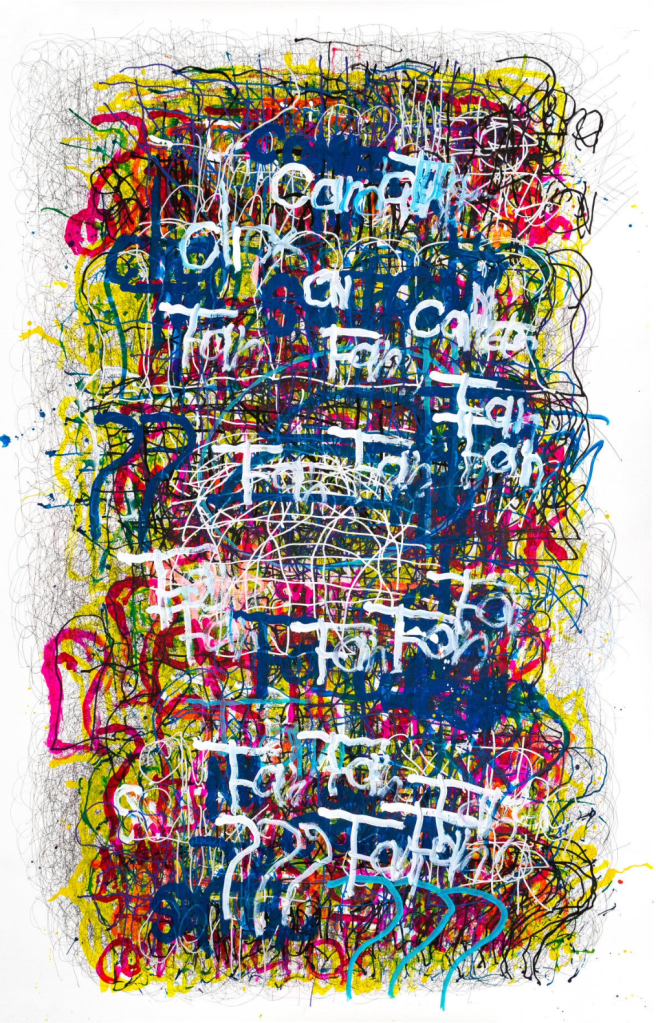
Sometimes, you only notice something when it’s gone. In the past few months, I have become aware of the absence, in a growing number of artists’ work, of narrative—in particular, narrative about these artists’ biographies or identities. Much of this work is abstract, often purely abstract, and it seems that more and more people, myself included, are lately being drawn to this type of nonobjective and nonliteral work. Historically, abstraction in visual art developed along two parallel avenues: the distortion of things seen in the world (Paul Cézanne, Pablo Picasso) and the invention of entirely nonobjective forms (Kazimir Malevich, Wassily Kandinsky, Hilma af Klint). The contemporary work I have been noticing is, by and large, aligned with the latter stream of abstraction. In something of a departure from the dominance of identity-centered figuration in recent years, much contemporary abstraction is being made by artists of color who are resistant to foregrounding their identities through narrative. As mixed-media artist Teresa Baker described her abstract paintings to me, she noted that it is work that “should speak for itself. I shouldn’t have to give words to it.” Her position is echoed by Rema Ghuloum, a painter based in Los Angeles, who told me: “I really want the work to speak for itself.”
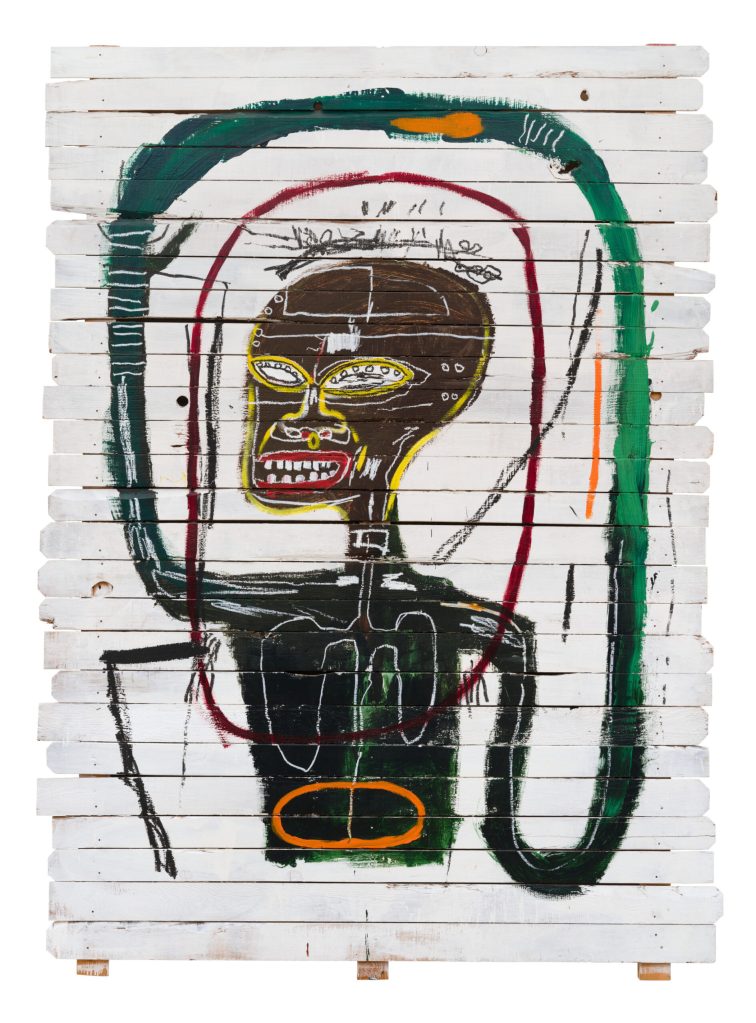
In October 1981, when the art dealer Larry Gagosian first laid eyes on a painting by Jean-Michel Basquiat, he had never heard of the artist. “My hair stood on end,” he said of seeing the 20-year-old’s work. Just six months later, when Basquiat opened a solo show at Gagosian’s gallery in West Hollywood, the place, Gagosian recalled in an interview, “was absolutely mobbed.”


 Jonathan Griffin