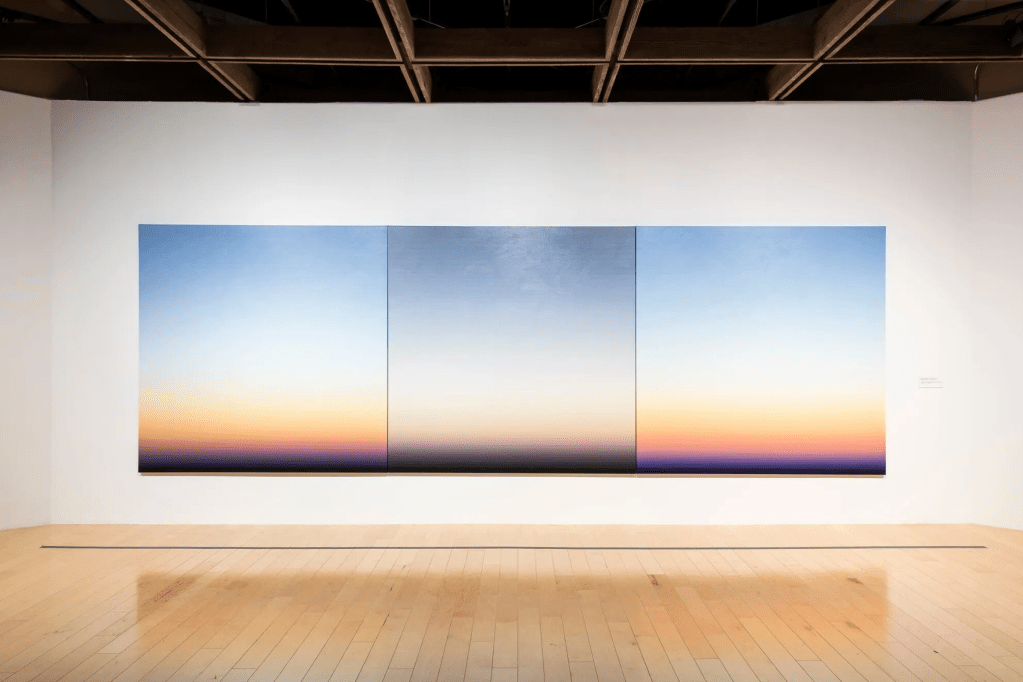
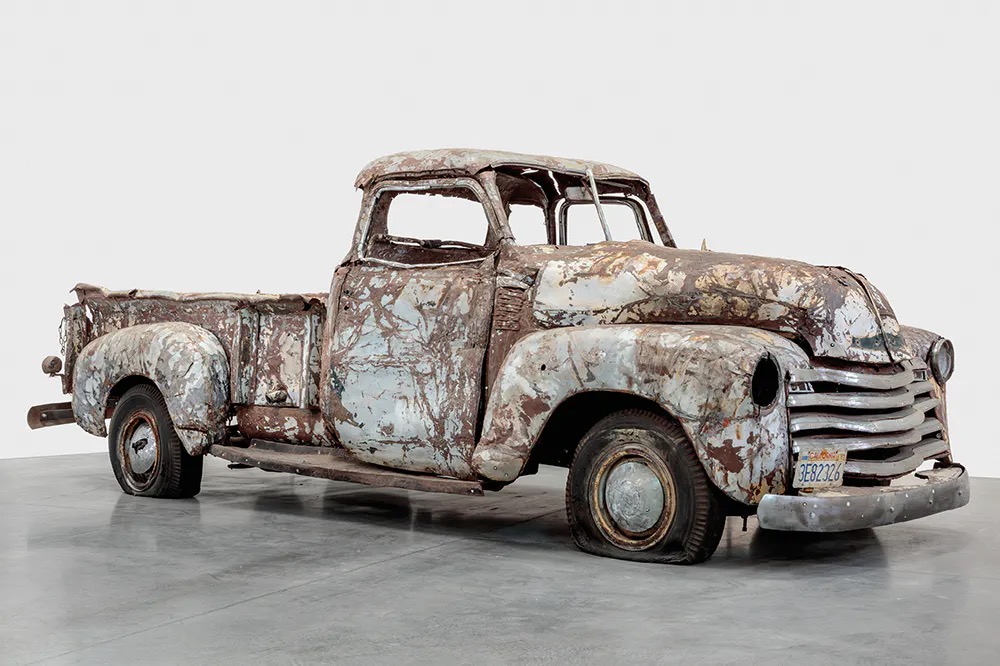
Norman Zammitt, “Caly-forny-ay,” 1987. Credit…RJ Sánchez/Solstream Studios, via Palm Springs Art Museum
Aesthetically, Los Angeles is mostly a mess. Unplanned, mismatched buildings sprout like fungus among the grid of its streets, whose orderly classicism is often disrupted by tectonically induced hills. Curbs crumble and sidewalks crack beneath telegraph poles festooned with cables. Flamboyant succulents mingle with scrubby native plants.
To mark the occasion of his double-bill exhibition at both the Bury Street and Helmet Row galleries of Modern Art in London, Ron Nagle had his nails done. Specifically, just his thumbnails: black on his right, pale pink on his left.
Once upon a time, everybody knew Bingo. In San Francisco in the 1970s, it’s said she couldn’t walk down the street in North Beach or Chinatown without someone calling out her name. Bernice Bing, the statuesque artist known to most as Bingo, was easy to spot in her sharp zoot suits, boots and jet-black hair. She was born in Chinatown in 1936; when it became the heart of the Beat movement in the 1950s, she found herself at the centre of a community that was not only wildly hedonistic but also close-knit, pluralistic, non-judgemental, socially progressive and spiritually visionary. Later, she worked with at-risk youth in the area, including gang members whom she persuaded to take part in art workshops. She helped found the South of Market Cultural Center (SOMAR, now known as SOMArts), which she ran in the 1980s. Why, then, is Bing – who died in 1998 – so little known today?
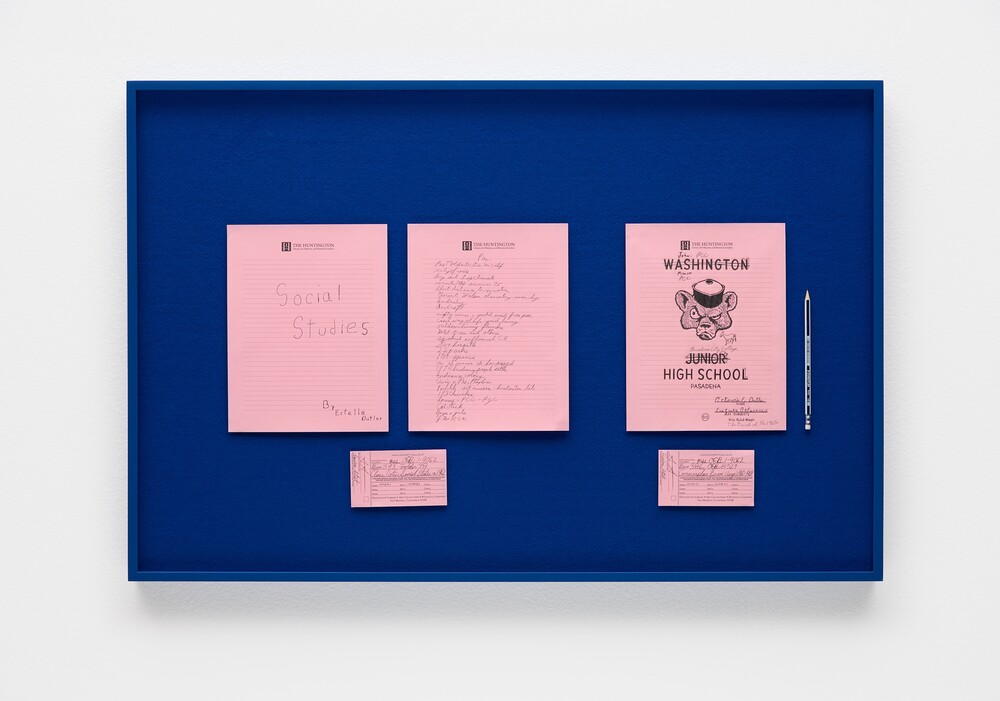
American Artist, Octavia E. Butler Papers: mssOEB 1-9062 I (Social Studies), 2022. Huntington Library stationary, graphite, pencil, felt, 26 x 39.5 inches (framed). Image courtesy of the artist; Commonwealth and Council, Los Angeles; and REDCAT, Los Angeles. Photo by Brica Wilcox
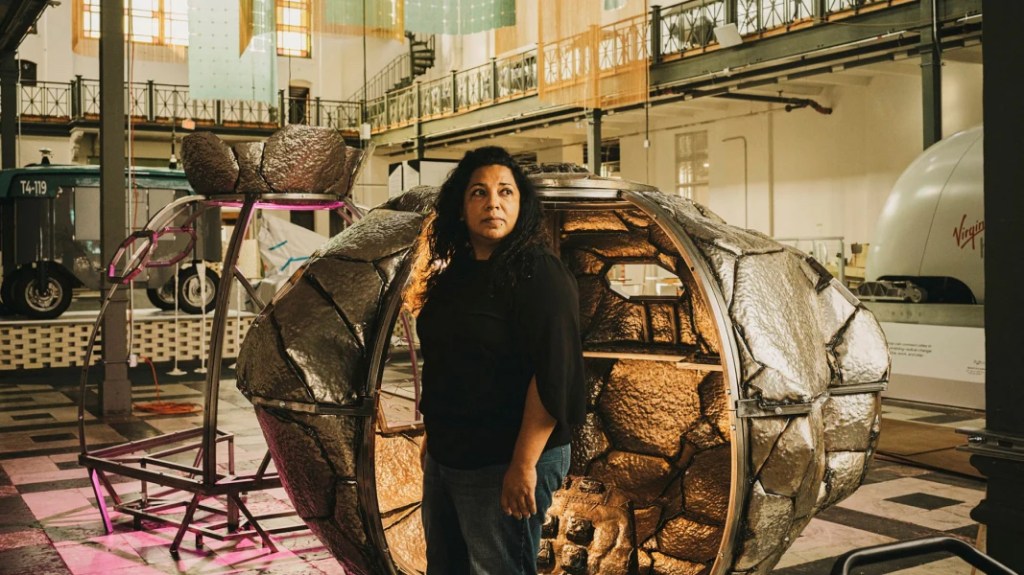
About 15 minutes’ drive from the mirrored towers of downtown Los Angeles, a shady canyon throngs with oaks, willows, sycamores, and cottonwoods. Treefrog tadpoles wriggle in the creek. Snakes hunt among the rocks. Visitors to Hahamongna Watershed Park, named after the Tongvan village that once existed there, also cannot miss the adjacent white buildings of the Jet Propulsion Laboratory, a giant research facility owned by NASA. Read the rest of this entry »
Although he has lived in Taos, New Mexico, since 1973, Larry Bell is still chiefly associated with the Light and Space movement that emerged in southern California in the 1960s. His early works epitomised the group: semi-mirrored glass cubes that, through their fleeting reflectivity, reacted to — as advertised — the light and space around them, deft exercises in highlighting the processes of perception.
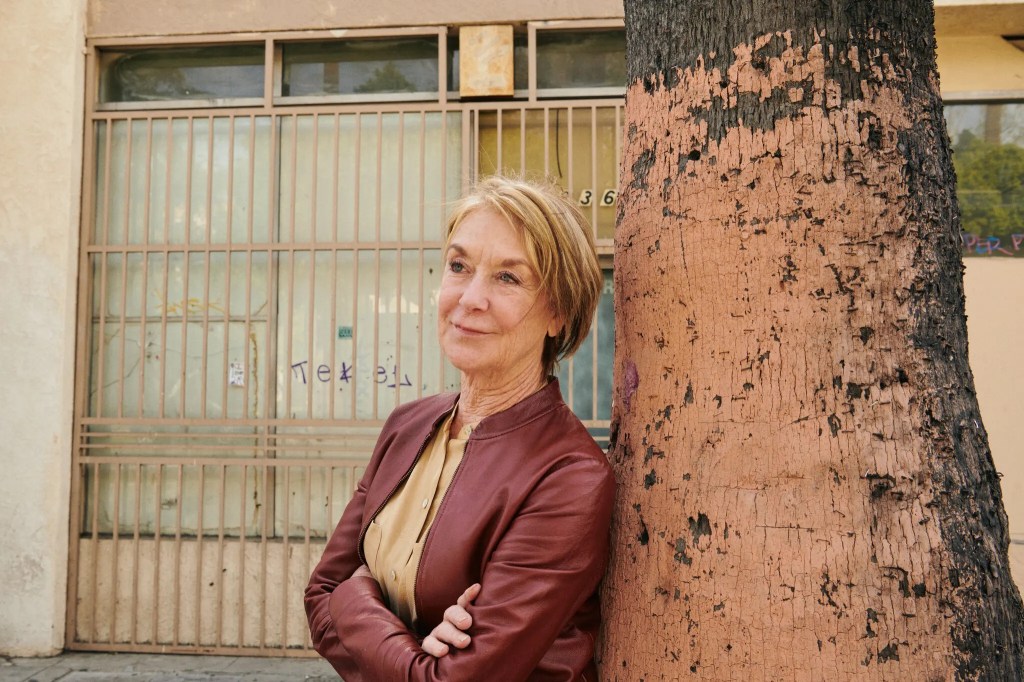
Suzanne Lacy, Los Angeles, 2022. Yudi Ela for The New York Times
On a cold day last December, sitting outside her studio in Santa Monica, Calif., the artist Suzanne Lacy talked excitedly about the coming year. In Manchester, England, exhibitions of her work were already open at the Whitworth Art Gallery and the Manchester Art Gallery. She looked forward to a prestigious fellowship at the University of Manchester in the spring.
In May 2020, the sculptor Charles Ray was driving north from his home in Los Angeles to Anacortes, in Washington state, to see a man about a boat. Locked up in the early months of the pandemic, the restless Ray got what he calls ‘Covid fever’ and, despite the entreaties of his wife Sylvia, threw a sleeping bag into the back of his car and set off for the boatyard, near the Canadian border, where he needed to make some decisions about the layout of a sailing boat that was being built for him. Ray takes sailing very seriously indeed. In 2003 he was nearly shipwrecked in the Pacific Ocean when an unlit military vessel collided with him in the middle of the night; this new boat, he tells me, is designed to accommodate his wife and her friends so Ray will not have to sail alone.
The Arts and Industries Building, built in 1881 by the Smithsonian Institution in Washington DC, began life as a place to house artefacts from the 1876 World’s Fair in Philadelphia. It became the US’s first national museum. Over the years, its purpose was rejigged as new Smithsonian museums spawned around it, and it accrued various nicknames from “the Mother of Museums” to “the Palace of Invention”.
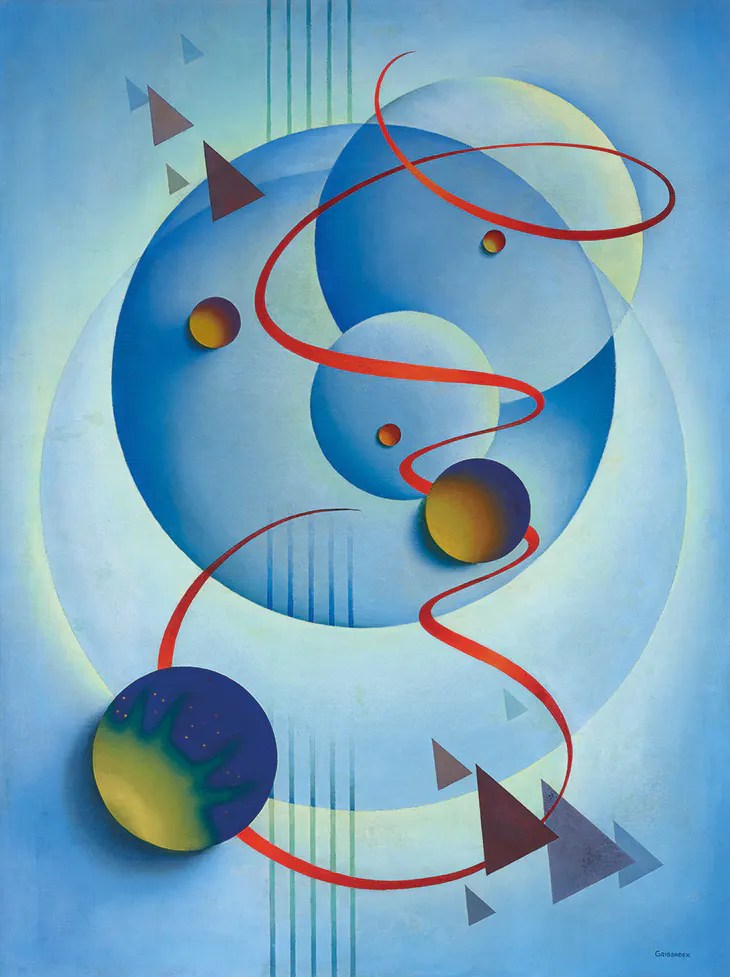
Composition #57/Pattern 29 (1938), Robert Gribboek. Fine Arts Museums of San Francisco Photo: Geistlight Photography, Albuquerque
Depending on who you ask, Helena Blavatsky was either a mystic and a sage who introduced Eastern spirituality to Western culture, with the stated aim of establishing ‘a universal brotherhood of humanity’, or she was a plagiarist, a racist and a fraud. If you ask me, she was a bit of both. Kurt Vonnegut called her ‘the Founding Mother of the Occult in America’, which is not entirely hyperbole. When she arrived from her native Russia, in 1873, the United States was already in the thrall of new religious movements such as Spiritualism, but it was Blavatsky’s co-founding of the Theosophical Society with fellow seekers Henry Olcott and William Quan Judge that cemented her influence on Western esotericism on both sides of the Atlantic.
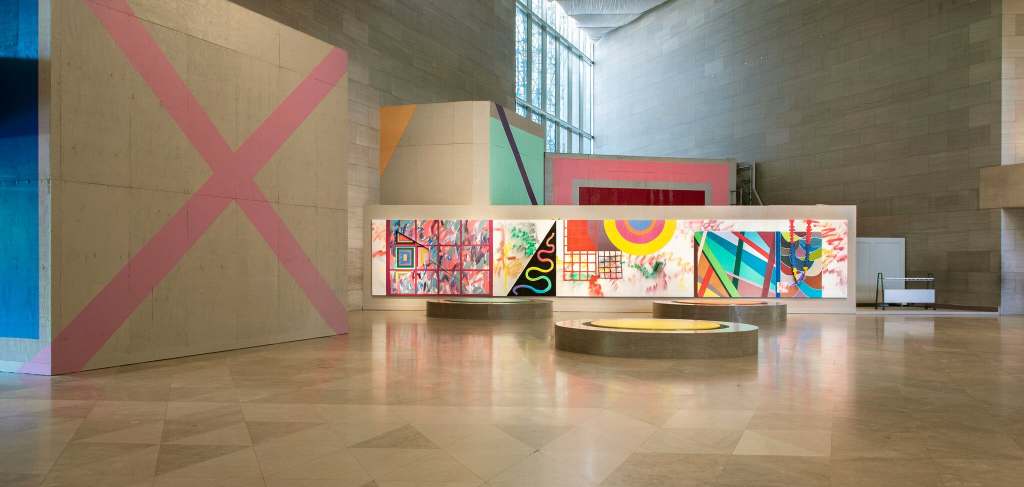
Sarah Cain, “My favorite season is the fall of the patriarchy,” at the National Gallery of Art in Washington, D.C., 2021 Photograph: Rob Shelley
Last summer, the painter Sarah Cain was contemplating the biggest project of her career: a 45-foot-long painting for the East Building Atrium of the National Gallery of Art, in Washington, D.C. Cain, 42, has been making caustically colorful, improvised abstractions since the mid-2000s and had been commissioned to hide construction walls during refurbishment of the atrium’s skylight. Nearby sculptures by Max Ernst, Isamu Noguchi and Richard Serra, too large to relocate, were protected by wooden boxes. Cain was tasked with painting on the boxes, too — each bigger than her studio. (And she needed a title.)


 Jonathan Griffin