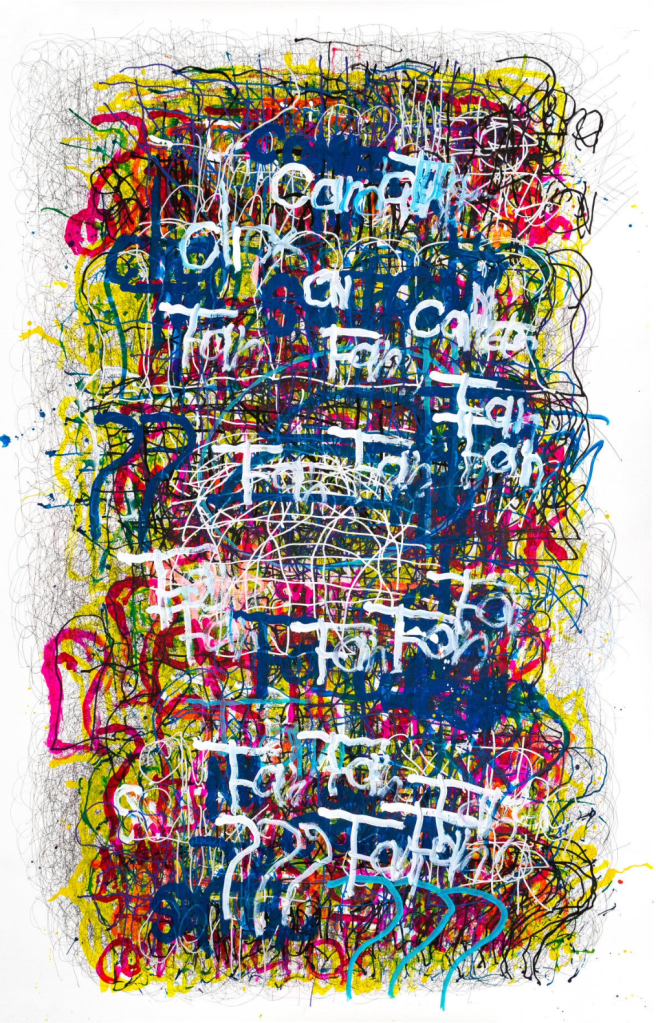
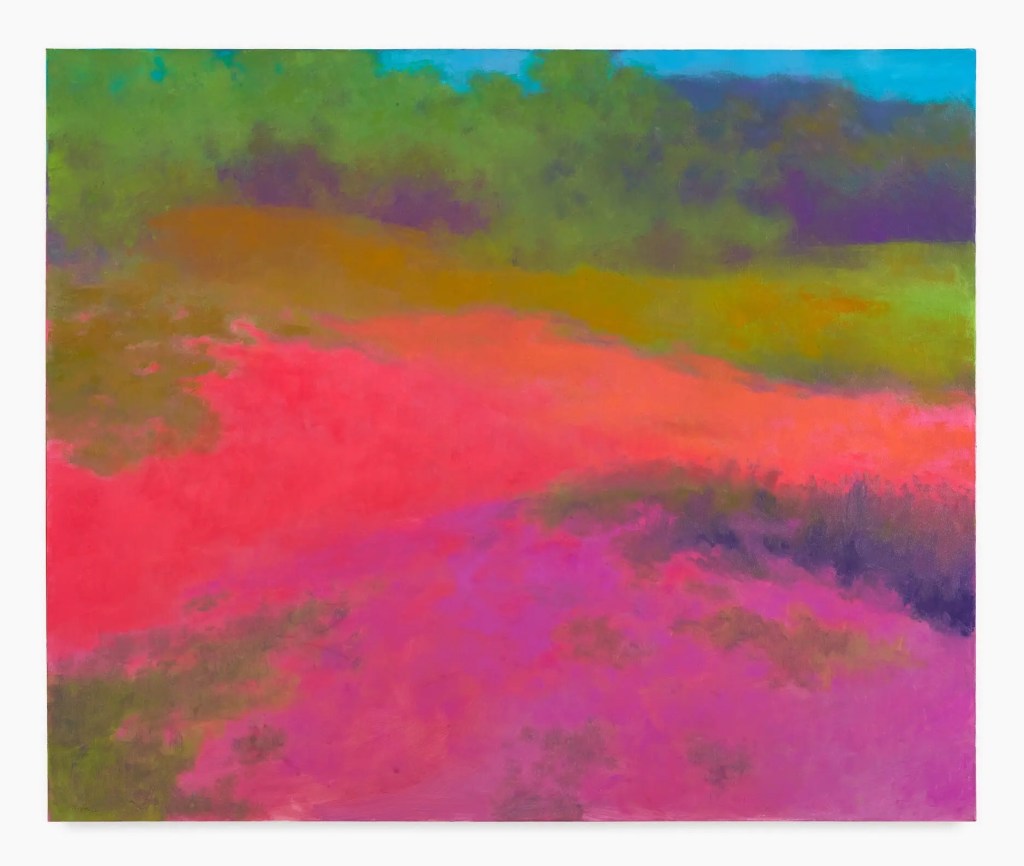
Dan Miller, “Untitled” (2021) Courtesy: San Francisco Museum of Modern Art
In 1974, Florence Ludins-Katz and Elias Katz — she an artist, he a psychologist — turned the garage of their Berkeley home into an art studio for adults with developmental disabilities. Across California at that time, people with a range of disabilities were being deinstitutionalized, with little provision made for them after their release. The Katzes viewed art-making as a pathway not only to personal fulfillment for disabled people, but also to their integration into a society that valued their work.
Sometimes, you only notice something when it’s gone. In the past few months, I have become aware of the absence, in a growing number of artists’ work, of narrative—in particular, narrative about these artists’ biographies or identities. Much of this work is abstract, often purely abstract, and it seems that more and more people, myself included, are lately being drawn to this type of nonobjective and nonliteral work. Historically, abstraction in visual art developed along two parallel avenues: the distortion of things seen in the world (Paul Cézanne, Pablo Picasso) and the invention of entirely nonobjective forms (Kazimir Malevich, Wassily Kandinsky, Hilma af Klint). The contemporary work I have been noticing is, by and large, aligned with the latter stream of abstraction. In something of a departure from the dominance of identity-centered figuration in recent years, much contemporary abstraction is being made by artists of color who are resistant to foregrounding their identities through narrative. As mixed-media artist Teresa Baker described her abstract paintings to me, she noted that it is work that “should speak for itself. I shouldn’t have to give words to it.” Her position is echoed by Rema Ghuloum, a painter based in Los Angeles, who told me: “I really want the work to speak for itself.”
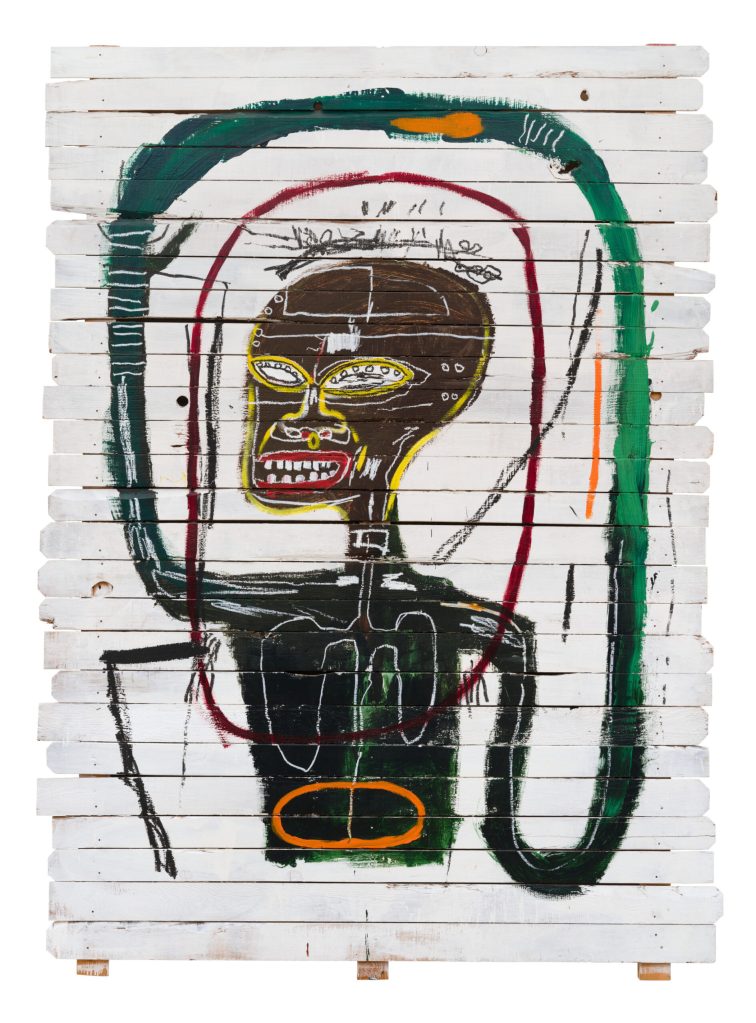
In October 1981, when the art dealer Larry Gagosian first laid eyes on a painting by Jean-Michel Basquiat, he had never heard of the artist. “My hair stood on end,” he said of seeing the 20-year-old’s work. Just six months later, when Basquiat opened a solo show at Gagosian’s gallery in West Hollywood, the place, Gagosian recalled in an interview, “was absolutely mobbed.”
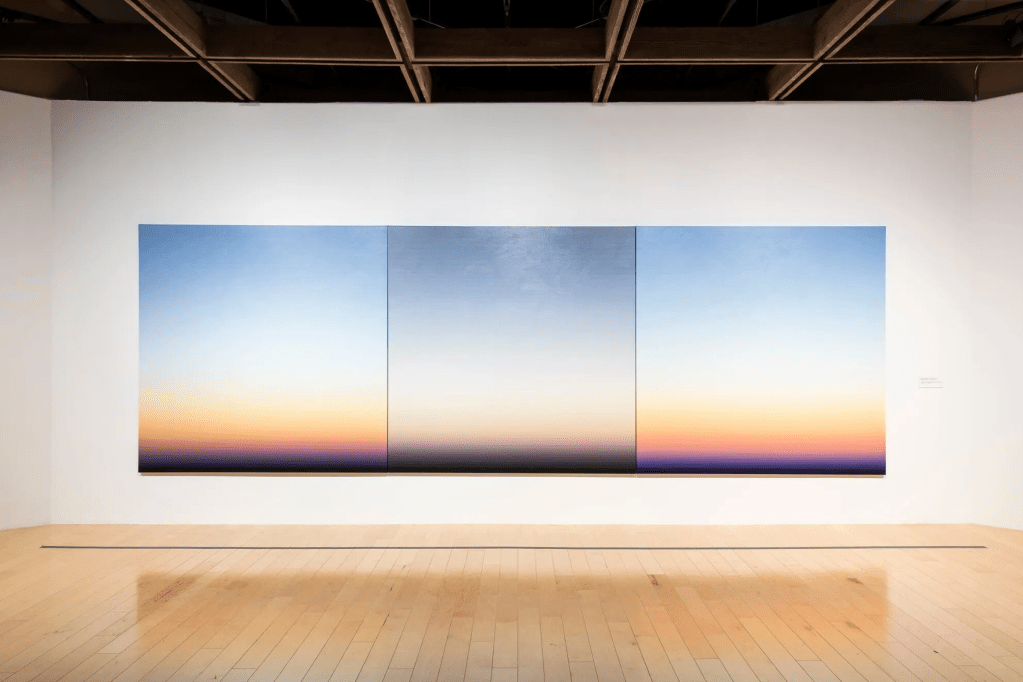
Norman Zammitt, “Caly-forny-ay,” 1987. Credit…RJ Sánchez/Solstream Studios, via Palm Springs Art Museum
Aesthetically, Los Angeles is mostly a mess. Unplanned, mismatched buildings sprout like fungus among the grid of its streets, whose orderly classicism is often disrupted by tectonically induced hills. Curbs crumble and sidewalks crack beneath telegraph poles festooned with cables. Flamboyant succulents mingle with scrubby native plants.
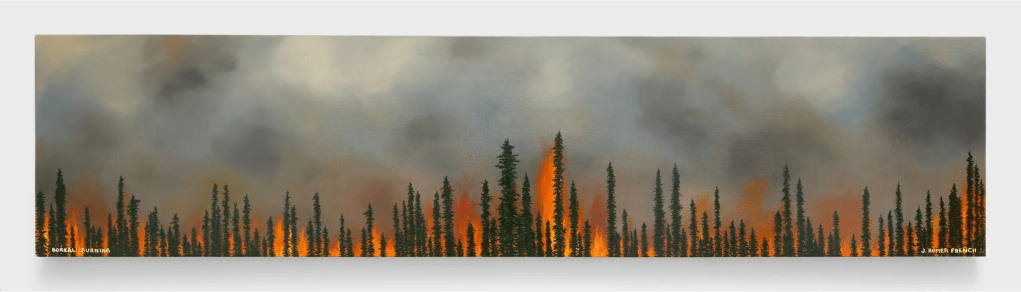
Jessie Homer French, “Boreal Burning,” 2022.Courtesy: Jessie Homer French, MASSIMODECARLO, and Various Small Fires
On a sunny autumn morning, in Jessie Homer French’s garage-studio, up several miles of mountain switchbacks from Palm Desert, Calif., a dozen canvases are propped on shelves in various stages of completion. Most are landscapes. Three depict cemeteries, a recurrent subject for the 83-year-old self-taught artist. Standing out among the browns and the greens, however, are two pictures of wildfires, in furious tones of orange, yellow and black.
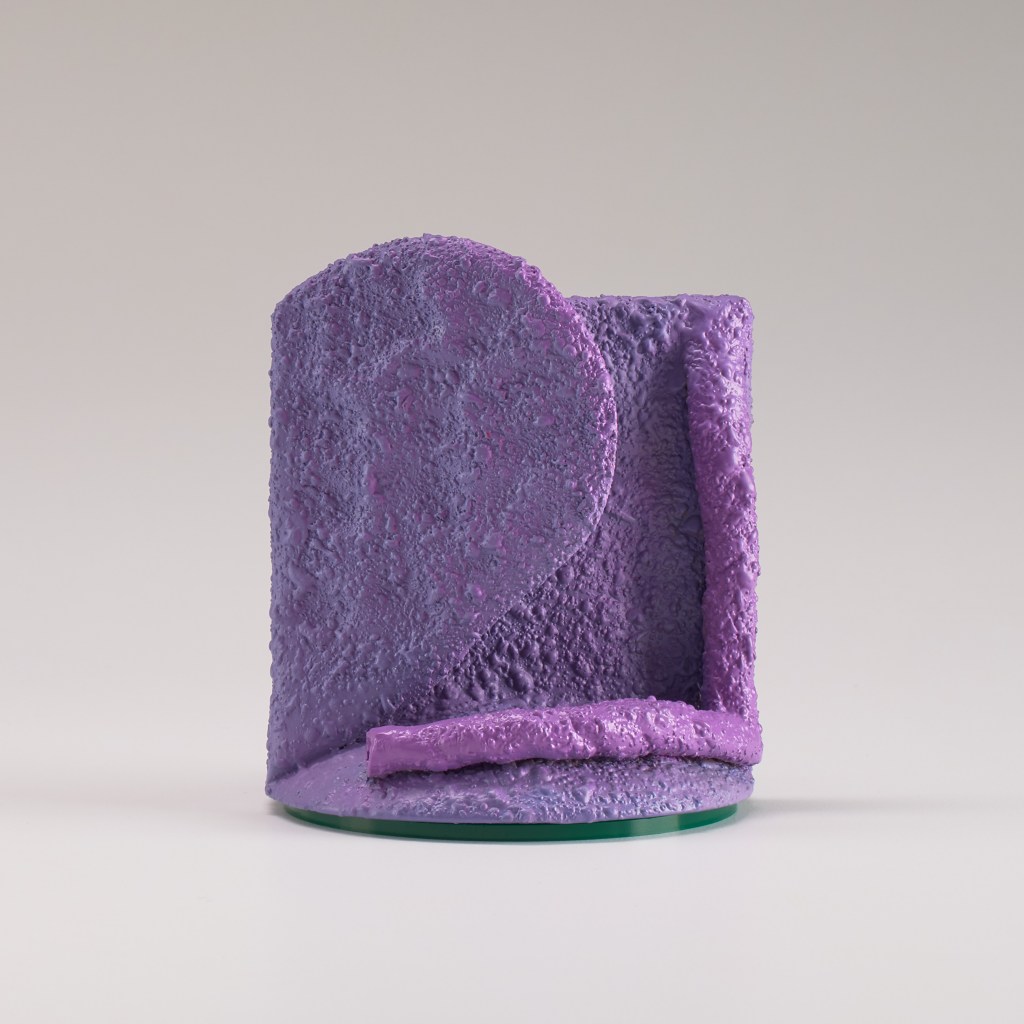
To mark the occasion of his double-bill exhibition at both the Bury Street and Helmet Row galleries of Modern Art in London, Ron Nagle had his nails done. Specifically, just his thumbnails: black on his right, pale pink on his left.
The story, as literary theorist Peter Brooks has observed, is today’s dominant cultural form. To Brooks, this “overabundance” of narrative is worrying: he criticizes the deference of virtually all strands of culture (not only literature, TV, and movies but art, museology, and—especially—news media) to the persuasive rhetorical power of the story.1 I share many of his concerns. “The universe is not our stories about the universe,” he writes, “even if those stories are all we have.”2
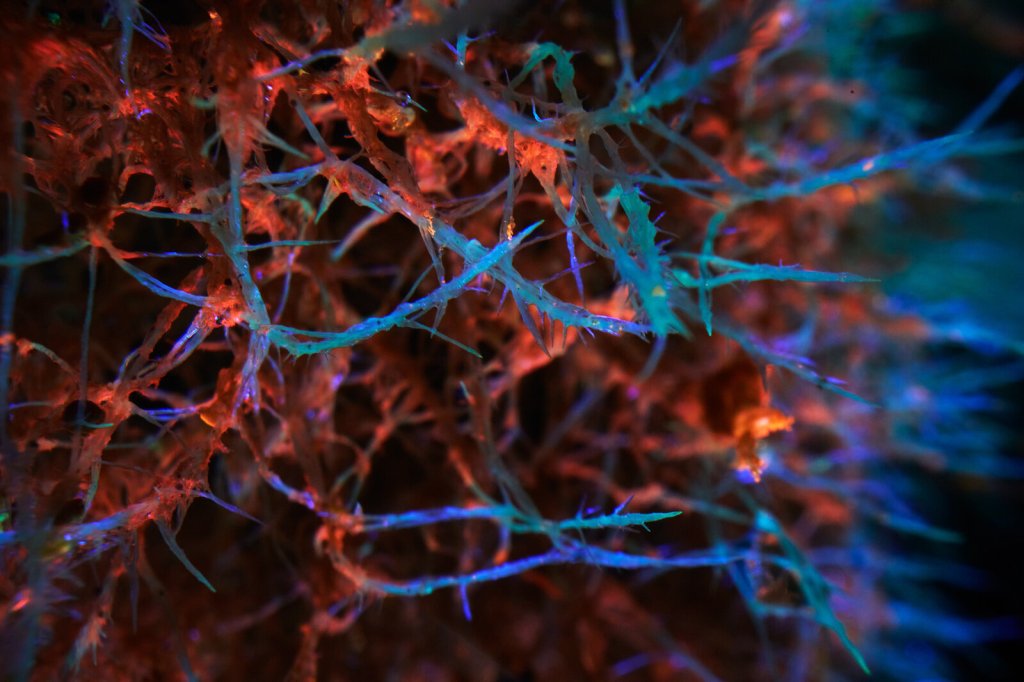
Richard Mosse, Still from Broken Spectre VIII, Llanganates Sangay Ecological Corridor, Ecuador, 2022. Courtesy: Altman Siegel, San Francisco; Jack Shainman Gallery, New York
In 2018, the artist Richard Mosse was understandably weary. He had spent most of the last decade in places torn by conflict and civil unrest.
In the early 2010s, the Irish-born New York-based artist had worked for five years in the Democratic Republic of Congo, photographing and filming the humanitarian disaster that has claimed millions of lives and displaced millions more. That project led to another video and photographic series focusing on the European refugee crisis unfolding around the Mediterranean. Before that, he had embedded with the U.S. Army in Iraq.
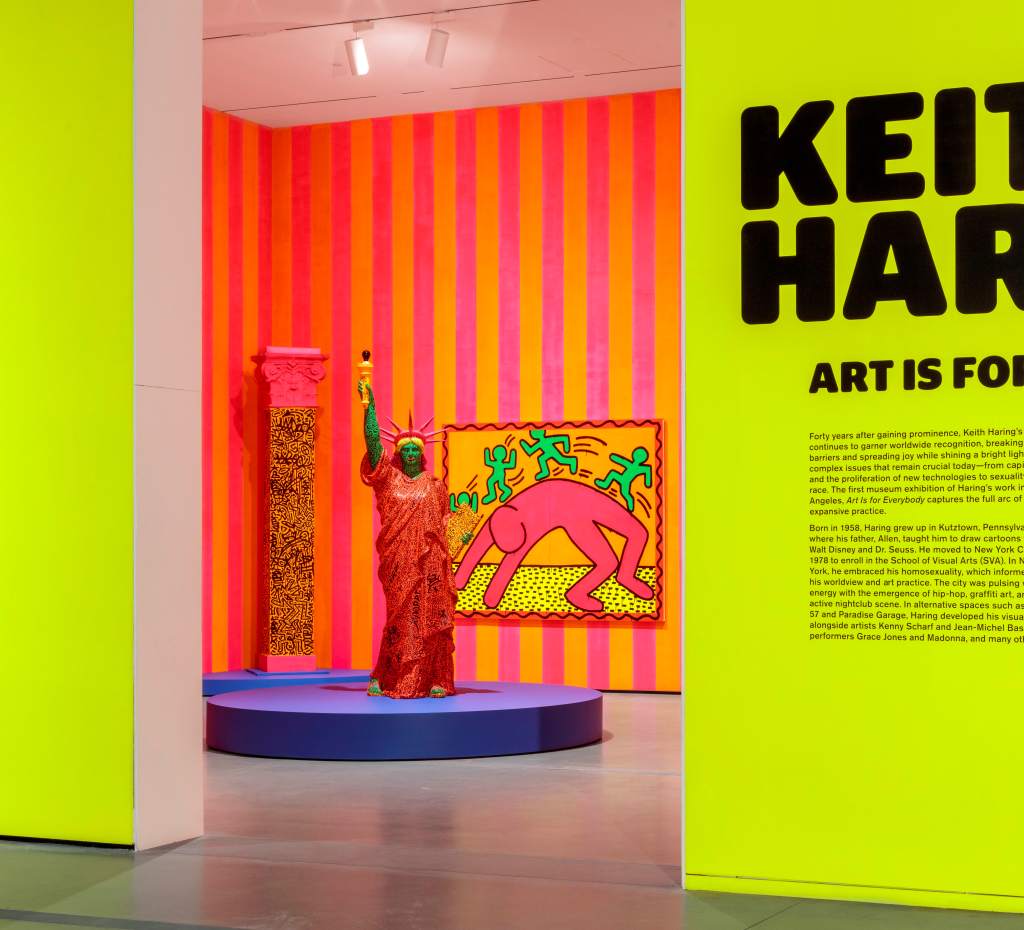
Installation view of Keith Haring: Art Is for Everybody exhibition at The Broad, Los Angeles. Photo: Joshua White/JWPictures.com, courtesy of The Broad
The Broad, Los Angeles
I predict few will linger long enough to absorb the four paragraphs of potted biography on the neon yellow wall welcoming visitors to ‘Keith Haring: Art Is for Everybody’, before surging onward into the first gallery, which is painted with fluorescent pink and orange stripes. The green and orange Statue of Liberty (1982) commands the room, graffitied to high heaven by Haring and his then-15-year-old collaborator, LA II (Angel Ortiz). Nearby is a Corinthian column, similarly improved, while on the walls hang Haring’s Day-Glo paintings on muslin, aluminium and Formica.
Pamela’s Aura, 2004, Courtesy Richard Mayhew and Venus Over Manhattan, New York
The painter Richard Mayhew, who recently celebrated his 99th birthday, has lived through as broad a swath of this nation’s history as anyone you might hope to meet.
Sitting at a patio table outside his cedar-shingled suburban home in Soquel, near Santa Cruz, Mayhew leaned back in his chair and reflected on his long life.
“I drove across the United States six times,” he said. “Three over, and three back, from New York to San Francisco. I was always looking.”

 Jonathan Griffin