Howardena Pindell, Untitled #100, 1979, Mixed media on board, 13 1/2 x 10 1/2 inches, Courtesy: Garth Greenan, New York
Many – if not all – artists eventually acquire origin stories, formative experiences to which all their subsequent artistic achievements can plausibly be traced. Tony Smith had his night-time drive on the unfinished New Jersey Turnpike; Louise Bourgeois had her father’s affair; Andy Warhol had his time drawing ads for shoes. Such stories become more meaningful as they recede in time, ossifying with use and reuse.
Of all the plastic ever produced by humankind – over nine billion tonnes and counting – less than nine percent has been recycled. Some was burnt. Most of it went into landfill. This tally is not improving. Since 2017, when China stopped importing plastic waste, developed countries have been recycling less, not more.
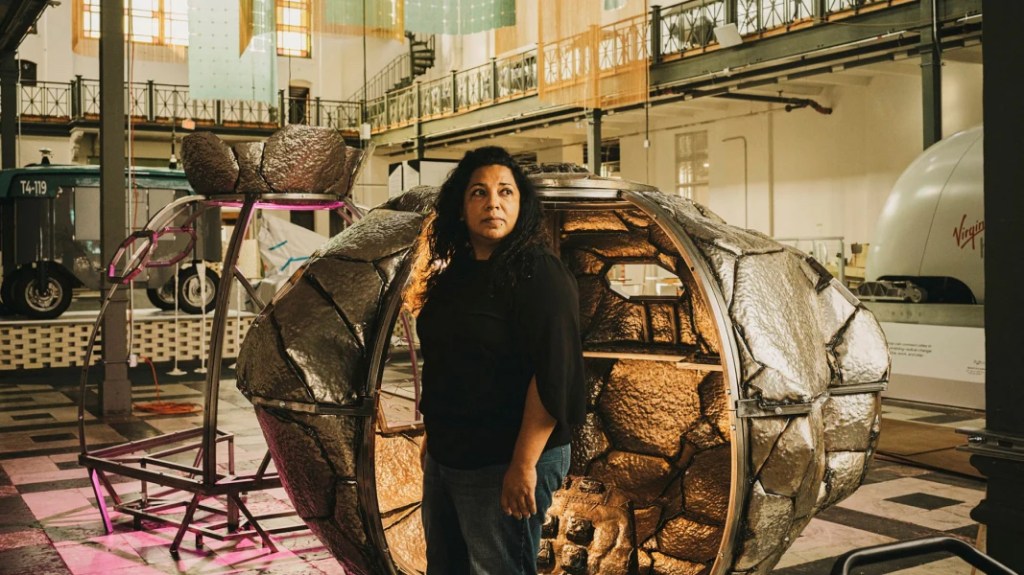
The Arts and Industries Building, built in 1881 by the Smithsonian Institution in Washington DC, began life as a place to house artefacts from the 1876 World’s Fair in Philadelphia. It became the US’s first national museum. Over the years, its purpose was rejigged as new Smithsonian museums spawned around it, and it accrued various nicknames from “the Mother of Museums” to “the Palace of Invention”.
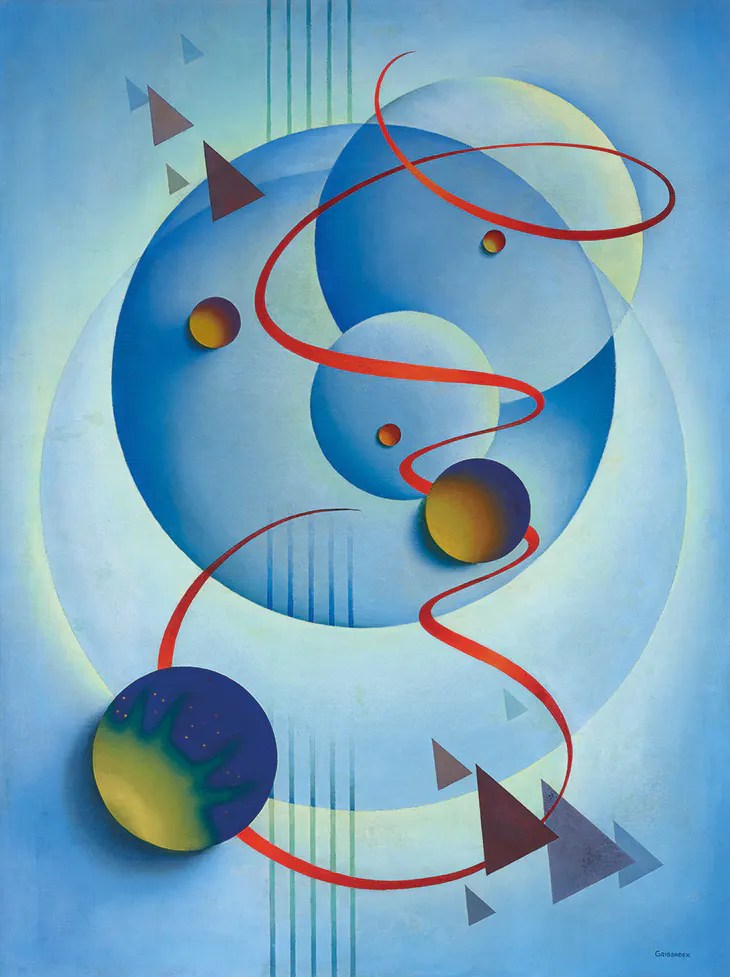
Composition #57/Pattern 29 (1938), Robert Gribboek. Fine Arts Museums of San Francisco Photo: Geistlight Photography, Albuquerque
Depending on who you ask, Helena Blavatsky was either a mystic and a sage who introduced Eastern spirituality to Western culture, with the stated aim of establishing ‘a universal brotherhood of humanity’, or she was a plagiarist, a racist and a fraud. If you ask me, she was a bit of both. Kurt Vonnegut called her ‘the Founding Mother of the Occult in America’, which is not entirely hyperbole. When she arrived from her native Russia, in 1873, the United States was already in the thrall of new religious movements such as Spiritualism, but it was Blavatsky’s co-founding of the Theosophical Society with fellow seekers Henry Olcott and William Quan Judge that cemented her influence on Western esotericism on both sides of the Atlantic.
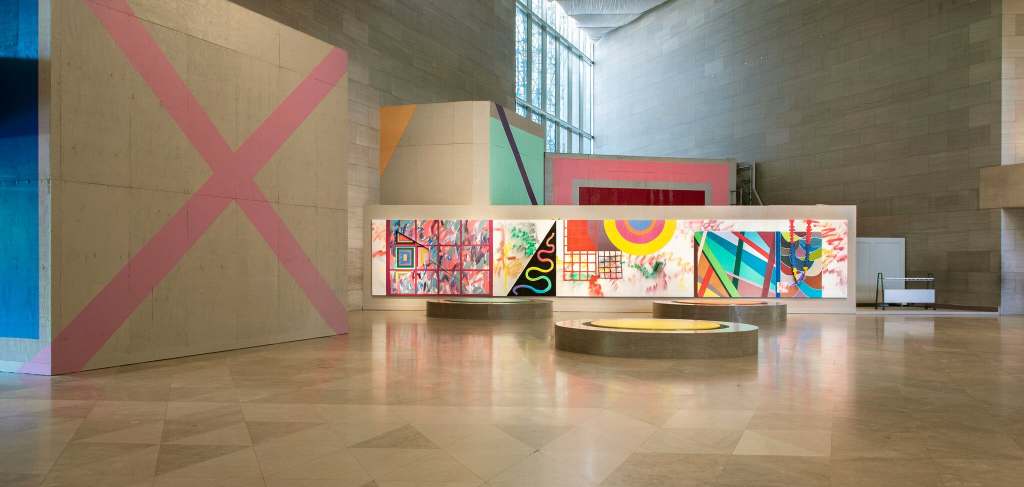
Sarah Cain, “My favorite season is the fall of the patriarchy,” at the National Gallery of Art in Washington, D.C., 2021 Photograph: Rob Shelley
Last summer, the painter Sarah Cain was contemplating the biggest project of her career: a 45-foot-long painting for the East Building Atrium of the National Gallery of Art, in Washington, D.C. Cain, 42, has been making caustically colorful, improvised abstractions since the mid-2000s and had been commissioned to hide construction walls during refurbishment of the atrium’s skylight. Nearby sculptures by Max Ernst, Isamu Noguchi and Richard Serra, too large to relocate, were protected by wooden boxes. Cain was tasked with painting on the boxes, too — each bigger than her studio. (And she needed a title.)
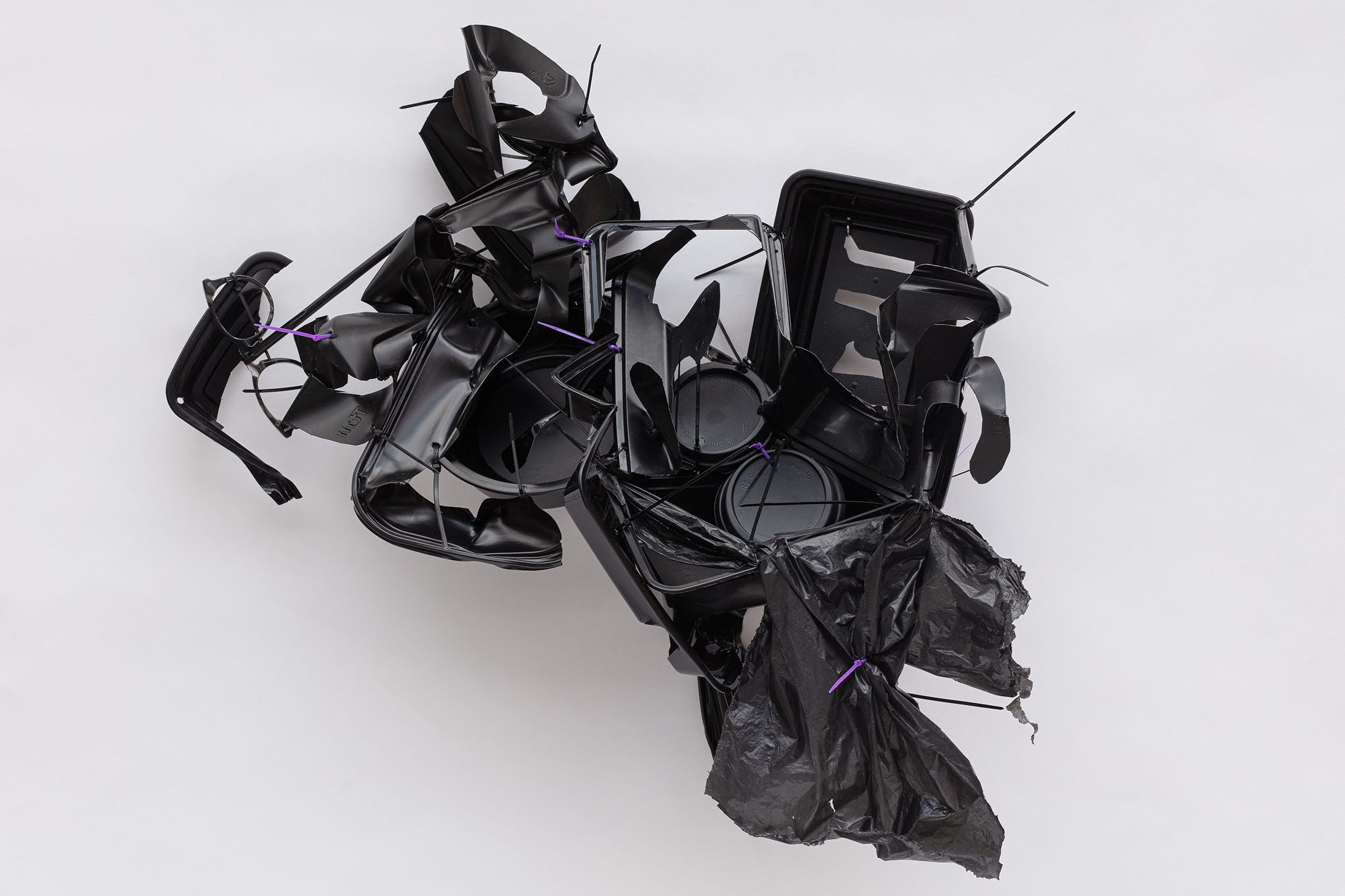
SoiL Thornton, Bench/barrier (314 lbs), 2021, Aluminum foil and aluminum foil tape compressed to the combined weight of momma and deddy, 29x25x16 inches. Courtesy of the artist and Morán Morán, Los Angeles
A squat, silver boulder partially blocks the entrance to SoiL Thornton’s deceptively loose exhibition at Morán Morán, Los Angeles. Bench/Barrier (314 lbs) (all works 2021) consists of a rolled ball of aluminium foil ‘compressed to the combined weight of momma and deddy’, the checklist reveals. Within the ordinarily starchy format of the gallery checklist, the fond familiarity in the way Thornton acknowledges this detail of the work’s media is jarring, cloying even. Throughout their practice, the artist prises open such spaces for vulnerability and revelation within the stringent conventions of conceptual and systems art.
Rachel Kushner at home in Los Angeles. Clifford Prince King for The New York Times
At one point in Rachel Kushner’s recently published novella, “The Mayor of Leipzig,” the narrator, an American artist, reveals: “I personally know the author of this story you’re reading. Because she thinks of herself as an art-world type, a hanger-on.”
Shahryar Nashat, “THEY COME TO TOUCH”, 2021. Courtesy of the artist; David Kordansky Gallery, Los Angeles; and Gladstone Gallery, New York. Photo by Elon Schoenholz.
I still do not really know what color the fitted carpet is that runs through the three floors of 8762 Holloway Drive in West Hollywood. Some shade of sage green, I’d guess, but it could be more lime, maybe more grass, maybe more gold. I do not know because Shahryar Nashat has covered every window in the building with a pink film (again, hard for my dazzled eyes to calibrate) that suffuses the space in a discombobulating, low-contrast pall—akin to the pulsing non-color that appears when you face into the sun with your eyes closed.
The Hammer Museum, Los Angeles, and the Huntington Museum, Art Collections, and Botanical Gardens, San Marino
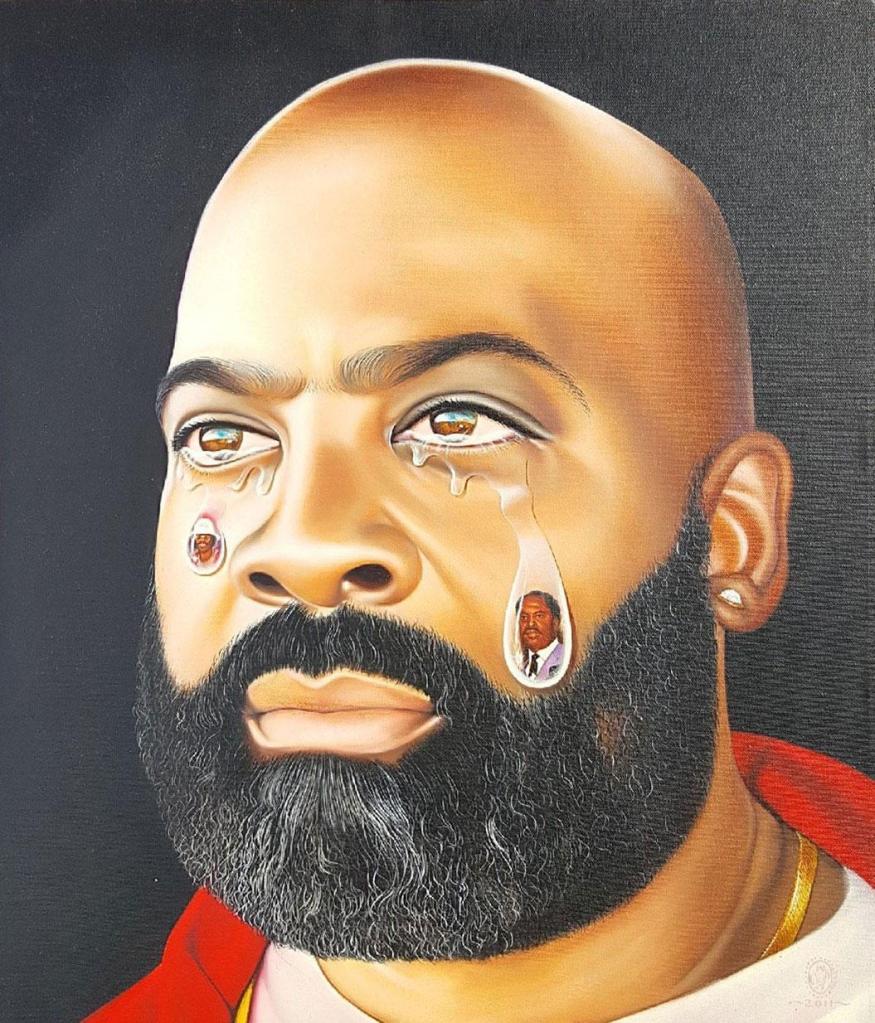
Fulton Leroy Washington (aka MR. WASH), Mr. Rene # MAN POWER, 2011, oil on stretched canvas, 61 × 50.8 cm. Courtesy: the artist, The Huntington Library, Art Museum, and Botanical Gardens, San Marino and Hammer Museum, Los Angeles
Before entering the long-delayed (and now revised) ‘Made in L.A. 2020: a version’, I pitied its poor curators, whose exhibition has been kyboshed by a succession of lockdowns. Originally scheduled to open in June, the biennial – split this year between the Hammer Museum and the Huntington Library, Art Museum and Botanical Gardens in San Marino – has lain partly dormant, partly unfinished. With (almost) all works installed, museum leaders allowed in a few members of the press, who, they hoped, might grant ‘Made in L.A. 2020’ a little exposure to daylight. (The biennial is currently expected to open to the public next year.)1
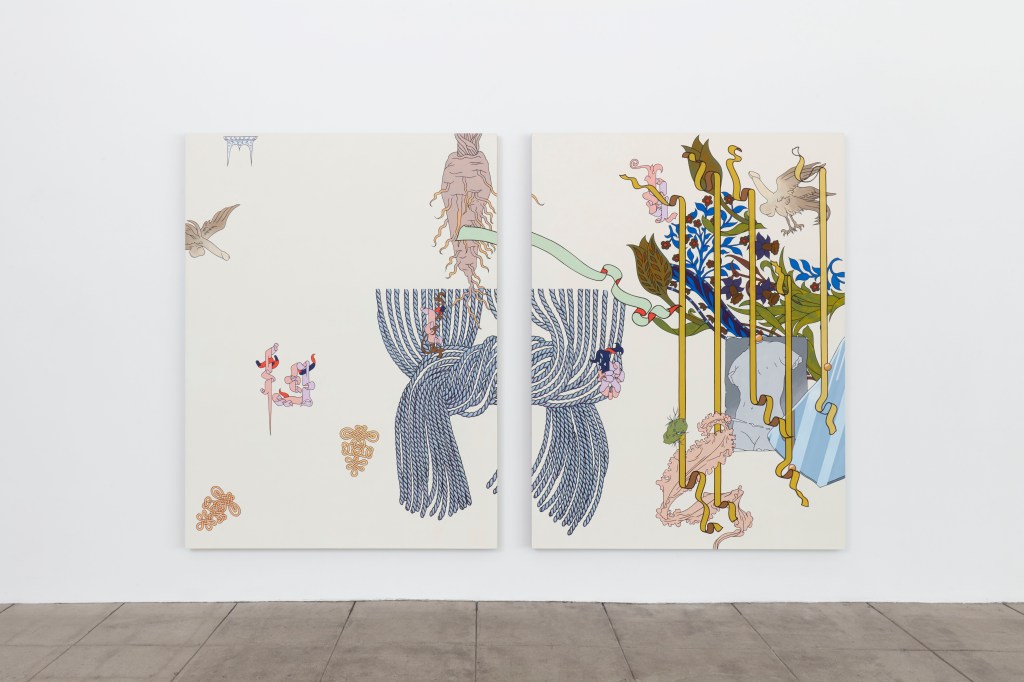
Caitlin Keogh, Waxing Year 1 and Waxing Year 2, (both 2020) Courtesy: the artist and Overduin & Co., Los Angeles
Caitlin Keogh’s ambitious exhibition, ‘Waxing Year’, at Overduin & Co in Los Angeles – which includes a group of seven large paintings interspersed with ten small, mixed-media assemblages – is, in many respects, a tour de force. Why, then, does it leave me wanting something more?



 Jonathan Griffin