Jonathan Griffin

Criticism and essays on art and culture

Category: Feature

Allen Ruppersberg

Ruppersberg hotel

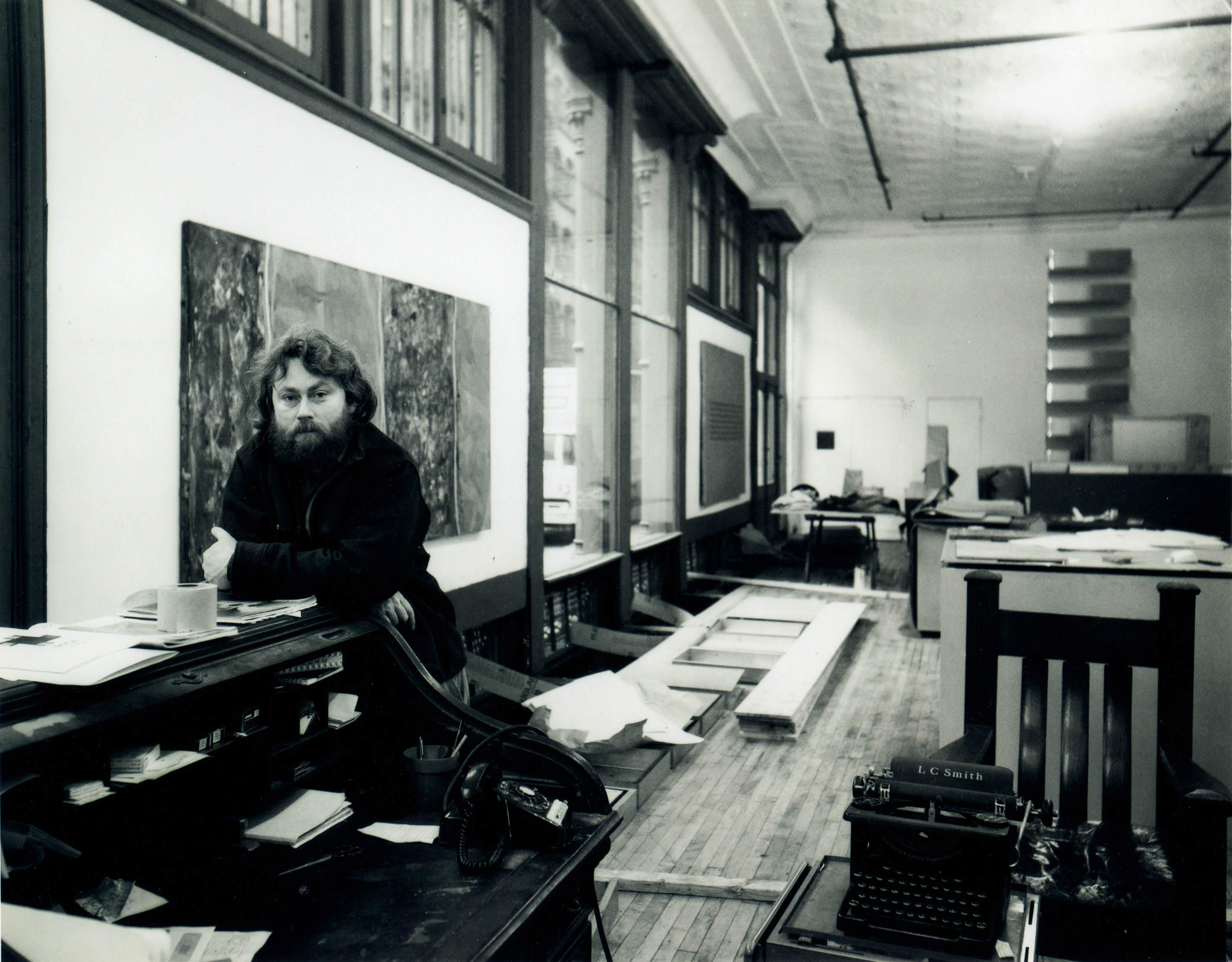
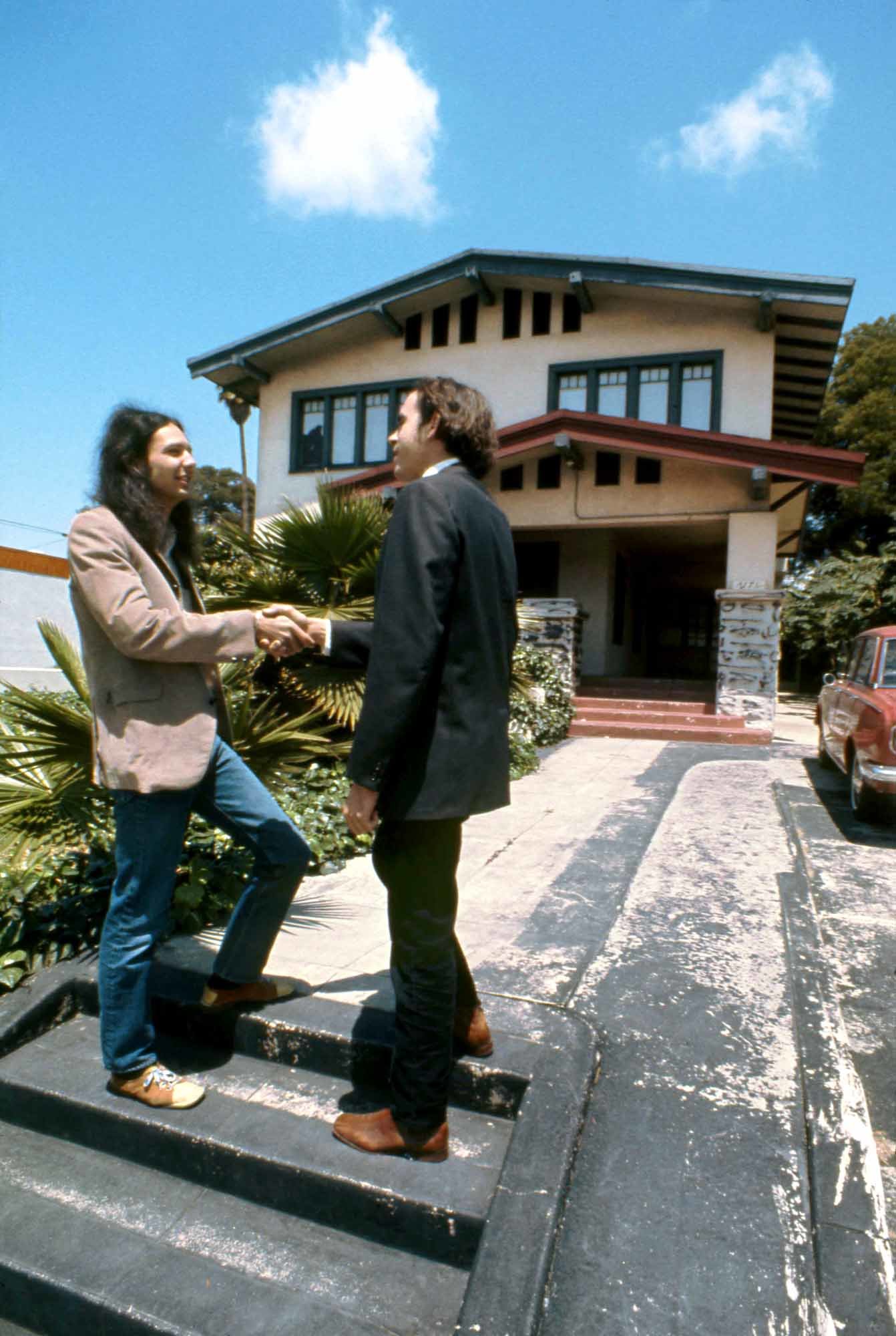
At 6am on 9 February, 1971, Allen Ruppersberg was thrown out of bed onto the floor of his studio. Later, he would learn that the 6.6 magnitude earthquake – Los Angeles’ worst in decades – had killed 64 people and caused half a billion dollars in damage. It also delayed construction of the new California Institute of the Arts (CalArts), 30 miles north of Los Angeles in Valencia. When CalArts finally occupied its new building in November that year, the progressive school ushered in a new era for Los Angeles’ art world. Read the rest of this entry »

Samara Golden

SamaraNG2014-4-CMYK

Like many children, when she was young Samara Golden liked to lie with her legs over the back of the sofa and look at the room upside down. She was fascinated by the space that appeared: when the ceiling became the floor, the room became strange, much bigger, more exciting – large items of furniture now dangling down from above and all the clutter lofted up there too – and though physically real, only accessible from Golden’s singular, inverted viewpoint. Read the rest of this entry »

Mark Leckey

Leckey 14-CMYK-retouched
‘I smell things. I listen to things. I feel things. I taste things. I look at things. It is not enough to look and listen and taste and smell and feel, I have to do those to the right things, such as look at books, and fail to do them to the wrong things or else people doubt that I am a thinking being.’

Amanda Baggs’s YouTube video, In My Language (2007), shows her silhouetted against a window, fluttering her hands through the air in front of her. Her motions are repetitive: she rocks back and forth, she jangles wire around a doorknob, she passes her finger through the stream of water from a tap. All the while she is humming – singing along with what is around her, as she puts it. Read the rest of this entry »

Frances Stark

Frances-Bobby-Jesus's-Alma-Mater_web

“What is this? 
This is me writing.”

So begins a text Frances Stark wrote in 2002, part of a handmade publication titled The Unspeakable Compromise of the Portable Work of Art. For two decades Stark has been writing about writing, and making art about the vexing processes of artistic production. If that sounds limited in scope or overly solipsistic, then consider the range of themes that this activity has, in Stark’s hands, enlisted. From performance anxiety and creative block to exhibitionism (peacocking, as she often characterizes 
it), to the art market and artist community, to pedagogy, her favorite music and books, her sexuality, and her family, the Los Angeles–based Stark has never lacked for material. Everything in her life has the potential 
to be incorporated into her art. Her collage Push, 2006, shows exhibition invitation cards flying through her mail slot like a horizontal tornado. Read the rest of this entry »

Close Encounters

Do initiatives like the Google Art Project help us see more – or less?

Brueghel-tower-of-babel

These days, websites have trailers. The ‘teaser’ video on YouTube for the Google Art Project opens, sedately enough, with a painting hanging on a wall. From middle distance, Pieter Breughel the Elder’s The Tower of Babel (1563) looks as if the colossal edifice is collapsing rather than growing. But then the camera zooms in, drawing closer and closer to the painting, eventually coming so close that it bursts through a tiny dark window in the tower. Whammo! Read the rest of this entry »

Seeds of Destruction

A History of Iconoclasm in British Art

Dead Christ (1500–20) Courtesy: The Mercers' Company

Dead Christ (1500–20)
Courtesy: The Mercers’ Company

In 1957, the artist Gustav Metzger mounted an exhibition of damaged art in King’s Lynn. ‘Treasures from East Anglian Churches’ was a selection of sacred artefacts that had been attacked during the period of iconoclasm between the English Reformation in the 1530s and the Commonwealth of 1649–60 when Britain, under the Puritan Oliver Cromwell, was effectively a republic. Metzger already knew plenty about annihilation. Born to Jewish parents in Nuremburg, he was evacuated via Kindertransport to England in 1939 at the age of twelve, just as Nazi Germany was engaging in genocide against its own people. His parents disappeared soon after. In the 1950s he was involved in activism, first with the Committee for Nuclear Disarmament and then as a founder of the Committee of 100. Later he made art born of material violence; nylon panels that he corroded with acid, and liquid crystal projections that melted and reformed under the heat of the projectors. He called it Auto-Destructive Art.

Read the rest of this entry »

Donald Judd

Donald Judd, 101 Spring Street, 1970. Photo by Paul Katz.
© Judd Foundation. Courtesy Judd Foundation Archives


How do you feel about the term Minimal Art?’ asks the art historian Barbara Rose. ‘Well I don’t like it,’ replies Donald Judd, leaning into the table and smiling shyly. ‘What’s minimal about it?’ Scattered across the bare floorboards of the warehouse loft behind him are a tricycle, a child’s painting, a small forest of cacti in terracotta pots, a toy truck and an open trunk. Read the rest of this entry »

Richard Greaves

Richard Greaves2

Photo: Mario del Curto


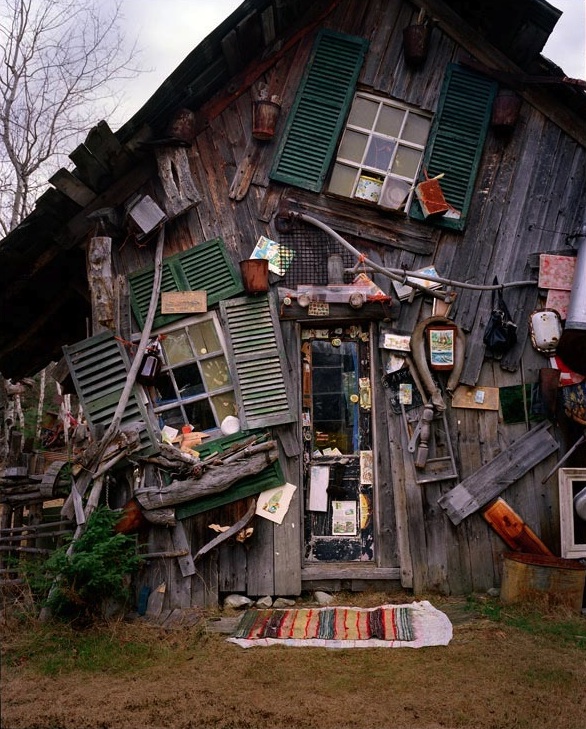
Richard Greaves turned his back on the city in 1984. In Montreal he had studied hotel management, graphic design and then theology. Unfulfilled, he packed his bags and settled on a mile-long strip of land in the Quebec backwoods that he had purchased some years before with a group of friends as a weekend getaway. The plot, when they bought it, was untouched save for two modest houses at one end, beside an unpaved track. Greaves began to build. Read the rest of this entry »
Carl Andre

Carl Andre building 'Cedar Piece', 1964

What is the most important thing to say about Carl Andre? Carl can’t remember. ‘What was it I once said?’ he responds when I ask him which, of all his contributions to the history of art, he is most proud of. ‘I didn’t make a great contribution but all I did was add the … It was something like …’ He tails off. ‘My mind is gone. I have no memory,’ he says simply and equitably. At 77, Andre is one of the most important living artists in America. Melissa Kretschmer, his wife, cuts in. She accompanies us throughout our conversation; nearly three decades Andre’s junior, she is better able to recall some of the details that evade her husband. Read the rest of this entry »

Anthony Pearson

The Man Who Wasn’t There

pearson5
‘A painting that is an act,’ wrote Harold Rosenberg in his trenchant 1952 essay ‘American Action Painters’, ‘is inseparable from the biography of the artist. The painting itself is a “moment” in the adulterated mixture of his life.’ He continues: ‘With traditional aesthetic references discarded as irrelevant, what gives the canvas its meaning is not the psychological data but rôle, the way the artist organizes his emotional and intellectual energy as if he were a living situation. The interest lies in the kind of act taking place in the four-sided arena, a dramatic interest.’1 Read the rest of this entry »