Jonathan Griffin

Criticism and essays on art and culture

Category: Feature

William Klein

You might know William Klein for the striking black and white photographs he took for Vogue in the 1950s and 60s, showing couture models cutting through the hubbub of New York and Rome. These, and his documentary street photographs – full of movement and danger and noise – are the subject of a forthcoming exhibition at Tate Modern, shared with the Japanese photographer Daido Moryama. Or perhaps you know him for Mr Freedom, his 1969 political satire about a feckless American superhero in France, or his send up of the fashion industry, Qui êtes-vous, Polly Maggoo?, released three years previously. You might even, if you’re a boxing fan, know his documentary Muhammad Ali: The Greatest 1964-74. Read the rest of this entry »
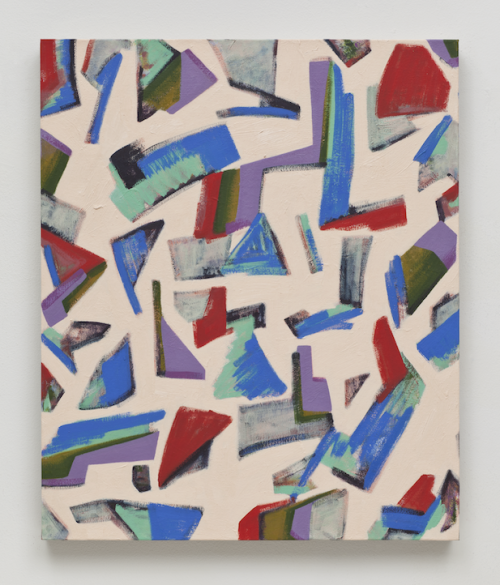
Dianna Molzan

molz

Every painting — every good painting, at least — is a problem. This problem can come in all shapes and sizes: a problem with the world, a problem with painting, a problem with one’s self. Whether it’s the curious vibrational effect of two colors in proximity to one another or the crisis of consumer capitalism, a painting embodies or responds to the impetus for its own creation. Not all paintings solve their problems; most don’t even come close. Many create more problems. That’s okay. Read the rest of this entry »

Learning by Heart

Ken Price, Echo (1997) ©2012 Ken Price, photo ©2012 Fredrik Nilsen

Ken Price, Echo (1997) ©2012 Ken Price, photo ©2012 Fredrik Nilsen

Adrian Searle once claimed, in the pages of this magazine: ‘Everything I know, I think I’ve learnt from artists.’ In wondering, as I often have, whether what he said could be true and, if so, whether it could be true for me too, I’ve found myself asking what an education solely directed by art and artists would consist of. Read the rest of this entry »

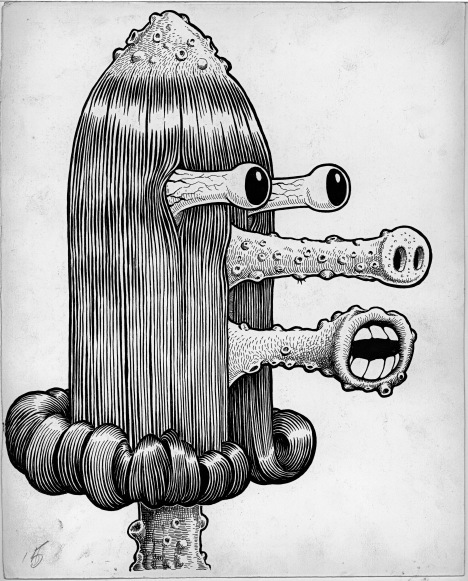
On the Grotesque

Basil Wolverton, Heap, 1955
© The Wolverton Estate. Courtesy Gladstone Gallery, New York

The grotesque got its name by mistake. When, one day in fifteenth-century Rome, a young man fell into a hole in a hillside, he assumed he’d discovered a Roman grotto. He fetched a lantern and found wild frescoes over the grotto’s walls: half-human, half animal figures, with legs and arms transforming into curling vines or ornamental volutes. In fact, he had stumbled upon Nero’s buried Villa Aurea, the raised floor level giving the rooms a grotto-like appearance. Nevertheless, the term “grotteschi” stuck as a label for this newly discovered style that radically dissented from the classical restraint to which the Renaissance had hitherto adhered. Read the rest of this entry »

Thomas Houseago

At Thomas Houseago’s studio building in east Los Angeles, which spans a full city block beside the giant concrete trench known as the LA River, the road is closed to traffic. The mechanical arm of a refuse truck is lifting metal dumpsters and tipping their contents into its hopper. White plaster dust billows across the street. Houseago’s team is cleaning up. Once a week, the piles of plaster, hessian, clay, broken sculptures and cracked casts that accumulate in the studio are swept together and cleared out. Houseago used to do this himself; then, when it began to take two days out of each week, he delegated it to assistants. Now he employs a staff of 20, and has five foundries in the US working to cast his prolific output of sculptures in high-strength Tuf-Cal casting plaster or clay into dark bronze or pale, silvery aluminium. Galleries in New York, London, Zurich, Brussels and Glasgow try to keep up with the demands of a growing network of private collectors, as well as those of museums, including the Stedelijk in Amsterdam and the Museum of Contemporary Art in LA.

Read more…

First published: Financial Times, August 17th, 2012

Still Making a Splash

On Leonard Koren and WET: The magazine of gourmet bathing

‘If you had to have it explained’, says Leonard Koren, ‘then it wasn’t the magazine for you.’ Many people, when they first encountered WET magazine in Venice, California, in 1976, or later, in the hippest bookstores and clothes boutiques around the world, weren’t quite sure how seriously to take its now famous strapline: ‘The magazine of gourmet bathing’. That was the idea. Read the rest of this entry »

Chadwick Rantanen

What is the significance of the fact that ‘walker balls’ are only available for purchase in the United States? They’re not sold in Canada, not in the UK, not in mainland Europe or Asia. Only in the US do manufacturers of tennis balls diversify by producing differently coloured and pre-cut balls to fit on the end of walkers (known in other countries as mobility aids or Zimmer frames) in order to facilitate their smooth and scratch-free shuffling across polished floors. Is the salient point here about the integration of medical equipment into American homes? The commercialization of geriatric invalidity? The expediency of customized design? Maybe the interesting thing is the way in which an inexpensive, makeshift addition is so quickly repackaged and marketed? Or is it to do with the meagre ways in which US consumers are happy to assert their individuality, be it with pink, blue or zebra-patterned balls on the legs of their walkers? Read the rest of this entry »

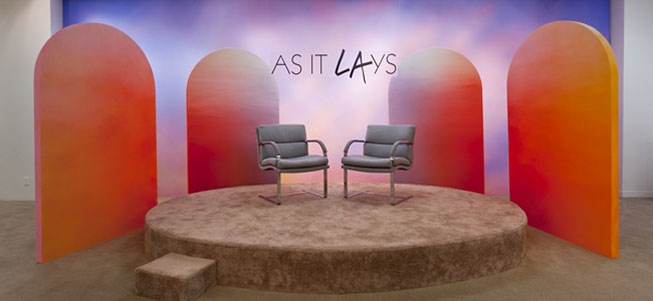
Alex Israel

'As It Lays', 2012. Photograph: Joshua White

The last question that Alex Israel asks each of his celebrity subjects in his video interview series ‘As It Lays’ (2012) is the same: ‘What do you want the world to know about [subject’s name]?’ A surprising number have exactly the same response: ‘Nothing.’ Surprising, because these are people whose very livelihood relies on public visibility, and who are voluntarily submitting to the Los Angeles-based artist’s deadpan interrogation. Their answer points to the open secret of the celebrity system: that the illusion of self-exposure can be the best defence for intensely private personalities. Read the rest of this entry »

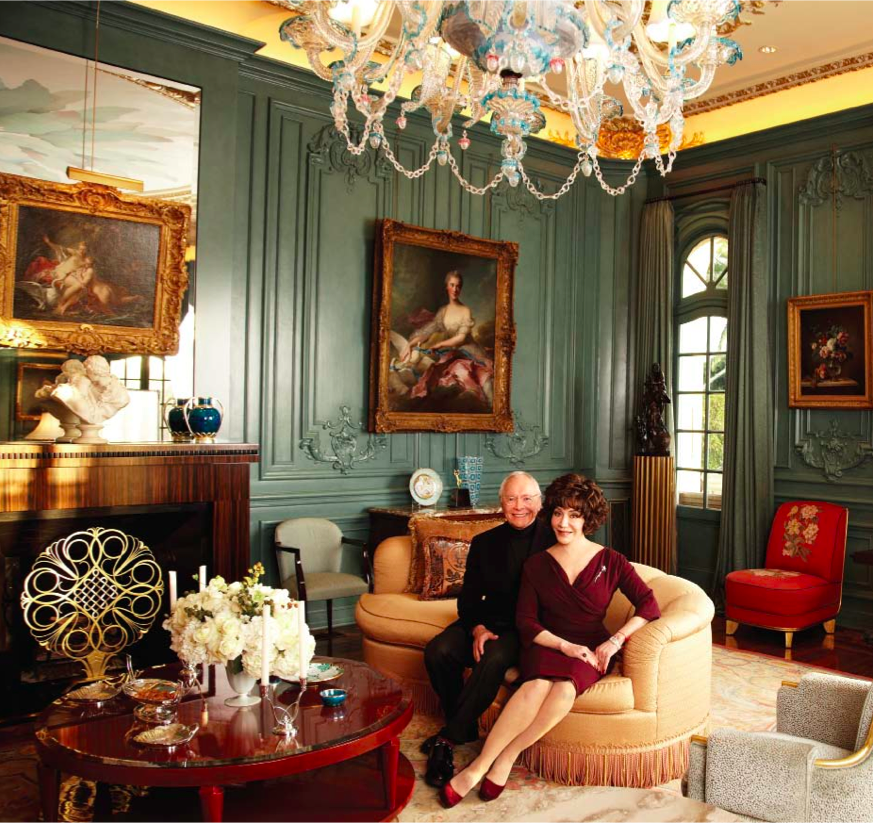
Stewart and Lynda Resnick

Photograph: Amanda Friedman

A chapter in Lynda Resnick’s book Rubies in the Orchard: How to Uncover the Hidden Gems in Your Business is titled ‘The One True Copy of Jackie Kennedy’s Real Fake Pearls’. Resnick tells the story of how, in 1996, Sotheby’s auctioned the estate of Jackie Kennedy Onassis, including her iconic three-strand pearl necklace. It didn’t matter that the pearls were imitation, and that the young Jacqueline Bouvier had picked them up at Bergdorf Goodman for around $35. They were listed by Sotheby’s at $200–$300. Resnick was determined to have them, and persuaded her husband Stewart to bid all the way to the jaw-dropping closing price of $211,000. The couple were the subject of ridicule in the national press. Read the rest of this entry »

Kaari Upson

Life Study

Kaari Upson admits she’s told this story so many times, in so many different ways, that it’s become hard to get it straight any more. Her changing recollection of events has now superseded hard truth. Journalists and critics, falling over themselves to retell the incredible tale, also invariably bungle their facts, and so further pollute her memories. She’ll do her best though. Here goes. Read the rest of this entry »