Jonathan Griffin

Criticism and essays on art and culture

Category: Review

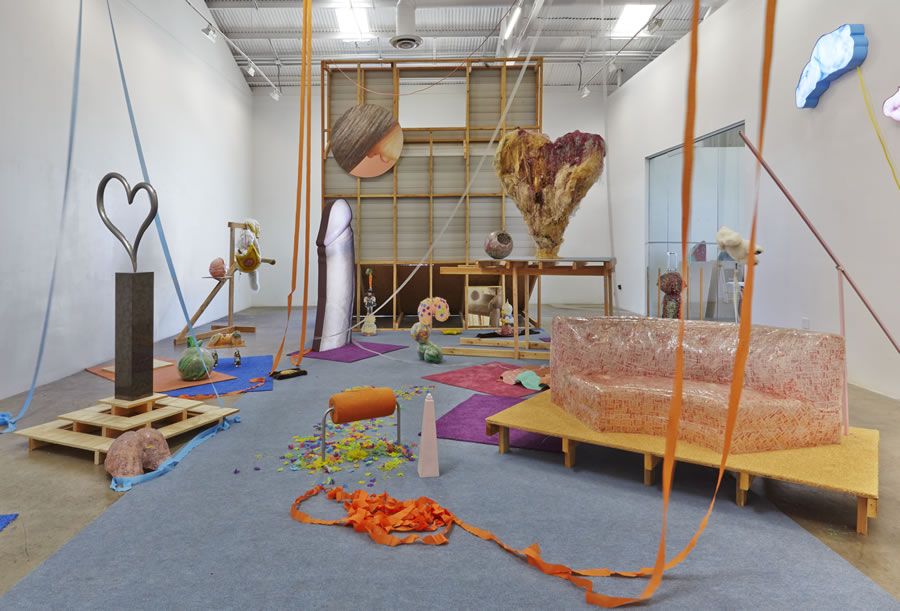
Paramount Ranch

OLYMPUS DIGITAL CAMERA

Paramount Ranch, Los Angeles, Feb 1–2 2014

On a recent Saturday morning, while half of Los Angeles’s art community was shelling out ten dollars to park their cars outside the dispiriting aircraft hangar of Art Los Angeles Contemporary, the city’s preeminent art fair, and the other half was trying to find an empty meter downtown for Printed Matter’s enormously popular LA Art Book Fair at MOCA’s Geffen Contemporary, I was heading west on the 101 Freeway, driving fast out of town. After half an hour or so, the houses thinned and gave way to scrubby, dry hills populated by pelotons of cyclists and nervous-looking fire crews. Read the rest of this entry »

Robert Heinecken

Heinecken

Robert Heinecken liked to describe himself not as an artist or a photographer but as a “paraphotographer.” He explained that he used the term like “paralegal” or “paramedic”: knowing only enough about his field “to keep someone out of trouble until the real guys show up.” Read the rest of this entry »

Alvin Baltrop / Gordon Matta-Clark

baltrop

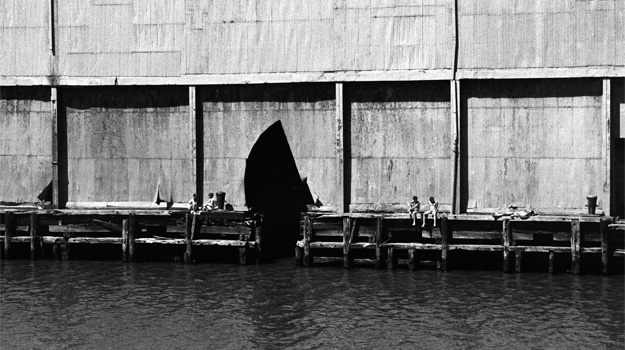
New York, in 1975, was on the verge of bankruptcy. When President Gerald Ford refused a federal bailout, the Daily News ran the headline ‘Ford to City: Drop Dead’. Parts of Manhattan seemed already to be dying. In the Meatpacking District, the piers on the Hudson River that had once hummed with commercial and industrial enterprise now stood rusting and silent. Read the rest of this entry »

Carnegie International 2013

Carnegie Museum of Art, PittsburghCI130362_swords

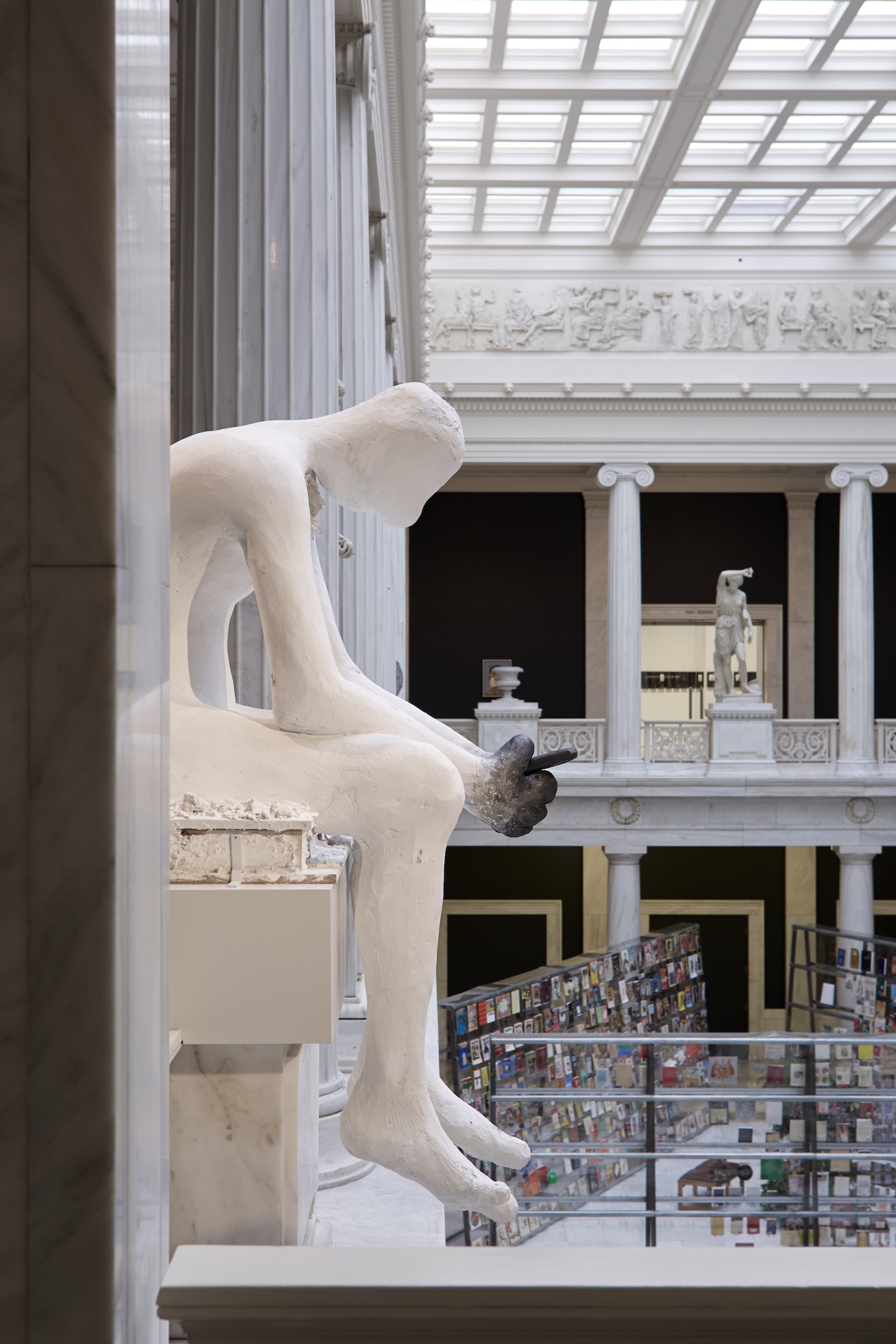
“You can’t bring culture to people, you can only bring it out of them.” That’s Robert Rauschenberg, in a 1968 manifesto titled “Proposals for Public Parks” which the curators of the 2013 Carnegie International—Daniel Baumann, Dan Byers, and Tina Kukielski—have reprinted in the catalog for their exhibition. Rauschenberg’s assertion poses a ticklish problem for the trio, whose assigned mission it has been (as first mandated by Andrew Carnegie in 1895) to bring culture to the people of Pittsburgh. Invigorated by Rauschenberg’s paradox, they have installed an edition of the Carnegie International (last held in 2008) that is both deeply rooted in its historical and geographical situation, and expansive in its purview. Artists from Switzerland and England lure visitors into the museum with eye-catching outdoor sculptures while, inside, the first work one encounters is by Polish artist Paulina Olowska, who has borrowed a collection of puppets from a Pittsburgh theater. Elsewhere, art from New York, Tehran, Zagreb, and Johannesburg seeks to connect the far-flung with the close at hand. And—notwithstanding the peripatetic art crowd that descended on Pittsburgh for the exhibition’s gala opening—it is the local audience that the 2013 Carnegie International seems designed to address. Read the rest of this entry »

Sean Kennedy


Thomas Duncan Gallery, Los Angeles

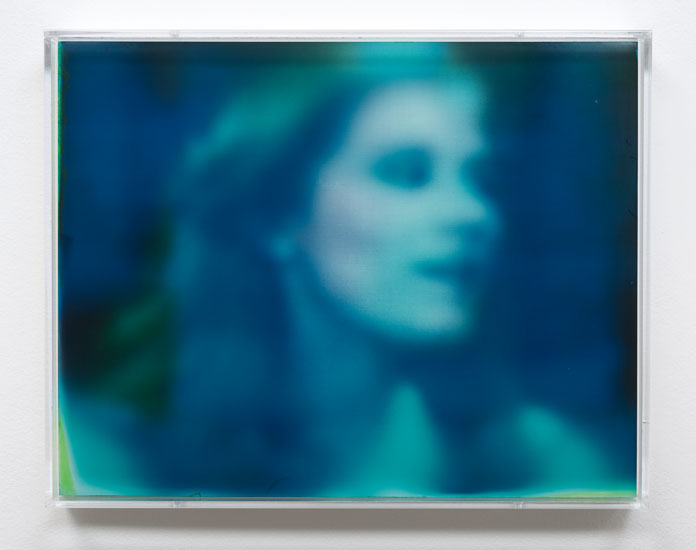
Sean Kennedy

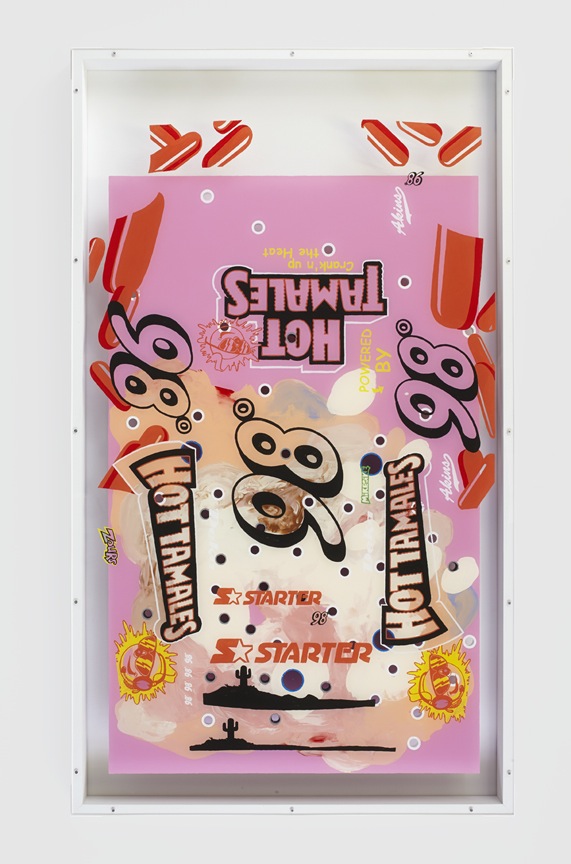
Sean Kennedy is not a great painter. His brushwork is hesitant, his mark-making is sloppy and inconsistent, and his colouration, though vivid, seems uninterested in harmony. Against these odds, however, he has created a suite of great paintings. If indeed paintings is what they are. Read the rest of this entry »

John Wesley


David Kordansky Gallery, Los AngelesJohn Wesley 3


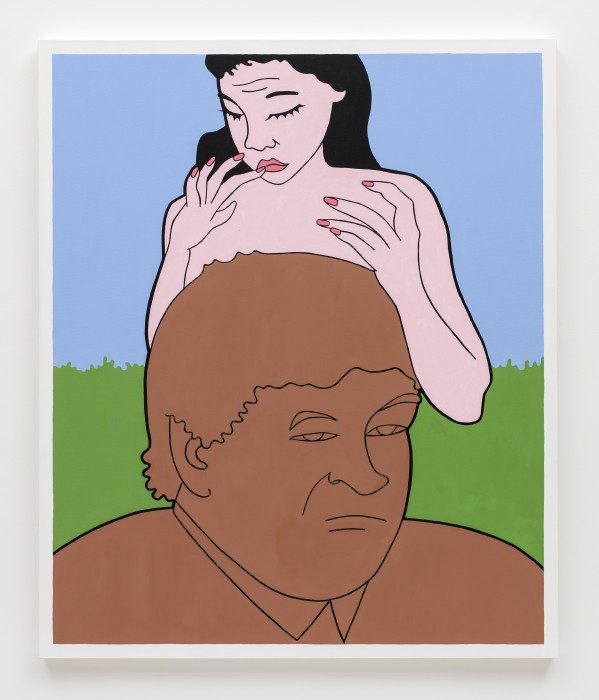
When John Wesley makes paintings of women, which he does very often, he makes paintings about men. Against powder-blue backgrounds, he floods their lithe bodies with a flat shade of pale pink, except for a hotter tone used for lips, nails and nipples. These are pictures of heterosexual male desire. When men appear, they tend to be woefully disproportioned and eccentrically dressed. His women, by contrast, are the sylphs of an imagination fired by the dreamy perfection of women in magazines and dampened by the comic pathos of real-life encounters. Read the rest of this entry »

Ed Fornieles


Mihai Nicodim Gallery, Los AngelesFornieles

If Britney Rivers didn’t exist, someone would have to invent her. She is the epitome of Generation Y narcissism and vapidity, a creature who gives fullest expression to her life on Facebook and Instagram, whose pronouncements are specially keyed to half-bored, half-horny social media browsers. Her Tweets include such gems as: ‘Cute guy emails 2 ask me out on coffee date but “sent from droid” so now i’m like :-/’. I’m Facebook friends with her. You should be too. Read the rest of this entry »

Urs Fischer

Museum of Contemporary Art, Los AngelesUrs Fischer Horses Dream of Horses 2004

When asked about scale in a recent interview, Urs Fischer said that ‘the physical size of the art work doesn’t make it big or small.’ The scale of an object, he argued, is the size it assumes in the viewer’s mind; not its size in the gallery space. Fischer has become known for making very large art works – often from seemingly small ideas – as well as small works based on big ideas. This discrepancy has won him as many admirers as detractors. Read the rest of this entry »

Charles Garabedian

LA Louver Gallery, Los Angeles

Charles-Garabedian_Blue-Lipstick-CG13-16_14

There is a painting in Charles Garabedian’s current exhibition at LA Louver titled Beauty (2013). It is one of the ugliest works in the show – and it has some stiff competition. Blue Lipstick (2013), for instance, portrays the cyanotic features of a person of indeterminate gender who appears to have been recently chewing on an ink cartridge. Giotto’s Tree (2012) shows an ungainly woman with big legs and no arms (literally – no arms!) entangled in the branches of a sapling. Read the rest of this entry »

Prison Landscapes

Alyse Emdur, Four Corners Books

PrisonLandscapes

Remi Emdur, Bruce Emdur and Alyse Emdur, Bayside State Prison, Leesburg, N.J. 1988

“MY SISTER AND I could go to the beach,” writes the artist Alyse Emdur, “but our brother could not go with us.” That is because he was incarcerated at the Bayside State Prison, in Leesburg, New Jersey. Instead, the trio posed in front of a photograph of a tropical beach at sunset, two palm trees framing the glowing sky. A Polaroid photograph of the make-believe excursion, taken in the late 1980s, is included on the back cover of Emdur’s recent book, Prison Landscapes. Read the rest of this entry »