Jonathan Griffin

Criticism and essays on art and culture

Made in Space

Night Gallery, Los Angeles
Made in Space 1

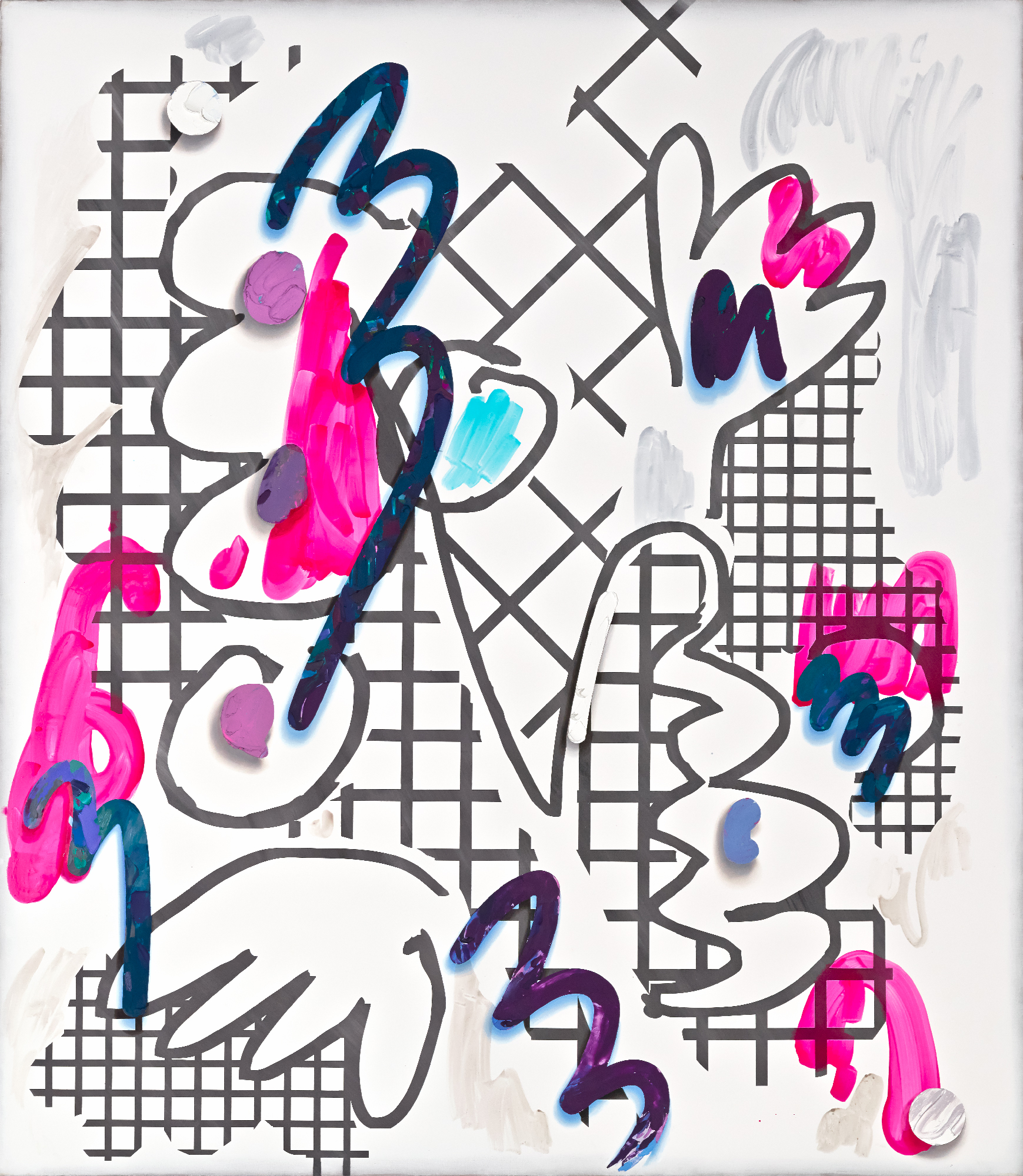
Is it possible to talk about art made in Los Angeles without crediting the city with everything that makes its art unique? Why are artists in Southern California so often asked to explain how their work is influenced by its infrastructure or climate? Is “Made in Space,” the exhibition curated by artists Peter Harkawik and Laura Owens, an antidote to these tendencies or is it a symptom? Read the rest of this entry »

Jordan Wolfson

REDCAT, Los Angeles

Jordan_Wolfson_Still_04-800x450

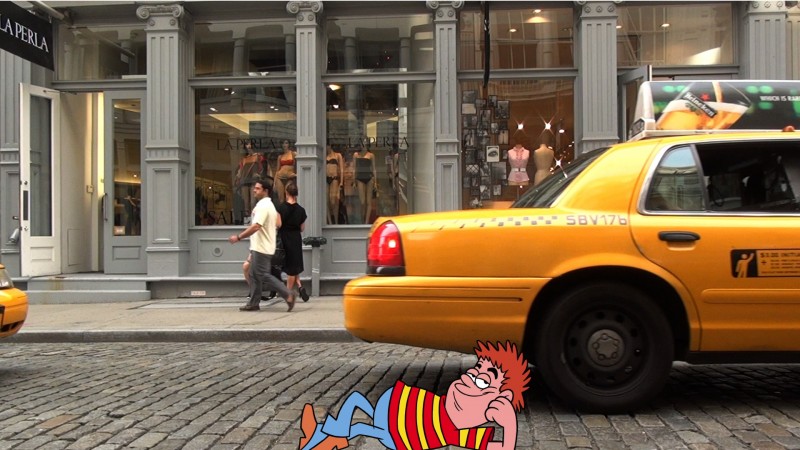
The HIV virus, in case you didn’t know, is depicted in molecular biology as an icosahedron (a 20-sided polygon) or a sphere, out of which protrude peg-like nodules representing the glycoproteins that fix onto and infect other cells. Dozens of these jolly red forms bounce across the screen in Jordan Wolfson’s part animated, part live-action film Raspberry Poser (2012). Their rubbery pegs wobble as they jump on the sinks in posh showrooms and across the wooden floor of a luxury gym. They bound through the sunny streets of New York’s Soho, and swell to bursting against photographs of scantily clad teens on spring break. As they frolic amongst these scenes of shameless desire they are buoyed by the heavy, synthetic beats of Beyoncé Knowles’ Sweet Dreams from her 2008 album I am … Sasha Fierce. Read the rest of this entry »

Carl Andre

Carl Andre building 'Cedar Piece', 1964

What is the most important thing to say about Carl Andre? Carl can’t remember. ‘What was it I once said?’ he responds when I ask him which, of all his contributions to the history of art, he is most proud of. ‘I didn’t make a great contribution but all I did was add the … It was something like …’ He tails off. ‘My mind is gone. I have no memory,’ he says simply and equitably. At 77, Andre is one of the most important living artists in America. Melissa Kretschmer, his wife, cuts in. She accompanies us throughout our conversation; nearly three decades Andre’s junior, she is better able to recall some of the details that evade her husband. Read the rest of this entry »

Anthony Pearson

The Man Who Wasn’t There

pearson5
‘A painting that is an act,’ wrote Harold Rosenberg in his trenchant 1952 essay ‘American Action Painters’, ‘is inseparable from the biography of the artist. The painting itself is a “moment” in the adulterated mixture of his life.’ He continues: ‘With traditional aesthetic references discarded as irrelevant, what gives the canvas its meaning is not the psychological data but rôle, the way the artist organizes his emotional and intellectual energy as if he were a living situation. The interest lies in the kind of act taking place in the four-sided arena, a dramatic interest.’1 Read the rest of this entry »

Lutz Bacher

Ratio 3, San Francisco

LutzBacher-Edward-LORES

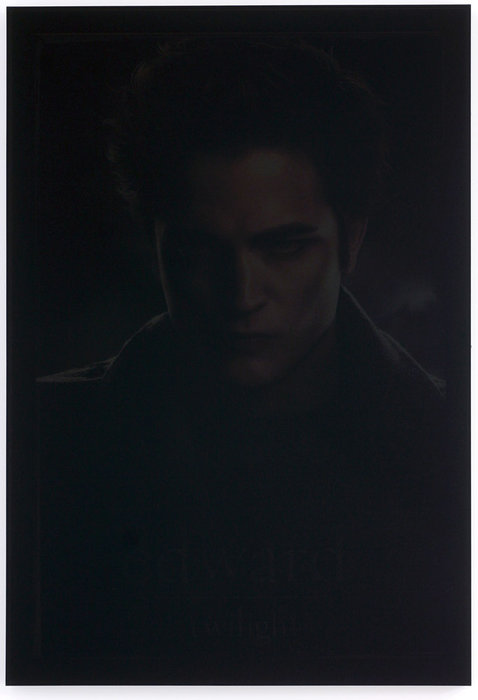
Have you seen ‘The Twilight Saga’ (2008–12)? Me neither. But, like you, I know who Robert Pattinson is. For a spell last year, the vampire movies’ British star seemed to be everywhere, the dramas of his private and professional life broadcast on all channels of the news media. Perhaps it should have come as no surprise to find him framed, glowering through darkened glass, in Lutz Bacher’s exhibition at Ratio 3, the first at the gallery’s new premises in San Francisco’s Mission District. But it was a surprise, nevertheless, despite Bacher’s reputation as one of the most consistently surprising artists working in the US today. Dissonance, elision and confusion have been her stock-in-trade since her career began in the 1970s. Even Lutz Bacher is reportedly a pseudonym. Read the rest of this entry »

Liam Everett

leverett2012show8

Liam Everett’s art stands, first and foremost, as testament to the processes of its making. In spite of their rich optical pleasures, his art works claim a solemn dignity as battered survivors of previous punishments. It is fun to imagine just what these wild, intense forces might have entailed. Read the rest of this entry »
William Klein

You might know William Klein for the striking black and white photographs he took for Vogue in the 1950s and 60s, showing couture models cutting through the hubbub of New York and Rome. These, and his documentary street photographs – full of movement and danger and noise – are the subject of a forthcoming exhibition at Tate Modern, shared with the Japanese photographer Daido Moryama. Or perhaps you know him for Mr Freedom, his 1969 political satire about a feckless American superhero in France, or his send up of the fashion industry, Qui êtes-vous, Polly Maggoo?, released three years previously. You might even, if you’re a boxing fan, know his documentary Muhammad Ali: The Greatest 1964-74. Read the rest of this entry »

David Ostrowski

Ltd Los Angeles

David-Ostrowski, F (Jung, Brutal, Gutausehend), 2012, acrylic, lacquer, adhesive foil and cotton on canvas, wood, 87 x 67.3 in (221 x 171 cm)

The day I visit David Ostrowski’s exhibition, it’s raining. The unusually inclement weather seems appropriate for these battered, defeated-looking paintings. I am reminded of the terrible storm that hit New York recently. Ostrowski’s work corresponds to images of Chelsea-gallery employees hauling drenched canvases out of waterlogged crates. Read the rest of this entry »

Dianna Molzan

molz

Every painting — every good painting, at least — is a problem. This problem can come in all shapes and sizes: a problem with the world, a problem with painting, a problem with one’s self. Whether it’s the curious vibrational effect of two colors in proximity to one another or the crisis of consumer capitalism, a painting embodies or responds to the impetus for its own creation. Not all paintings solve their problems; most don’t even come close. Many create more problems. That’s okay. Read the rest of this entry »

Learning by Heart

Ken Price, Echo (1997) ©2012 Ken Price, photo ©2012 Fredrik Nilsen

Ken Price, Echo (1997) ©2012 Ken Price, photo ©2012 Fredrik Nilsen

Adrian Searle once claimed, in the pages of this magazine: ‘Everything I know, I think I’ve learnt from artists.’ In wondering, as I often have, whether what he said could be true and, if so, whether it could be true for me too, I’ve found myself asking what an education solely directed by art and artists would consist of. Read the rest of this entry »