Jonathan Griffin

Criticism and essays on art and culture

Nathan Hylden

Richard Telles Fine Art, Los Angeles

The facetious joke – or is it a wry compliment? – about white monochrome paintings is that they hardly differentiate themselves from the walls they hang on. Despite choosing as his pictorial subject rectangles of blank white wall, Nathan Hylden worked hard to make the paintings in his exhibition ‘So There’s That’ as unblank and as unneutral as possible. Read the rest of this entry »

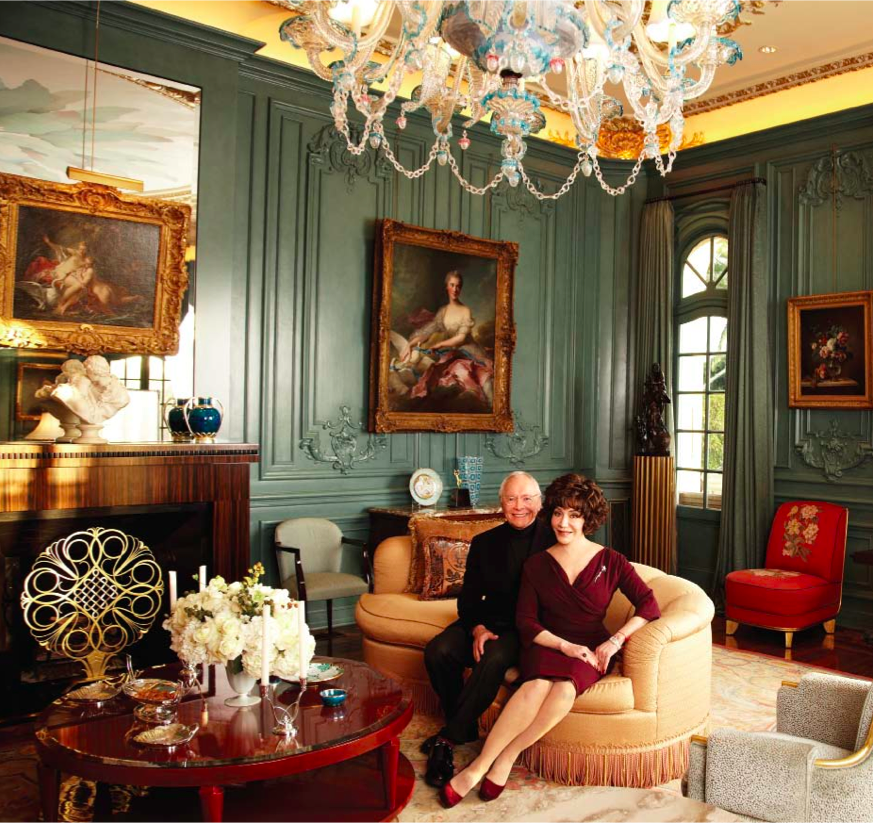
Stewart and Lynda Resnick

Photograph: Amanda Friedman

A chapter in Lynda Resnick’s book Rubies in the Orchard: How to Uncover the Hidden Gems in Your Business is titled ‘The One True Copy of Jackie Kennedy’s Real Fake Pearls’. Resnick tells the story of how, in 1996, Sotheby’s auctioned the estate of Jackie Kennedy Onassis, including her iconic three-strand pearl necklace. It didn’t matter that the pearls were imitation, and that the young Jacqueline Bouvier had picked them up at Bergdorf Goodman for around $35. They were listed by Sotheby’s at $200–$300. Resnick was determined to have them, and persuaded her husband Stewart to bid all the way to the jaw-dropping closing price of $211,000. The couple were the subject of ridicule in the national press. Read the rest of this entry »

Kaari Upson

Life Study

Kaari Upson admits she’s told this story so many times, in so many different ways, that it’s become hard to get it straight any more. Her changing recollection of events has now superseded hard truth. Journalists and critics, falling over themselves to retell the incredible tale, also invariably bungle their facts, and so further pollute her memories. She’ll do her best though. Here goes. Read the rest of this entry »

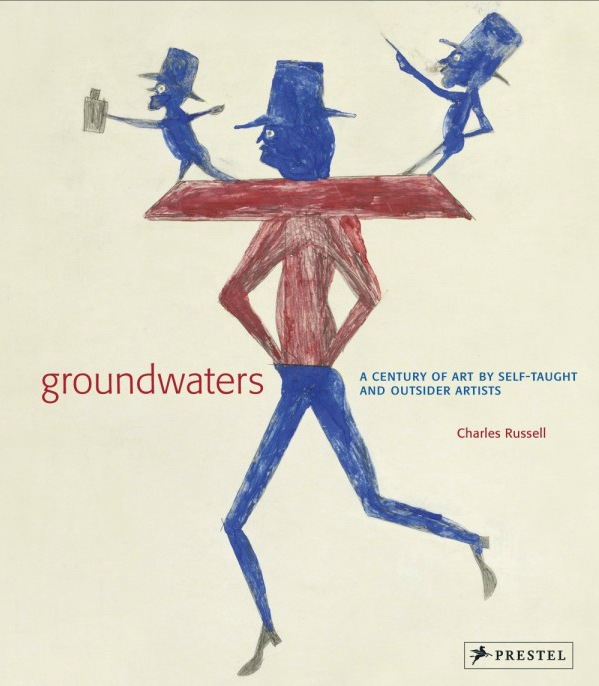
Groundwaters

A Century of Art by Self-Taught and Outsider Artists

by Charles Russell; Prestel, New York

Some call it outsider art; others prefer self-taught. Still others insist on distinguishing between folk art and naïve art, or the less pejorative terms vernacular art and visionary art. Then there’s Art Brut, Neuve Invention and art therapy. Confusion and disagreement have come to reign over this fervently debated world. Charles Russell’s authoritative new survey attempts to clear up some of the muddle. Read the rest of this entry »

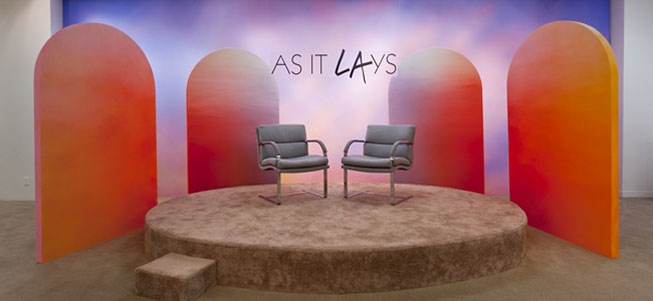
Undead and/or Dead Living: The New Social Category

Mateo Tannatt on Zombies

 
Mateo Tannatt’s diverse artworks are hard to summarise in general terms. However, one frequent point of departure for the artist is the idea that public urban space – particularly corporate space – is a stage for involuntary performance by all those who use it. Tannatt has made installations, photographs, paintings and films; for the recent Performa 11 biennial in New York, he devised Pity City Ballet, a performance resembling a television talk show which took place in the lobby of the Saatchi & Saatchi headquarters in Manhattan. The following exchange, with the art critic Jonathan Griffin, developed over the weeks leading up to that performance. Griffin and Tannatt are both based in Los Angeles. Read the rest of this entry »

Peter Shire

Photograph: Tim Street Porter

Mid-Century Modified


‘The famous photograph’, as Peter Shire calls it, hangs over the dining table in his Los Angeles home. It shows the moment that his parents, Henry and Barbara, first met. The story is almost too good to be true: she was working for the San Francisco longshoremen’s union, he for IATSE – the union for technicians working in the theatre and entertainment industries. At a longshoremen’s fundraiser, a photographer snapped Henry delivering magazines to Barbara’s table. This being 1946, the early days of McCarthyism and Communist paranoia, the photographer sent one copy of his picture to Peter’s parents and one to the FBI. Peter, an artist famous for his work with the 1980s’ design collective Memphis, was born about nine months later.

Read the rest of this entry »

Under the Big Black Sun: California Art 1974–81

Museum of Contemporary Art, Los Angeles

John Divola, Zuma #9 (1978/2006)

Events sometimes tell their own story. 1974: Richard Nixon resigns; Patty Hearst is kidnapped by left-wing terrorists; the U.S. oil crisis continues. 1975: Saigon falls; Gerald Ford survives two assassination attempts, both in California. 1976: Chairman Mao dies. 1977: Elvis Presley dies; Jimmy Carter is sworn in. 1978: Californian cult, the Peoples Temple, commits mass suicide in Jonestown, Guyana; Harvey Milk and George Moscone are shot in San Francisco; Proposition 13, limiting Californian property taxation, is passed. 1979: Three Mile Island nuclear disaster; the U.S. embassy in Tehran is seized; revolution in Nicaragua; Soviet Union invades Afghanistan, reigniting the Cold War. 1980: the U.S. and other countries boycott the Summer Olympics in Moscow; John Lennon is murdered. 1981: assassination attempt on the Pope; Egyptian president Anwar Sadat is assassinated; AIDS is identified; Ronald Reagan is sworn in as president. Read the rest of this entry »

Bobbi Woods

Annie Wharton Los Angeles

Seven ninths of Bobbi Woods’ exhibition ‘COMA (so fine)’ is, ostensibly, exactly the same. She has sprayed identical movie posters with black enamel, masking out only the title, Coma, which stands out in dull, lithographed black against the oily gloss of Woods’ paint. Read the rest of this entry »

Richard Jackson

David Kordansky Gallery, Los Angeles

Richard Jackson’s preferred brand of paint is called BREAK-THROUGH. ‘A new paint chemistry,’ boasts the label, ‘The tradition continues!’ Half-empty tins of BREAK-THROUGH, in primary colours, lay around his cataclysmic installation The Little Girl’s Room (2011), his first solo show in Los Angeles for 20 years. The rest had been pumped through tubes threaded into the penis of an inverted, pink fibreglass unicorn, and exploded out of its anus. Red, yellow and blue paint is spattered all over the floor, the walls, the ceiling and the unicorn himself.

Read the rest of this entry »

George Herms: Xenophilia

MOCA at the Pacific Design Center, Los Angeles

George Herms must get tired of being referred to as the last of his generation. Born in 1935, he was amongst the youngest of the Beats and a pioneer of the California Assemblage movement. Like many of his peers he saw his lack of art school training as no impediment to combining found objects in the way that he might compose a poem, or jam with jazz musicians. By reputation, and by the evidence of his unkempt but literary art, he’s a free spirit, a mystic. He stands (especially in younger minds) for a now rare artistic archetype, pure of heart and innocent of commercial ambition. Herms is regarded with affection, and, as ‘George Herms: Xenophilia (Love of the Unknown)’ proposes, his work remains a touchstone for a slew of artists working today. Read the rest of this entry »