Jonathan Griffin

Criticism and essays on art and culture

Henry Taylor

Blum & Poe, Los Angeles

The colour black is, notionally, an absolute. As a racial classification, however, black consists of myriad shades of grey, though it continues to absolutely define many Americans’ lives. In Henry Taylor’s work it appears both as a colour and a condition. In each instance, the Los Angeles-based artist proves black to be a potent but inadequate term when talking about the realities of people’s daily existence.

Read the rest of this entry »

Bella Pacifica: Bay Area Abstraction 1946–1963

Jerry Burchard, Jay DeFeo (1958) Collection SFMOMA

Between 1946 and 1952, the proportion of students at California’s five most important art schools who had served in the military was never less than 70 percent, and frequently more than 80. Most of these enrolled with assistance from the GI Bill, the monumental piece of post-war legislation that swelled the ranks of liberal arts courses across the United States with mature, motivated and philosophically reflective men and women, alive to the preciousness of their personal freedoms.

Read the rest of this entry »

William Leavitt

California Dreaming: The work of William Leavitt reflects upon Los Angeles’ faded visions of the future, bourgeois taste and the scientific sublime

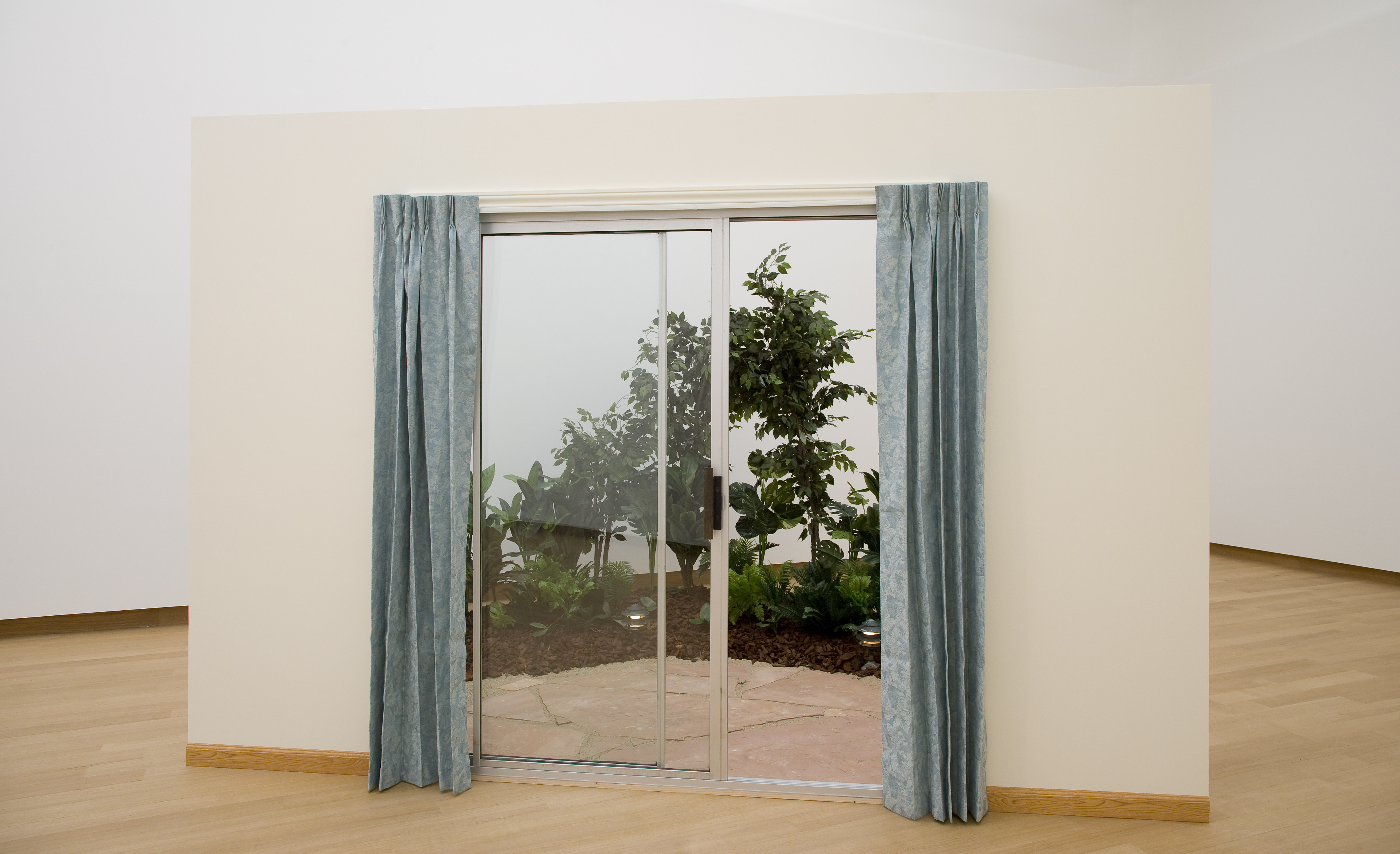
It is evening in the backyard and garden of a contemporary hillside home in Southern California. There is a swimming pool, a flagstone patio, a redwood fence, some lawn and the usual tropical landscaping of succulents, ferns, leafy plants, and flowering shrubs. The beauty of the scene is most evident at this time of day when the combination of lighted pool, soft garden lights, black sky and the lights of surrounding homes comes into play.

On this particular evening a small cocktail party is being held on the patio adjoining the house. The guests are all close friends of the host and hostess. Their presence adds the elements of motion and sound to the setting; the men stand near the edge of the patio engaged in relaxed conversation, while the women sit in a loose circle of garden chairs arranged on the lawn. Now the hostess comes out through the sliding glass door to announce that a light buffet supper is ready inside.

Read the rest of this entry »

Annika Ström

Personal Delivery

Annika Strom in performance, CAAC Seville, 2011

Guitar slung low, legs spread wide apart, neck craning up towards the microphone, the young man screws his features into an expression that looks like something between grief and sexual ecstasy. He sings:

‘I – will be – the one – to turn you on!

On the bed

I – will be – the one – tonight.’

Between the assembled bar crowd and the shallow, six-inch high stage, in front of clusters of people clutching bottles of beer and raising their voices to the ears of their friends, in front of other people who stare expressionlessly at the singer, surrounded by movement and noise, stands the singer’s mother, holding a video camera which she points at her son for the whole duration of his performance.

No one seems to find this strange, or embarrassing, or worthy of comment.

Read the rest of this entry »

Jim Lambie

Goss Michael Foundation, Dallas

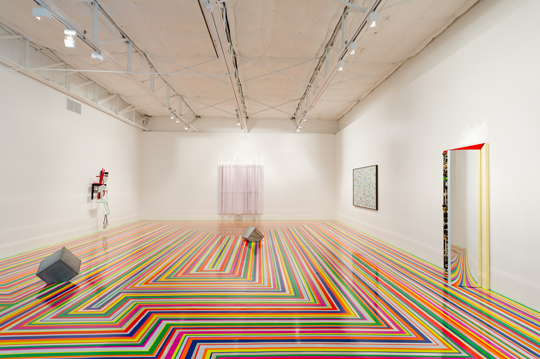
Jim Lambie made his first ‘Zobop’– the multicoloured, multilayered vinyl floor installation for which he is most widely recognised – in 1999. If a thing’s worth doing, the saying goes, it’s worth overdoing; for his exhibition at the Goss Michael Foundation in Dallas, the Glasgow-based artist reprised his 2004 iteration of the work, Zobop Fluoro, in the foundation’s expansive new premises. (His exhibition was the first solo presentation after an inaugural group show.)

Read the rest of this entry »

All of This and Nothing

Hammer Museum, Los Angeles

The Hammer Invitational is a biannual survey exhibition that has never called itself a biennial. That is about to change: next year it will be superseded by the new Los Angeles Biennial, organized jointly by the Hammer Museum and LAXART. For the time being, however, it remains an impressionistic report on the weather over LA’s contemporary art landscape. The latest incarnation, ‘All of This and Nothing’, is notable for including only seven artists (out of a selected 14) who currently live in LA; Hammer curators Douglas Fogle and Anne Ellegood, in their first exhibition together, are more interested in identifying the global currents of influence and parity that pass through the city. Read the rest of this entry »

Paul Stoelting

Pepin Moore, Los Angeles

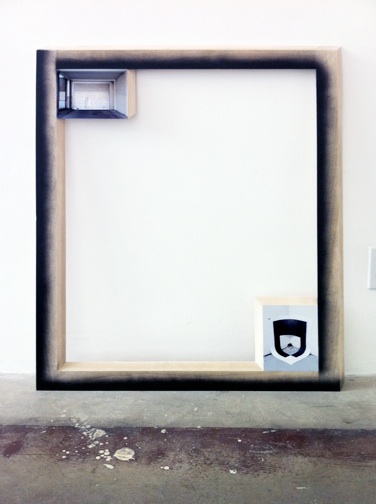
Paul Stoelting’s sculptures always seem to be sliding away from you. Objects that at first appear relatively straightforward – a length of timber, a picture frame – soon reveal themselves to be unstable, skewed and evasive. Stoelting’s exhibition Content Aware is dominated by a series of sculptures that look like supports for paintings: rectangular frames of wood hung on or propped against the wall. Closer inspection reveals the wood to be uniformly bevelled at 45 degrees, giving the impression that the object is oriented towards a vanishing point somewhere beyond one or the other of its corners. Since the frames hang against the wall on (what one assumes is) a deliberately ugly, pragmatic block screwed into the masonry, those rectangles whose bevels slope upwards are incapable of hanging without sliding off. Hence their positioning on the floor.

Read the rest of this entry »

Vanessa Billy

Equilibrium and tension; nature and vegetables

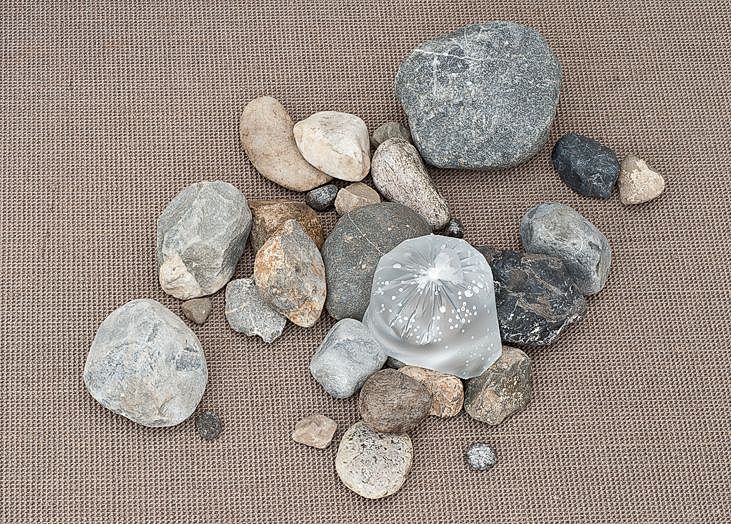
Conceptions of nature and naturalness have grown so ragged through contradiction and ambiguity that, as terms, they’ve become almost unusable. This is no deterrent to Swiss artist Vanessa Billy. The title of her exhibition of sculptures and collages at Christina Wilson Gallery earlier this year declared that ‘Natural means something like vegetables’. This guilelessly simple statement is, for Billy, a characteristic blend of irony and sincerity. As she sees it, ‘natural’ does mean something simultaneously as earthy and as cultivated as vegetables; naturalness inheres in matter, and extends to everything around us. Billy sees it as her job to point this out.

Read the rest of this entry »

Michael Dean

Hardness can be deceiving. Despite its reputation for intransigence, concrete is a uniquely subtle, delicate material. The surface of any motorway flyover, housing block or city pavement reveals a spectrum of patinas through which it absorbs and reflects its surroundings. Metal fixings soak rusty stains into their concrete bases; shoes and rubber tyres apply patient layers of dirt and oil onto walkways and roads, and rainwater causes streaks of discolouration (or sometimes just colouration) to develop across walls.

Read the rest of this entry »

Nathan Mabry

Cherry & Martin, Los Angeles

The unresolved debate around the work of Nathan Mabry seems to hinge on a question of belief: to what extent does Mabry mean what he says? Is the cynical humour and teenage innuendo in his work an expression of a mind deeply concerned with the unstable meanings and values of cultural artefacts, or is the artist just playing wilfully, provocatively dumb?

Read the rest of this entry »