Jonathan Griffin

Criticism and essays on art and culture

Paul Stoelting

Pepin Moore, Los Angeles

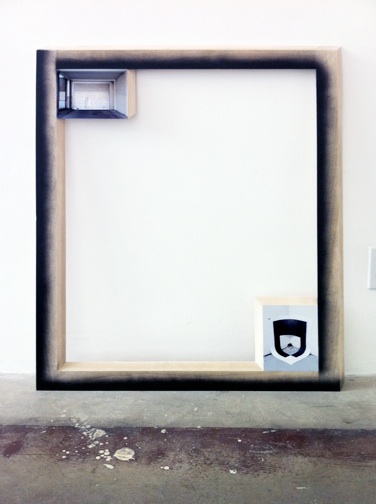
Paul Stoelting’s sculptures always seem to be sliding away from you. Objects that at first appear relatively straightforward – a length of timber, a picture frame – soon reveal themselves to be unstable, skewed and evasive. Stoelting’s exhibition Content Aware is dominated by a series of sculptures that look like supports for paintings: rectangular frames of wood hung on or propped against the wall. Closer inspection reveals the wood to be uniformly bevelled at 45 degrees, giving the impression that the object is oriented towards a vanishing point somewhere beyond one or the other of its corners. Since the frames hang against the wall on (what one assumes is) a deliberately ugly, pragmatic block screwed into the masonry, those rectangles whose bevels slope upwards are incapable of hanging without sliding off. Hence their positioning on the floor.

Read the rest of this entry »
Vanessa Billy

Equilibrium and tension; nature and vegetables

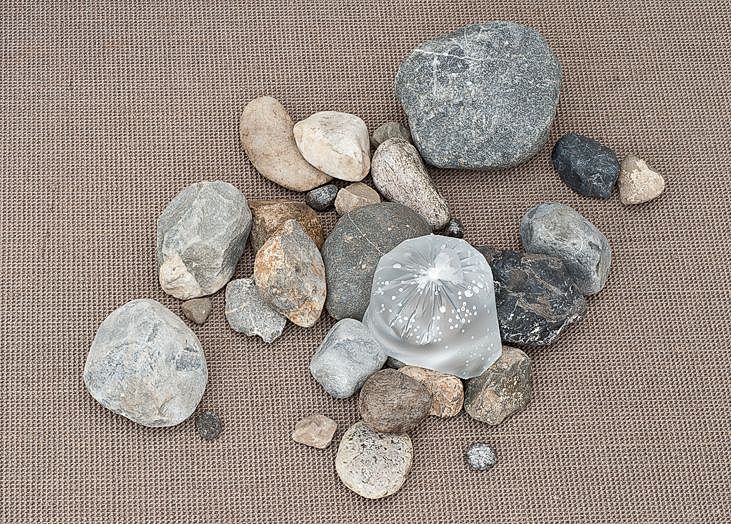
Conceptions of nature and naturalness have grown so ragged through contradiction and ambiguity that, as terms, they’ve become almost unusable. This is no deterrent to Swiss artist Vanessa Billy. The title of her exhibition of sculptures and collages at Christina Wilson Gallery earlier this year declared that ‘Natural means something like vegetables’. This guilelessly simple statement is, for Billy, a characteristic blend of irony and sincerity. As she sees it, ‘natural’ does mean something simultaneously as earthy and as cultivated as vegetables; naturalness inheres in matter, and extends to everything around us. Billy sees it as her job to point this out.

Read the rest of this entry »

Michael Dean

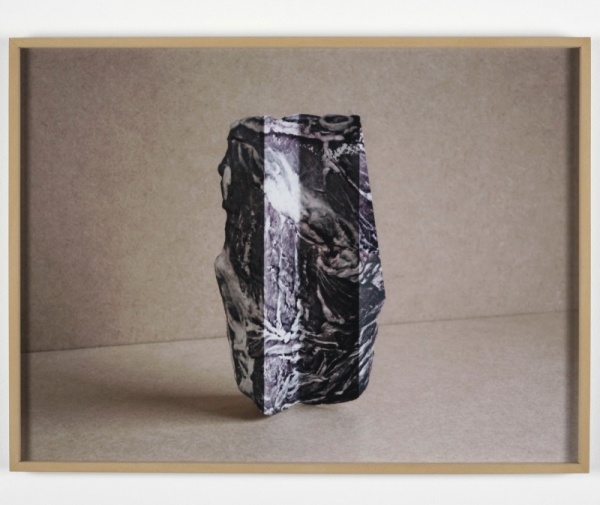
Hardness can be deceiving. Despite its reputation for intransigence, concrete is a uniquely subtle, delicate material. The surface of any motorway flyover, housing block or city pavement reveals a spectrum of patinas through which it absorbs and reflects its surroundings. Metal fixings soak rusty stains into their concrete bases; shoes and rubber tyres apply patient layers of dirt and oil onto walkways and roads, and rainwater causes streaks of discolouration (or sometimes just colouration) to develop across walls.

Read the rest of this entry »

Nathan Mabry

Cherry & Martin, Los Angeles

The unresolved debate around the work of Nathan Mabry seems to hinge on a question of belief: to what extent does Mabry mean what he says? Is the cynical humour and teenage innuendo in his work an expression of a mind deeply concerned with the unstable meanings and values of cultural artefacts, or is the artist just playing wilfully, provocatively dumb?

Read the rest of this entry »

Thomas Helbig

China Art Objects Galleries, Los Angeles

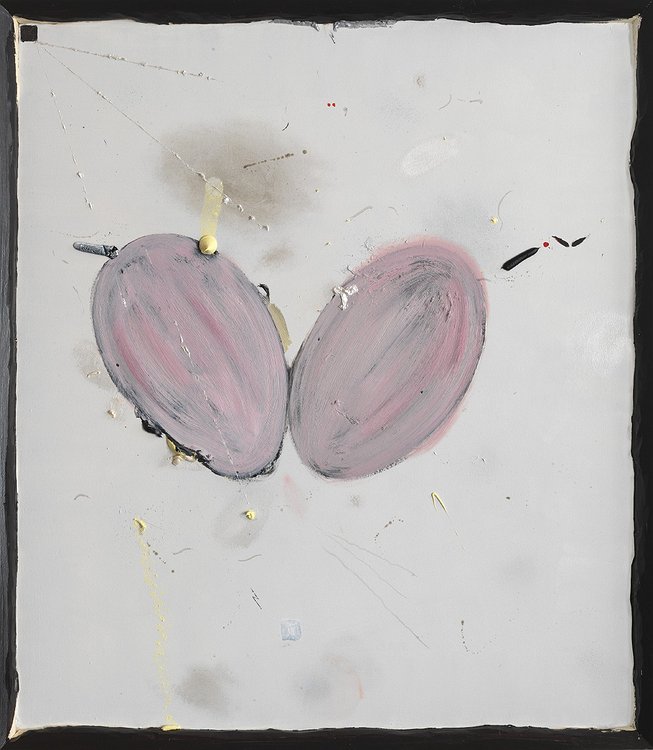
There is a moment in Thomas Helbig’s exhibition ‘Use Your Relatives’ that I can’t stop thinking about. A large oil painting comprises two pale pink egg shapes on a dirty white ground. The forms touch – kiss – at one edge; as we approach, the mess around them clarifies into a constellation of distinct, deliberate marks. In its lower left corner, a caterpillar-sized lozenge of paint, straight from the tube, has rolled from the point where it was applied and come to rest against the bottom edge of the frame, leaving sticky lemon-yellow tracks across the surface of the painting. Where it began, another squeeze of paint has been applied, making the trail double-headed and seemingly offering an inversion of the work’s downward gravitational pull.

Read the rest of this entry »

Brian Kennon

Spread the Word

Over the past few years, Brian Kennon has emerged as one of the most active and generous participants in the Los Angeles art scene. Aside from his practice as an artist, which regularly involves collaboration or appropriation of other artists’ work (many of them his friends or mentors), he single-handedly runs 2nd Cannons Publications, an independent publishing house that produces a wide range of artists’ books and editions. In 2008, 2nd Cannons opened a project space, a glass-fronted vitrine in Los Angeles’ Chinatown; the current exhibition, by The Institute of Social Hypocrisy, will be its last. Kennon’s work as an artist has taken the form of prints and publications, and his latest exhibition, ‘Documents Remain’, will be at BQ, Berlin, until 25th February 2011.

Read the rest of this entry »

Andrew Lord

Milton Keynes Gallery, UK

Eighteen Mexican Pieces (1993) Photo: Andy Keate

At the end of Milton Keynes Gallery’s exhibition of work by Andrew Lord, upstairs past three galleries of exquisitely installed ceramics, plaster sculptures and drawings, is a one hour 43 minute-long video of Lancastrian morris dancers performing in blackface. Lord, a Lancashire-born artist now living in New York, has said that ‘Making objects has been a way for me to understand things I’ve found incomprehensible’. Britannia Coconutters dance through Bacup, Easter Sunday (2009) is one of a series of films made by the artist over the past three years in and around the area in which he was raised. Despite his incomprehension, it is possible that Lord recognises something of the tradition’s defiant oddness, and its anachronism, in his own practice.

Read the rest of this entry »

Amanda Ross-Ho

Cherry & Martin, Los Angeles

In the work of Amanda Ross-Ho, bigger is not necessarily better. Her exhibition ‘A Stack of Black Pants’ is packed with images, objects and interventions, some of it grand in scale and some nearly invisible. One of the show’s pivotal pieces isn’t even acknowledged in the list of works: it consists of five tiny pieces of haberdashery – a zipper, an earring, a couple of unidentified bits of jewellery and a gold heart – fixed directly to the wall. Between them, a ruled pencil line connects one to the other; all roads, however, lead to the heart, which is positioned to one side. It looks like a symbolic diagram.

Read the rest of this entry »

A Different Country

On Gerard Byrne’s ongoing series of photographs Images and Shadows of Divine Things (2005 –)

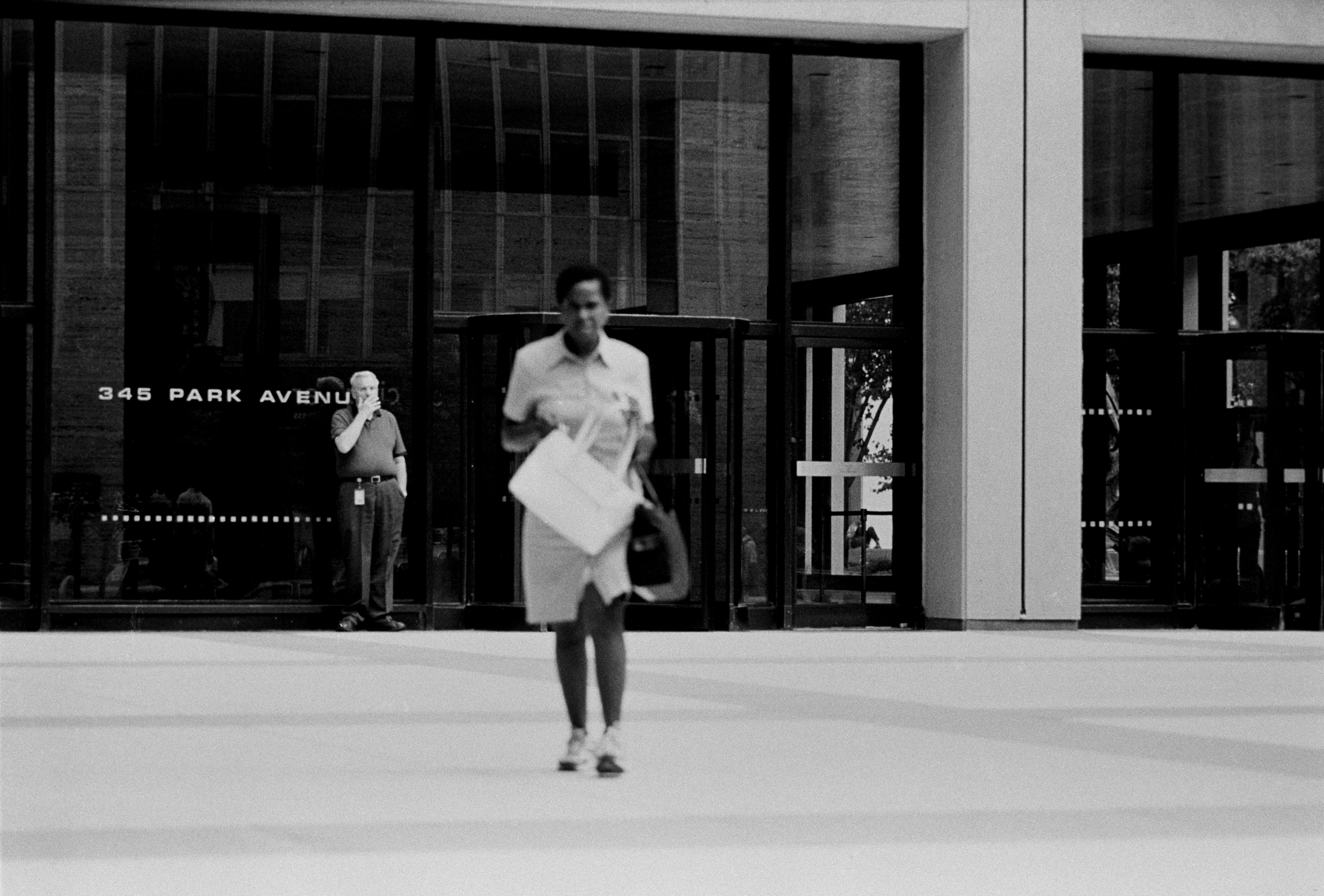
It is so dry here. Things never disappear, never rot, are not washed into storm drains or blown into gutters. Sometimes it feels like the moon, where a flag unfurled four decades ago still hangs in the vacuum. The pale stone facing on these walls remains unstained, pristine. Chrome does not rust. Rubber does not perish. Paint does not peel from timber.

There is no weather. The cold and the heat are the same, indifferent to us and equally tolerable. Only wind and moisture could dramatise the atmosphere, and allow us to feel the air on our skin. We have neither.

Read the rest of this entry »

Jen DeNike

The Company, Los Angeles

In occultism, the verb ‘to see’ usually refers not to the ordinary processes of visual apperception but to psychic insight. ‘Seers’, as those gifted in this area are known, sometimes adopt the practice of scrying – an ill-defined process of divination that uses repetitive gestures around substances such as crystals, mirrors or water to conjure visions from beyond.

Read the rest of this entry »