Jonathan Griffin

Criticism and essays on art and culture

Tag: agnes martin

Refusing Identification, Not Identity: Contemporary Positions in Abstraction

Teresa Baker, Flow (2023). Acrylic, buckskin, yarn, and artificial sinew on artificial turf, 110 × 74 inches. © Teresa Baker. Image courtesy of the artist and de boer, Los Angeles/Antwerp. Photo: Jacob Phillip.

Sometimes, you only notice something when it’s gone. In the past few months, I have become aware of the absence, in a growing number of artists’ work, of narrative—in particular, narrative about these artists’ biographies or identities. Much of this work is abstract, often purely abstract, and it seems that more and more people, myself included, are lately being drawn to this type of nonobjective and nonliteral work. Historically, abstraction in visual art developed along two parallel avenues: the distortion of things seen in the world (Paul Cézanne, Pablo Picasso) and the invention of entirely nonobjective forms (Kazimir Malevich, Wassily Kandinsky, Hilma af Klint). The contemporary work I have been noticing is, by and large, aligned with the latter stream of abstraction. In something of a departure from the dominance of identity-centered figuration in recent years, much contemporary abstraction is being made by artists of color who are resistant to foregrounding their identities through narrative. As mixed-media artist Teresa Baker described her abstract paintings to me, she noted that it is work that “should speak for itself. I shouldn’t have to give words to it.” Her position is echoed by Rema Ghuloum, a painter based in Los Angeles, who told me: “I really want the work to speak for itself.”

Read the rest of this entry »
David Hammons

Hauser & Wirth, Los Angeles

90

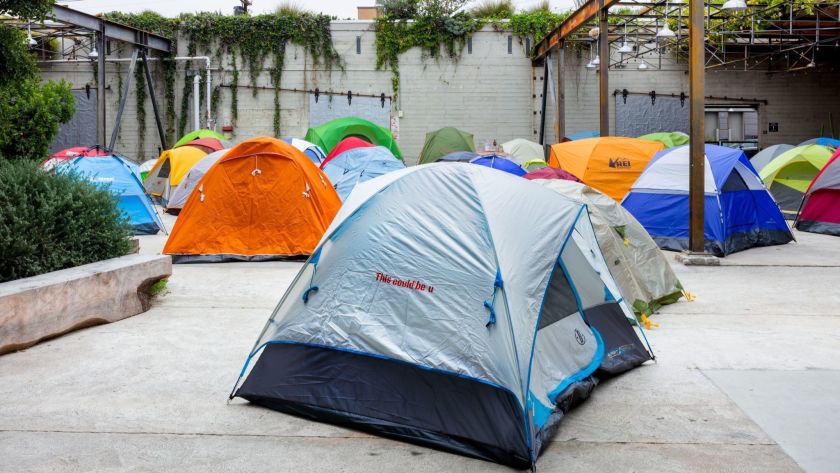
‘David Hammons’, 2019, exhibition view. © David Hammons; courtesy: the artist and Hauser & Wirth; photograph: Fredrik Nilsen Studio

Just inside one suite of galleries at Hauser & Wirth is a small display of material related to Ornette Coleman, the late saxophonist and free jazz innovator to whom David Hammons has dedicated the largest survey of his work to date and the first in Los Angeles for 45 years. ‘It was when I found out I could make mistakes that I knew I was on to something,’ said Coleman, who died in 2015. Read the rest of this entry »

Los Angeles to New York: Dwan Gallery 1959–1971

Los Angeles County Museum of Art

Virginia-Dwan-at-the-exhibition-Language-III-Dwan-Gallery-New-York-1969

Virginia Dwan at the exhibition Language III, Dwan Gallery, New York, 1969, photograph by Roger Prigent, courtesy of Dwan Gallery Archive

There was no way it was ever not going to be a mess: eleven years of one of the most influential American art galleries, condensed into a 100,000 square foot section of LACMA’s Resnick Pavilion. Consider the fact that many of the artworks in the 134 exhibitions held over those eleven years turned out to be canonical Modernist masterpieces, and were acquired by museums or major private collections around the globe, many now unwilling or unable to lend them. Others were destroyed, or lost, or are too delicate to go on public display. Some – not all of them masterpieces – entered LACMA’s own collection, so of course they wound up in this show, whether they fully deserved to be there or not. Read the rest of this entry »

Agnes Martin

tumblr_o665tr7Vly1rq7887o5_1280

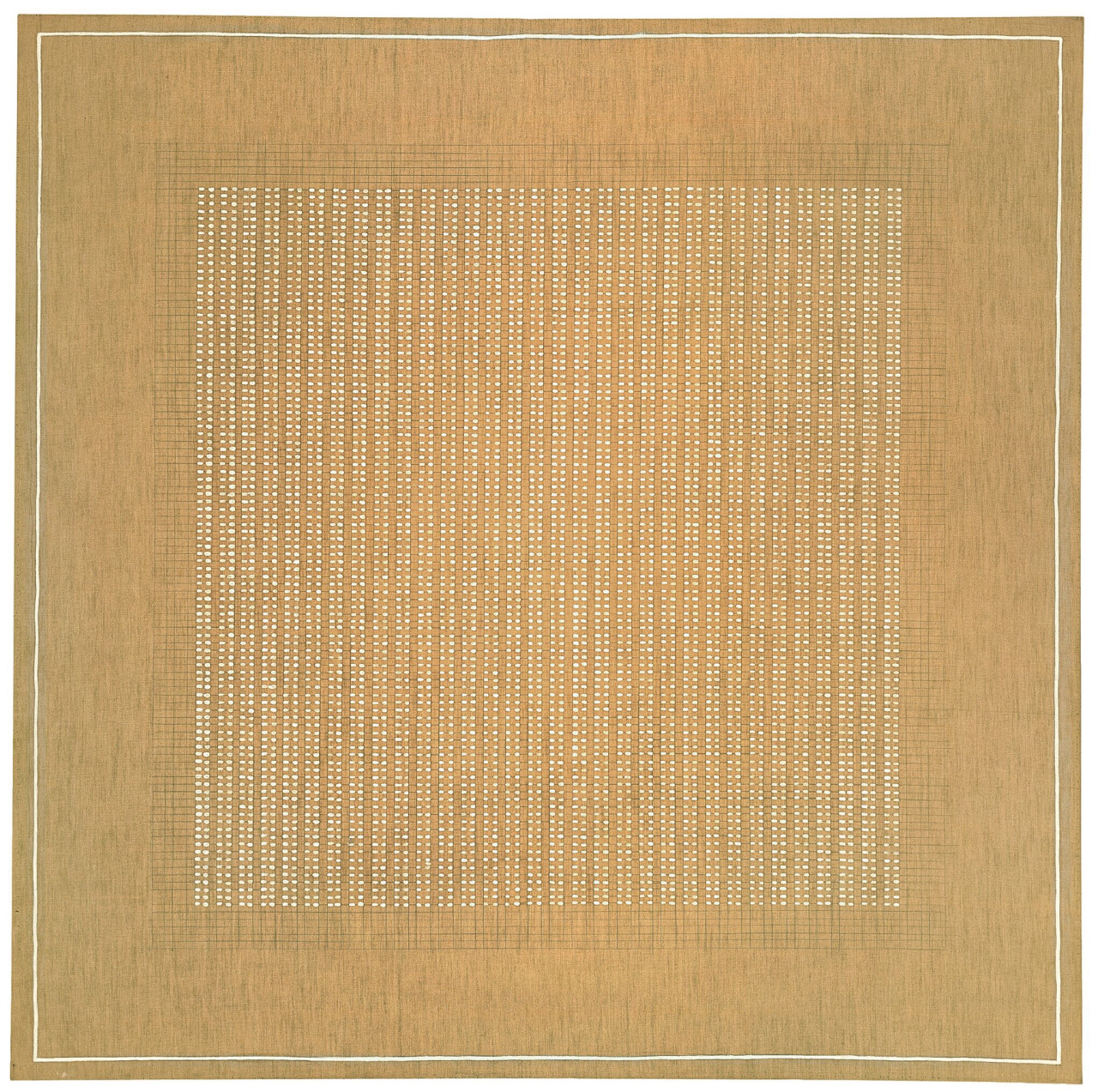
Agnes Martin, The Islands, 1961, Private Collection © 2016 Agnes Martin/Artists Rights Society (ARS), New York, photo courtesy Pace Gallery


On the very last page of Agnes Martin: Her Life and Art (2015), the biography’s author, Nancy Princenthal, admits that Martin would probably have thought her book utterly worthless. She quotes her from a handwritten note reproduced  near the start of Arne Glimcher’s semi-biographical monograph, Agnes Martin: Paintings, Writings, Remembrances (2012): ‘Almost everyone believes that art is from the experience of the artist […] They believe that it is affected by where you live and what you do. But one’s “biography”, character, abilities, knowledge – all of that has nothing to do with artwork. Inspiration is the beginning, the middle and the end.’ Read the rest of this entry »