Jonathan Griffin

Criticism and essays on art and culture

Category: Frieze

Olga Balema

Hannah Hoffman Gallery, Los Angeles

olga-balema-install-19_300dpi

Olga Balema, A thing filled with evil streams, 2016, Wood, latex, Magic Sculpt, cell phone motors, batteries, 31x8x7 inches. Courtesy Hannah Hoffman Gallery

I was laughing even before I entered the gallery. Beside the door to Hannah Hoffman, a notice announced the title of Olga Balema’s exhibition: ‘On the Brink of My Sexy Apocalypse’. There was certainly nothing laugh-out-loud funny in the show, but Balema’s work has an electric material intelligence and sense of the unexpected that might be termed, inadequately, wit. Read the rest of this entry »

Question the Wall Itself

Walker Art Center, Minneapolis

fullsizeoutput_585f

Marc Camille Chaimowicz, Here and There, 1978, installation view, Walker Art Center, 2016

Do not make your way to ‘Question the Wall Itself’, the Walker Art Center’s survey of artists’ work with interior architecture and decor, if you are looking for ideas for new curtains in the back bedroom. The only fabric samples on display belong to the collection of the late Seth Siegelaub, sourced from Oceania and Africa, and are hand-painted on brown barkcloth. On second thought, actually, this is a great place to get ideas for your curtains. Read the rest of this entry »

Ry Rocklen

headplanter3rr72dpi

Ry Rocklen, Head Planter, 2016, Terracotta, sonotube and paint, 48 x 18 x 18 inches    Courtesy the artist and Honor Fraser Gallery, Los Angeles. Photo by Brian Forrest

Humility has been a consistently appealing quality in Ry Rocklen’s work over his decade-long career. Even when it approaches bling – as with his polished bronze cast of a punctured Humvee wheel (Untitled Hummer Flat, 2014) ­– his work is inflected with a down-home wit and a self-deprecating localism. Rocklen, an LA native who also studied in the city, is more entitled than most to call it his muse. The press release for ‘L.A. Relics’, incredibly the artist’s first exhibition in Los Angeles since 2009, curiously notes that his memories of the 1984 LA Olympics were particularly influential on the series that shares the show’s title. Read the rest of this entry »

Tinseltown in the Rain

Telles Fine Art, Los Angeles

tinseltown1

Man Ray once commented that ‘there was more surrealism rampant in Hollywood than all the surrealists could invent in a lifetime’. The line comes to us via William Copley, who, in 1949, exhibited canonical works by Max Ernst, René Magritte, Man Ray and others in a short-lived gallery in Beverly Hills, to almost universal indifference. There were, however, a handful of Los Angeles artists who took notice, including Lorser Feitelson, Helen Lundeberg, Peter Krasnow and Knud Merrild. These artists and many more are brought together by curator Max Maslansky in ‘Tinseltown in the Rain: The Surrealist Diaspora in Los Angeles 1935–69’. Read the rest of this entry »

Carl Cheng

Cherry and Martin, Los Angeles

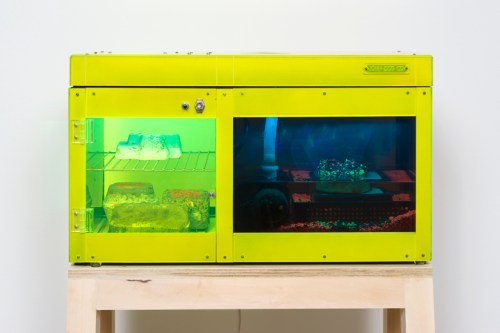
cheng_erosion_machine_4_detail_jmc_web

Carl Cheng, Erosion Machine (detail), 1969, Plexiglas, metal racks and fittings, plastic, water pump, LED lights, black light, pebbles, 4 erosion rocks and wood base, 38 x 64 x 23 cm. All images courtesy: the artist and Cherry & Martin, Los Angeles

In 1967, the year he graduated from the University of California, Los Angeles, Carl Cheng registered the trade name John Doe Co. and, soon after, began stamping it on his sculptures. Up to this point, much of Cheng’s work had a formal relationship to photography – he was taught by the influential artist-photographer Robert Heinecken, who was instrumental in widening the field – but, as John Doe Co., Cheng began producing objects that seem more like crackpot inventions than image-based sculptures. Read the rest of this entry »

Weaving Histories

The impact of pre-Columbian techniques and designs on 20th-century artists
1_17_1

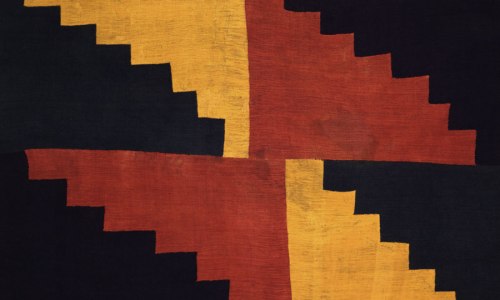
Detail of tunic with stepped triangles, Nazca Culture, South Coast, c.700-800, scaffold weave, camelid wool, 186 x 123 x 6 cm. Courtesy: Yale University Art College, New Haven

Sheila Hicks was a student at  Yale when she took a class on pre-Columbian art in the mid-1950s. At the time, there was only one book in the library on Andean textiles,  Raoul d’Harcourt’s Textiles of Ancient Peru and their Techniques (1934) — still essential reading on the subject  — and she saw that Anni Albers had checked it out. Hicks was captivated by the textiles produced by Andean tribes in the centuries before the Spanish Conquest of 1532, as well as those predating the Incas who ruled for the preceding 100 years. ‘The richness of the pre-Incaic textile language is the most complex of any textile culture in history,’ she has said.1 The study of Andean textiles is virtually mandatory for anyone serious about weaving. Even before the Early Nazca period (approximately 1‒450), almost all weaving techniques — such as kelim, interlocking and eccentric tapestry; pattern weaves, weft scaffolding, twining and plaiting; lace, brocade, wrapped weaving and double cloth — were already known. Hicks was impressed by how, before written language, these ancient peoples organized ideas through thread. Her own earliest weavings — such as Muñeca (1957), which is titled after the woven dolls found in Andean tombs — were simply ‘attempts to understand material structures’.2 Read the rest of this entry »

Agnes Martin

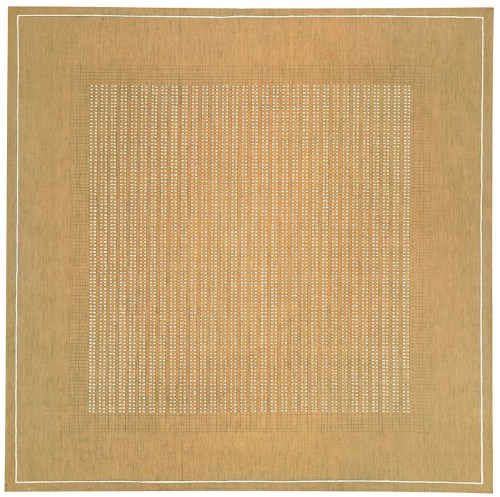
tumblr_o665tr7Vly1rq7887o5_1280

Agnes Martin, The Islands, 1961, Private Collection © 2016 Agnes Martin/Artists Rights Society (ARS), New York, photo courtesy Pace Gallery


On the very last page of Agnes Martin: Her Life and Art (2015), the biography’s author, Nancy Princenthal, admits that Martin would probably have thought her book utterly worthless. She quotes her from a handwritten note reproduced  near the start of Arne Glimcher’s semi-biographical monograph, Agnes Martin: Paintings, Writings, Remembrances (2012): ‘Almost everyone believes that art is from the experience of the artist […] They believe that it is affected by where you live and what you do. But one’s “biography”, character, abilities, knowledge – all of that has nothing to do with artwork. Inspiration is the beginning, the middle and the end.’ Read the rest of this entry »

Made in L.A.: a, the, though, only

Hammer Museum, Los Angeles

IMG_6644

Huguette Caland, installation view, Hammer Museum, Los Angeles. Photograph: Jonathan Griffin

One of the best things about ‘Made in L.A. 2016: a, the, though, only’, is that – title notwithstanding – it is quite possible to forget that the work in the exhibition was made in LA. Now in its third edition, the biennial is still finding its purpose, torn as it is in different directions. Tasked with showcasing emerging and under-recognized artists, each iteration’s curators are widely expected to reflect back at the city an image of itself that is, at once, recognizably authentic but also unfamiliar, transcendent and subjective. Read the rest of this entry »

Gina Beavers

Beavers 4_12

Gina Beavers, Memphis BBQ (looks like a Gina Beavers), 2013, acrylic on canvas, 40 x 40 cm. Courtesy: the artist and Michael Benevento, Los Angeles; photograph: Jeff McLane

Modelling the surface of a picture into a 3D relief, with contours that boost the image with real shadows and highlights, is a technique so crassly obvious that it is a wonder you don’t see it more often – not only in art but in visual culture in general. Why not, in order to snag the attention of easily distracted viewers, just make images that physically pop out from the wall? Read the rest of this entry »

The Ocular Bowl

Kayne Griffin Corcoran Gallery, Los Angeles

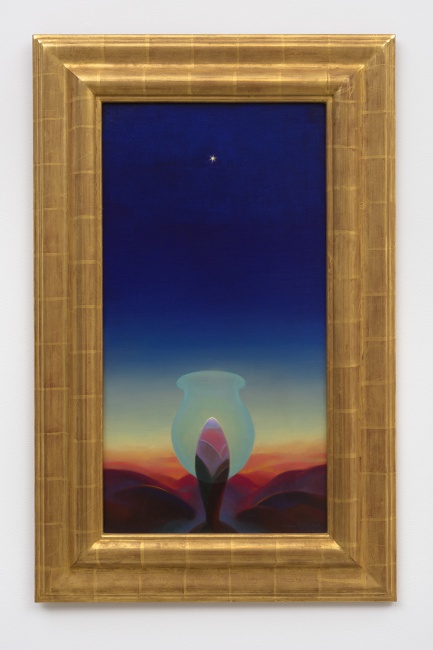
2556_large

Agnes Pelton, Star Gazer, 1929

The eye, wrote Jacques Lacan in his essay ‘The Line and the Light’, ‘is a sort of bowl’ which light is wont to overflow. ‘A whole series of organs, mechanisms, defences’arerequired to deal with this excess; the shrinking pupil, in bright conditions, ‘has to protect what takes place at the bottom of the bowl.’ Read the rest of this entry »