Jonathan Griffin

Criticism and essays on art and culture

Portland2014

Various venues, Portland, OregonPortland2014

In the April issue of frieze, Dan Fox prefaced his review of the 2013 Carnegie International with some observations about the perplexing lack of consensus around what, today, a biennial is actually for. ‘Portland2014’ is the third in this current formulation (the Oregon Biennial ran from 1949 until 2006) but its agenda and format are still, evidently, very much up for grabs. Read the rest of this entry »

Depression

François Ghebaly Gallery, Los Angeles

depression_web

Here’s a good one: a New York gallery comes to Los Angeles to do an exhibition of its artists in a colleague’s space. The exhibition opens a week before the home-coming leg of Mike Kelley’s touring retrospective, installed at the Museum of Contemporary Art, two years after the revered artist’s suicide. What do the New Yorkers title their show? ‘Depression’. Read the rest of this entry »

John Tweddle

Kayne Griffin Corcoran, Los Angeles

Tweddle_1742_large

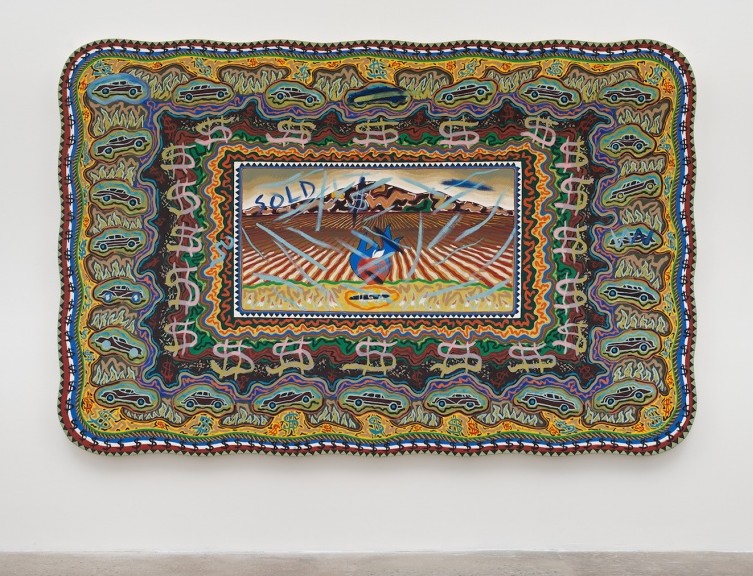
John Tweddle is one of those artists who never really fitted into any scene he found himself in. The astonishing, eccentric body of work that he has produced during his lifetime may be both the cause and effect of this condition. Born in 1938, he left rural Kentucky to go to art school in Kansas City and Atlanta, then moved to New York at the end of the 1960s. A decade later, appalled by the commercial art world, he turned his back on the city and moved back South. Today he lives and works in Santa Fe, New Mexico, which seems about right for an artist of his bent. Read the rest of this entry »

Frances Stark

Marc Foxx, Los Angeles

Stark06_fs_2014_from_therealstarkiller_429

About three years ago, something unexpected happened in Frances Stark’s art. After two decades of making work about herself––about her anxieties and obsessions, her identity crises and motivational struggles––she started making work about other people. Stranger still, her subjects became, in most instances, young men of color.  Read the rest of this entry »

Thomas Demand

Demand Dailies

Early last December, Thomas Demand’s studio of 12 years, next to the Hamburger Bahnhof in Berlin, was bulldozed. Demand had known that sooner or later this day would come – the building’s prime location made it vulnerable to developers – but it marked the end of an era for the German artist. He had lived in the city since 1995, around the time that he first became known for his photographs of life-sized card and paper models of vacant interiors recreated from found photographs, often associated with poignant human narratives. Read the rest of this entry »

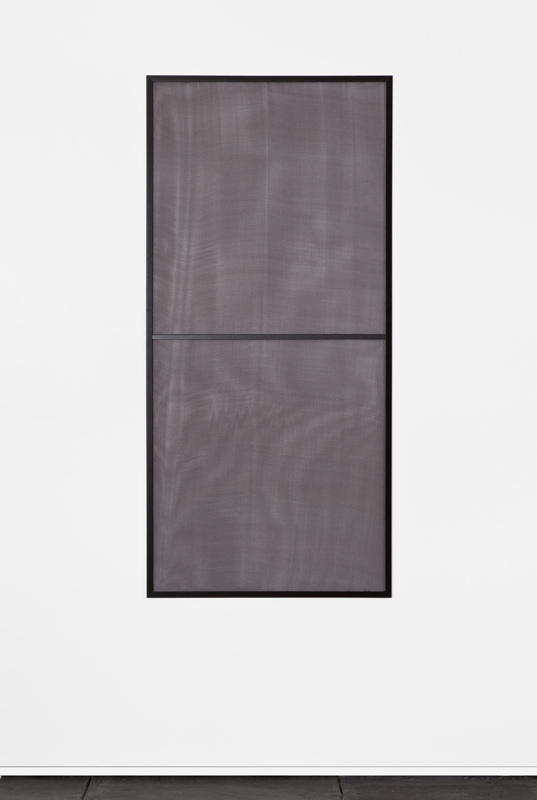
Raster Raster

Aran Cravey, Los Angeles

Artie Vierkant, Air filter and method of constructing same 18, 2013, US Patent 8118919 B1, aluminum, charcoal fiberglass mesh, organza, 68 x 32 in

Artie Vierkant, Air filter and method of constructing same 18, 2013, US Patent 8118919 B1, aluminum, charcoal fiberglass mesh, organza, 68 x 32 in

Any post-Postmodernists who dared hope that contemporary art had become ‘post-movement’ must have been dispirited, in recent years, to see the tag ‘post-Internet’ growing in ubiquity. Art magazines have done their best to nail down a definition of this vague field, in some cases recruiting the same curators who are bold enough to try to identify its principal characteristics and exponents in group exhibitions. Read the rest of this entry »

Math Bass

Overduin & Co., Los Angeles

Math Bass

Math Bass was known, until recently, principally as a performance artist, although she has long made sculptures and drawings. Her performances – which, I admit, belong to a genre that I find rather pretentious – often combine solemnly delivered poetry or song with passages of improvised group activity. Dogs and Fog, an event Bass presented at Overduin & Kite in 2011, convened dry ice machines, cinder blocks and 20 or so dogs who padded amongst the crowd. A circle of singers, the artist among them, intoned in harmony a song written by the artist. The dogs seemed uninterested. Read the rest of this entry »

Allen Ruppersberg

Ruppersberg hotel

At 6am on 9 February, 1971, Allen Ruppersberg was thrown out of bed onto the floor of his studio. Later, he would learn that the 6.6 magnitude earthquake – Los Angeles’ worst in decades – had killed 64 people and caused half a billion dollars in damage. It also delayed construction of the new California Institute of the Arts (CalArts), 30 miles north of Los Angeles in Valencia. When CalArts finally occupied its new building in November that year, the progressive school ushered in a new era for Los Angeles’ art world. Read the rest of this entry »

Aaron Curry

CAPC_LA_062014_photo_Arthur_Pequin_MG_8971-1024x682

When Alexander Calder began making monumental steel ‘stabiles’ in the late 1950s, he developed a distinctive technique for signing them: a welded ‘AC’, applied to the face of the sheet metal. For Calder, it was a logo of sorts, and an integral part of the sculpture: a reminder that these complicated constructions originated in drawing – from one man’s hand. Read the rest of this entry »

Joel Kyack

François Ghebaly Gallery, Los Angeles

kyack_still2_web

Joel Kyack is an artist not naturally given to subtlety. His last, maniacally overhung exhibition at François Ghebaly Gallery, in 2011, was titled Escape to Shit Mountain, and it included a large banner painted with the words ‘Kill all endings’. Old Sailors Never Die, his latest outing and only the second exhibition to take on Ghebaly’s new and enormous gallery space, reveals some remarkable and uncharacteristic moments of restraint. Read the rest of this entry »