Jonathan Griffin

Criticism and essays on art and culture

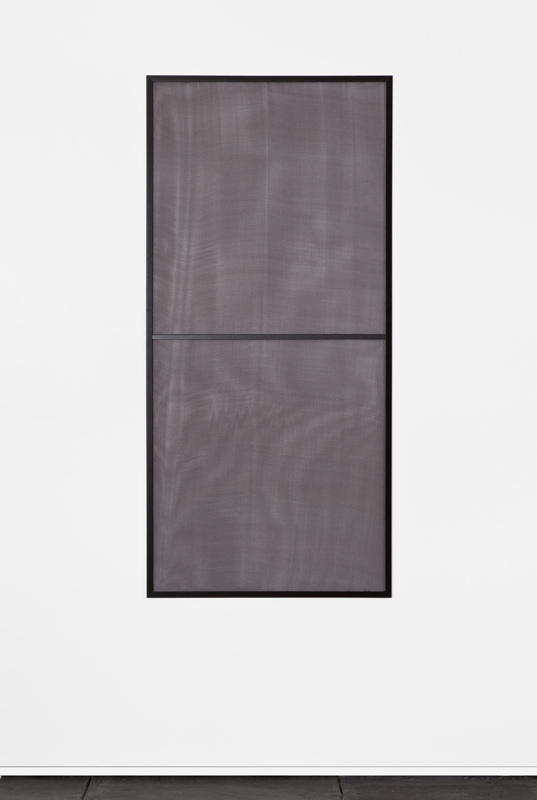
Math Bass

Overduin & Co., Los Angeles

Math Bass

Math Bass was known, until recently, principally as a performance artist, although she has long made sculptures and drawings. Her performances – which, I admit, belong to a genre that I find rather pretentious – often combine solemnly delivered poetry or song with passages of improvised group activity. Dogs and Fog, an event Bass presented at Overduin & Kite in 2011, convened dry ice machines, cinder blocks and 20 or so dogs who padded amongst the crowd. A circle of singers, the artist among them, intoned in harmony a song written by the artist. The dogs seemed uninterested. Read the rest of this entry »

Allen Ruppersberg

Ruppersberg hotel

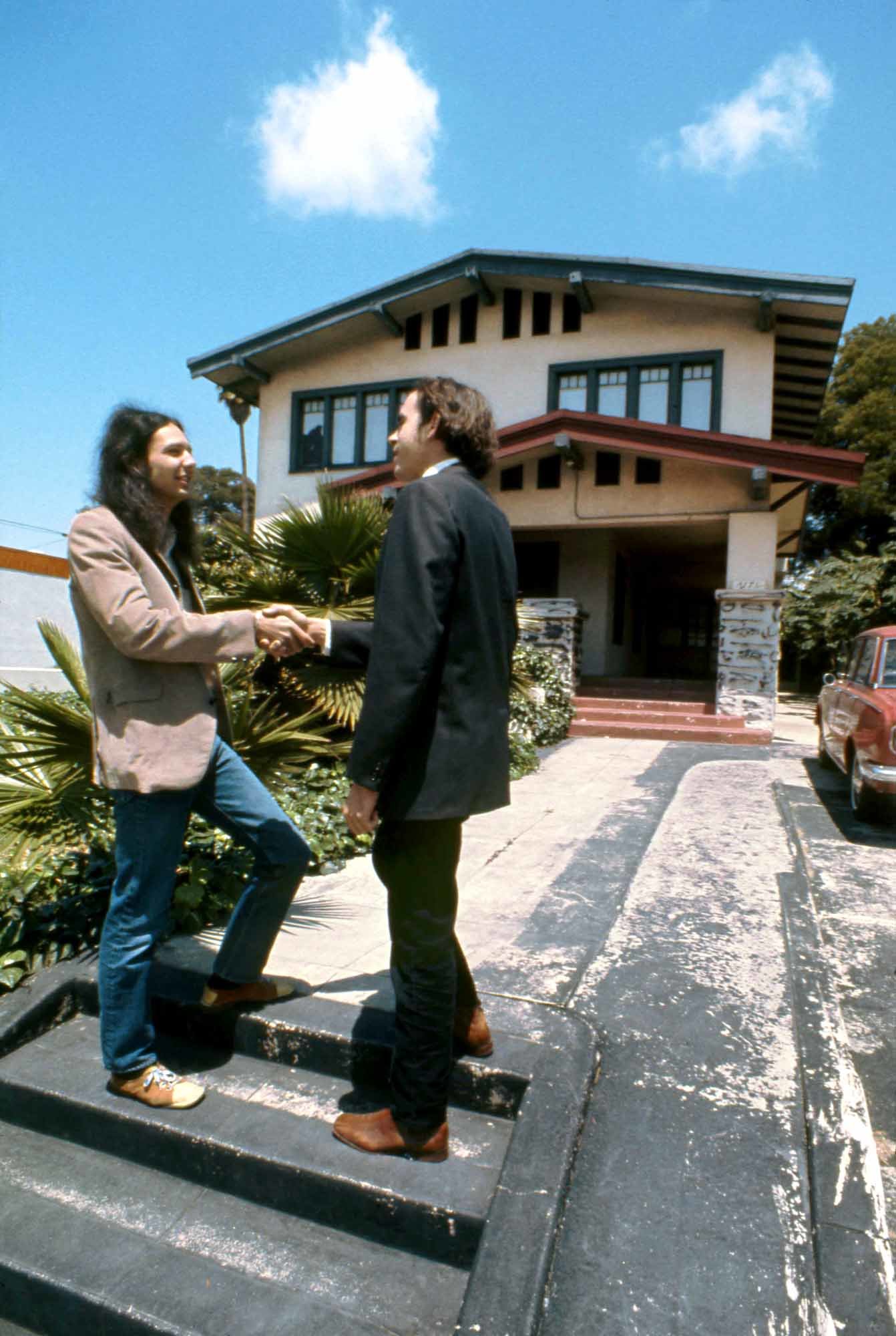
At 6am on 9 February, 1971, Allen Ruppersberg was thrown out of bed onto the floor of his studio. Later, he would learn that the 6.6 magnitude earthquake – Los Angeles’ worst in decades – had killed 64 people and caused half a billion dollars in damage. It also delayed construction of the new California Institute of the Arts (CalArts), 30 miles north of Los Angeles in Valencia. When CalArts finally occupied its new building in November that year, the progressive school ushered in a new era for Los Angeles’ art world. Read the rest of this entry »

Aaron Curry

CAPC_LA_062014_photo_Arthur_Pequin_MG_8971-1024x682

When Alexander Calder began making monumental steel ‘stabiles’ in the late 1950s, he developed a distinctive technique for signing them: a welded ‘AC’, applied to the face of the sheet metal. For Calder, it was a logo of sorts, and an integral part of the sculpture: a reminder that these complicated constructions originated in drawing – from one man’s hand. Read the rest of this entry »

Joel Kyack

François Ghebaly Gallery, Los Angeles

kyack_still2_web

Joel Kyack is an artist not naturally given to subtlety. His last, maniacally overhung exhibition at François Ghebaly Gallery, in 2011, was titled Escape to Shit Mountain, and it included a large banner painted with the words ‘Kill all endings’. Old Sailors Never Die, his latest outing and only the second exhibition to take on Ghebaly’s new and enormous gallery space, reveals some remarkable and uncharacteristic moments of restraint. Read the rest of this entry »

Take It or Leave It

Hammer Museum, Los Angeles

Gober September 12

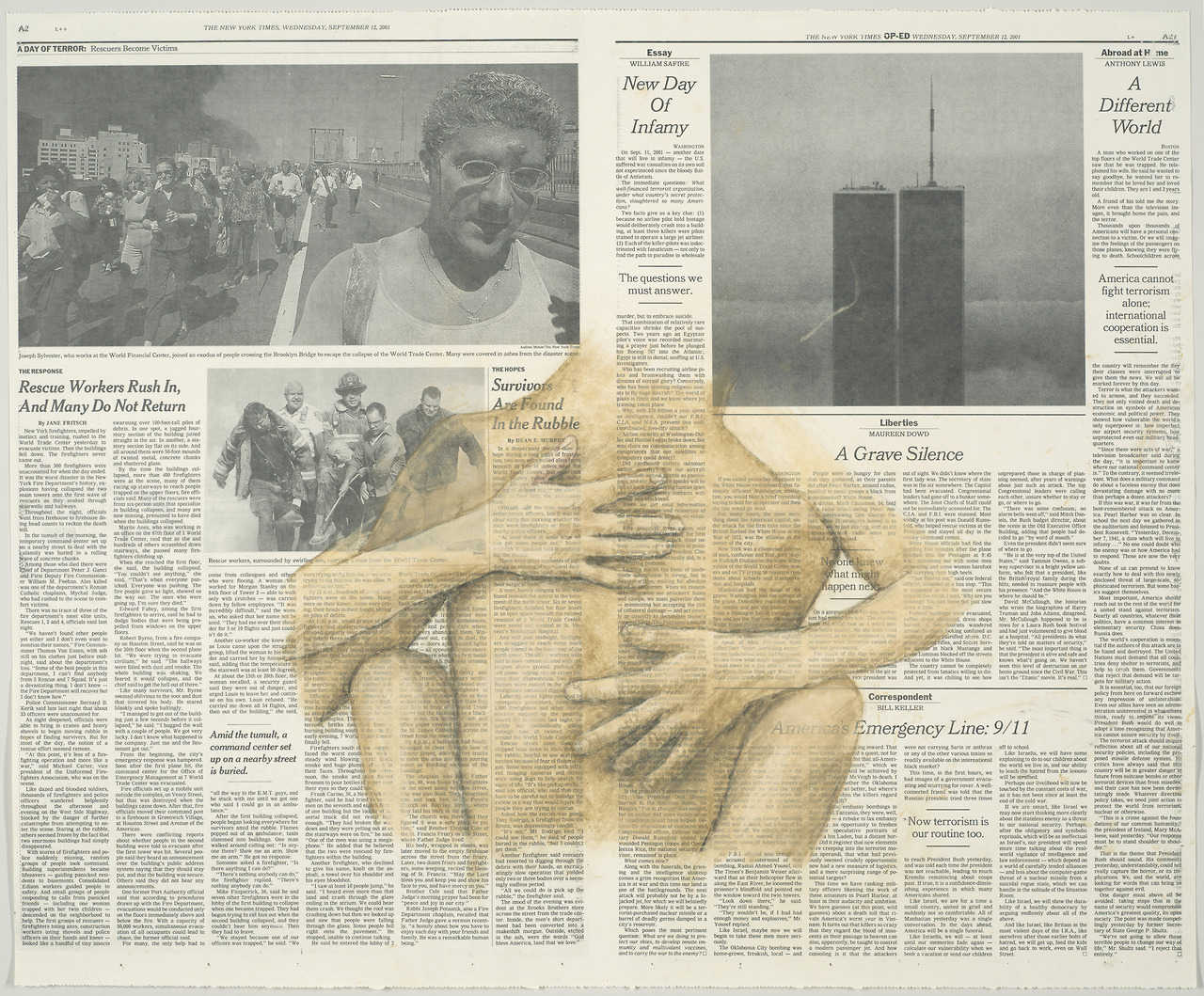
Large-scale historical shows, when done in a certain way, can be intellectual steamrollers. A museum exhibition is a powerful rhetorical device; gallery after gallery of judiciously selected aesthetic material beside didactic wall texts can make a particular hypothesis or observation seem indisputable, or a historical moment appear satisfyingly coherent. 
Read the rest of this entry »

Bill Viola

bill viola

When Bill Viola talks about his art, he refers to it as ‘our work’. He and his wife, Kira Perov, have been working together since they met in Melbourne, Australia, in 1977. The first thing Viola tells me, when I sit down with him at his studio in Long Beach, California, is that it is most important that my interview include Kira. Read the rest of this entry »

Samara Golden

SamaraNG2014-4-CMYK

Like many children, when she was young Samara Golden liked to lie with her legs over the back of the sofa and look at the room upside down. She was fascinated by the space that appeared: when the ceiling became the floor, the room became strange, much bigger, more exciting – large items of furniture now dangling down from above and all the clutter lofted up there too – and though physically real, only accessible from Golden’s singular, inverted viewpoint. Read the rest of this entry »

Liz Larner

Regen Projects, Los Angeles

LizLarner_3770

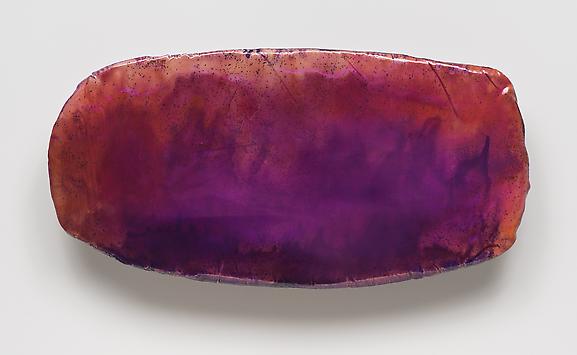
Some art works are so porous towards meaning, so sensitive to atmospheric conditions and the fingerprints of discourse, that we must be careful what words we use on them. Language can indelibly tarnish objects. Liz Larner’s best sculptures have always been hard to talk about with sufficient delicacy, none more so than the ceramic tablets which dominated her seventh solo exhibition at Regen Projects since 1989. Read the rest of this entry »

Karin Apollonia Müller

Diane Rosenstein Fine Art, Los Angeles

FAROUT

There are two opposing critical interpretations of the aerial panorama. Looking at the earth from above is, on the one hand, a way to see patterns, systems or gestalts not visible at close quarters – the behaviour of crowds, for instance, or the geological growth of cities. This distanced perspective might also, conversely, be considered generalising, flattening and simplifying. From afar, everyone looks the same. People move like water or gas, and the built environment appears biological. Do these similes point to profound universal truths, or are they delusions? Personally, I lean towards the latter view. Read the rest of this entry »

Malicious Damage

The Defaced Library Books of Kenneth Halliwell and Joe Orton

by Ilsa Colsell

MD_286026

At first, the staff of the Islington Public Library rather looked forward to the discovery of another book, turned in by a confused patron who had realised, too late, that something was terribly wrong with its cover or flyleaf blurb. On the front of The Great Tudors, Henry VIII’s face had been mysteriously replaced by that of a chimpanzee. The plot synopsis inside the jacket of Dorothy L. Sayers’ potboiler Clouds of Witness concludes by suggesting that the reader “have a good shit”. When, in late 1961, complaints began to increase in frequency and fervour, the chief librarian decided that something must be done. Read the rest of this entry »