Jonathan Griffin

Criticism and essays on art and culture

Still Making a Splash

On Leonard Koren and WET: The magazine of gourmet bathing

‘If you had to have it explained’, says Leonard Koren, ‘then it wasn’t the magazine for you.’ Many people, when they first encountered WET magazine in Venice, California, in 1976, or later, in the hippest bookstores and clothes boutiques around the world, weren’t quite sure how seriously to take its now famous strapline: ‘The magazine of gourmet bathing’. That was the idea. Read the rest of this entry »

Jeffry Mitchell

Ambach and Rice, Los Angeles

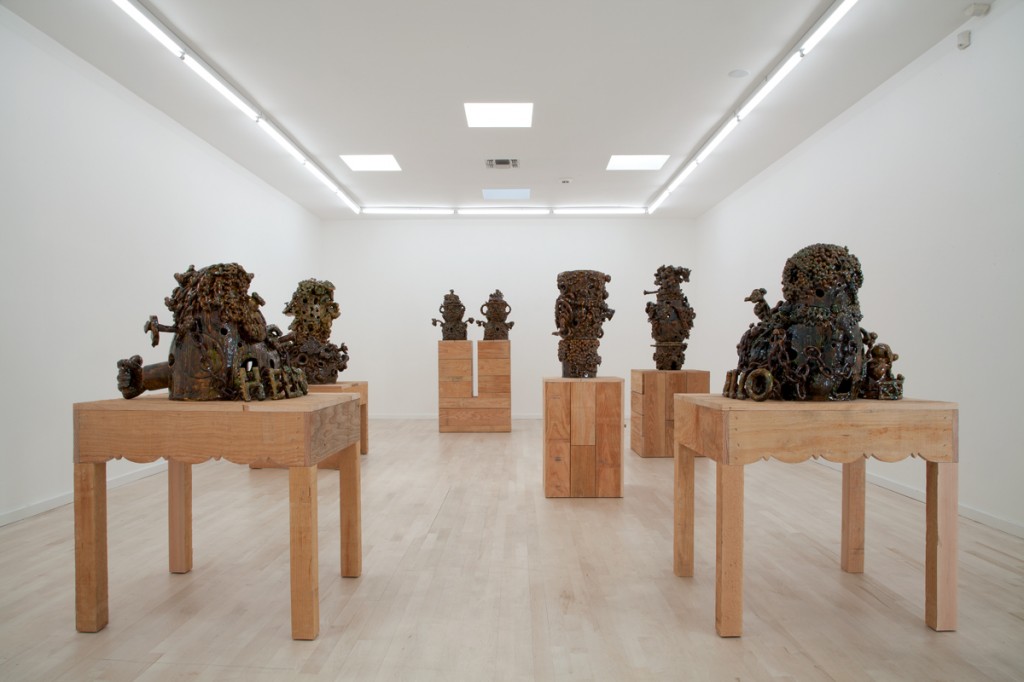
I’ve never met Jeffry Mitchell, but having seen his art, I’d imagine him to be a chunky fellow. Not fat, just well built. I’d also imagine him to be extravagantly hairy. Google reveals my hunches to be correct in the first instance, wrong in the second. Read the rest of this entry »

Paul McCarthy

The Box, Los Angeles

The doubling begins immediately. An exhibition across town, organized by MOCA and James Franco, called “Rebel,” themed (incredibly) around Franco’s resemblance to James Dean, finds its evil twin in “Rebel Dabble Babble.” It began with Franco inviting Paul McCarthy to collaborate on a project based on Rebel Without a Cause (1955), and ended up with McCarthy and his son Damon creating house-sized sets in their studio, staging auditions, filming, and performing in scenes with actors (who played hybrids of cinematic characters and the actors who originally played them) and, ultimately, shooting scenes for a pornographic version of Rebel Without a Cause featuring an actor named James Deen, who, like Franco, is a dead ringer for its original tragic star. A watered-down version of the project remains in MOCA’s exhibition, but at The Box it unfurls into full exhaustive glory. Read the rest of this entry »

Chadwick Rantanen

What is the significance of the fact that ‘walker balls’ are only available for purchase in the United States? They’re not sold in Canada, not in the UK, not in mainland Europe or Asia. Only in the US do manufacturers of tennis balls diversify by producing differently coloured and pre-cut balls to fit on the end of walkers (known in other countries as mobility aids or Zimmer frames) in order to facilitate their smooth and scratch-free shuffling across polished floors. Is the salient point here about the integration of medical equipment into American homes? The commercialization of geriatric invalidity? The expediency of customized design? Maybe the interesting thing is the way in which an inexpensive, makeshift addition is so quickly repackaged and marketed? Or is it to do with the meagre ways in which US consumers are happy to assert their individuality, be it with pink, blue or zebra-patterned balls on the legs of their walkers? Read the rest of this entry »

Sanya Kantarovsky

Marc Foxx Gallery, Los Angeles

In Sanya Kantarovsky’s painting Events (2012), a kneeling figure clutches his head and grasps a sheet of paper. The unfortunate conductor in Sinfonia #2 (2012) is frozen in horror as a gust of wind sends his music flying about his head. An empty table and chair awaits the protagonist in A New Talented Writer, while the man from An Episode from History (both 2012) smokes at his desk, gazing into the distance and hoping for inspiration. Read the rest of this entry »

Urs Fischer

Urs Fischer, Problem Painting, 2011
© Urs Fischer Photo by Mats Nordman

Your new series of silkscreens, ‘Problem Paintings’, overlays Hollywood publicity shots with objects such as screws, nails, fruit and vegetables. Has Hollywood always been an influence?

I think you’d have to live in the forest not to have been influenced by Hollywood. You turn on a TV and you’re in Hollywood. I think the entertainment industry and advertising industry shapes everybody these days. It’s like the Catholic Church; Hollywood is like the Vatican. It shapes how you imagine the world to be, who you want to be, what’s good, what’s bad. But that’s for all of us. So, to answer your question, no more than anybody else. Read the rest of this entry »

Pietro Roccasalva

David Kordansky Gallery, Los Angeles

Pietro Roccasalva’s work poses problems to those looking for legible meaning. Although his visual language of recurrent symbols and metaphors looks very much like it should be in some way translatable, most of its etymologies are so deeply entombed in Roccasalva’s eccentric logic that even those closest to him – assistants and gallerists, for instance – are sometimes at a loss to decode it. Read the rest of this entry »

David von Schlegell

China Art Objects Galleries, Los Angeles

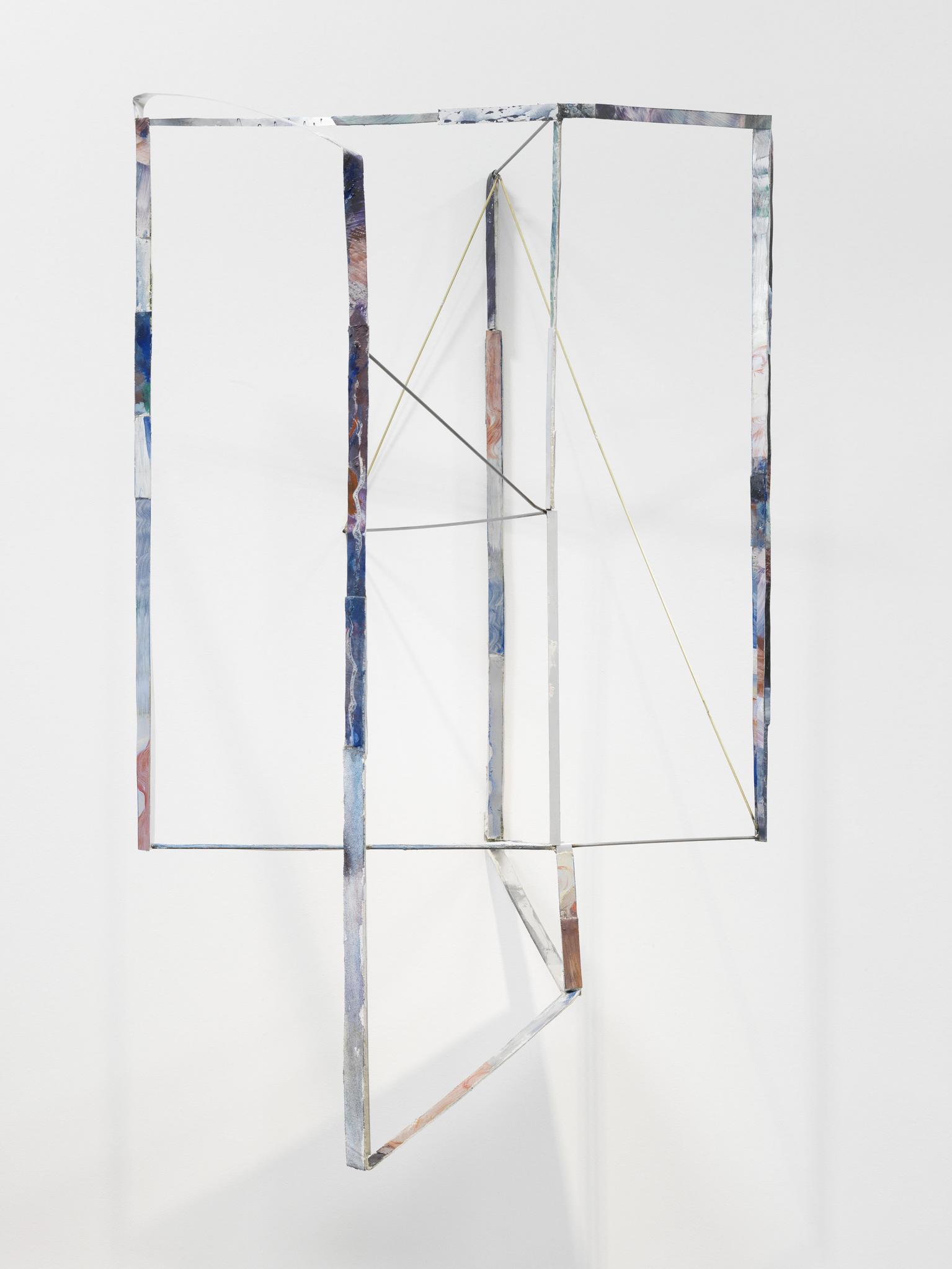
For all those (myself included) requiring an introduction to David von Schlegell’s art, the sculpture Five Birds and its attendant Untitled Study for Five Birds (both 1988) greeted visitors at the entrance to his exhibition. Birds in flight, cobbled from shards of aluminium tube and hanging on monofilament, cast fluttering shadows over the cut-paper studies on the wall behind. These were far from the most sophisticated works in the show, but they announced, for the uninitiated, the artist’s fascination with dichotomies of form and weightlessness, land and air, the man-made and the natural. Read the rest of this entry »

Alex Israel

'As It Lays', 2012. Photograph: Joshua White

The last question that Alex Israel asks each of his celebrity subjects in his video interview series ‘As It Lays’ (2012) is the same: ‘What do you want the world to know about [subject’s name]?’ A surprising number have exactly the same response: ‘Nothing.’ Surprising, because these are people whose very livelihood relies on public visibility, and who are voluntarily submitting to the Los Angeles-based artist’s deadpan interrogation. Their answer points to the open secret of the celebrity system: that the illusion of self-exposure can be the best defence for intensely private personalities. Read the rest of this entry »

Physica Sacra

While doing research for my forthcoming book Itinera Alpina (a collaboration with Ben Branagan – watch this space) I came across an image that stopped me in my tracks. It was an 18th-century engraving, showing a massive veiny liver apparently floating over a bucolic pastoral landscape, bordered by an elaborate Rococo frame. I found it reproduced in a book (in German) about 18th-century Zurich. Neither Ben nor I had any idea how or why such an image would come into being, or what it meant, but we were captivated by its weirdness, and it became an inspirational touchstone as we put together our book. Read the rest of this entry »